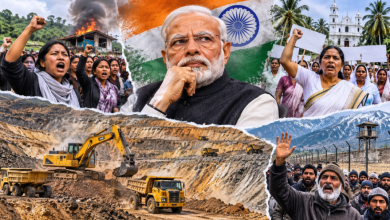
Bulldozer politics reflects discrimination, hatred in India: Arshad Madani
Says Muslims seek equal justice, not special treatment
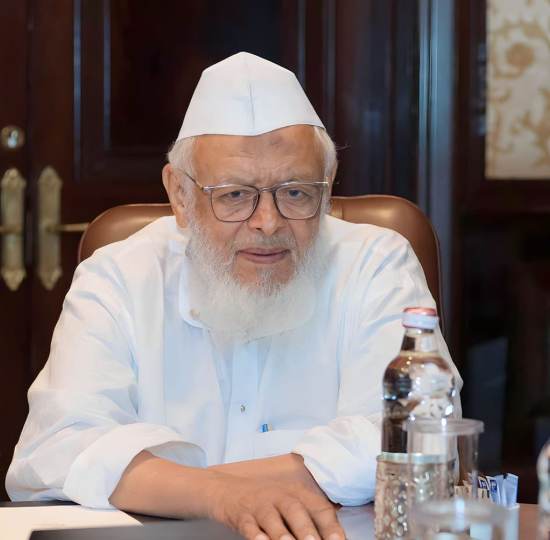
New Delhi: Jamiat Ulama-i-Hind President Maulana Arshad Madani has strongly condemned the demolition of a mosque in Saharanpur, Uttar Pradesh, saying the incident is not merely about a mosque but concerns the supremacy of the Constitution, rule of law, religious freedom, equality of citizens and impartiality of the state.
According to Kashmir Media Service, authorities in BJP-ruled Uttar Pradesh demolished the 150-year-old mosque on Saturday amid the deployment of a large contingent of police personnel in the area. The demolition came shortly after the District Judge’s court on September 4 dismissed an appeal filed by the mosque management committee and upheld an earlier order directing the structure’s removal. The administration had declared the mosque illegal in July and ordered its demolition. The proceedings were initiated following a complaint by Vikas Tyagi, a former provincial coordinator of the Bajrang Dal, a Hindutva organisation.
Maulana Arshad Madani expressed deep sorrow over the incident and said it had once again raised a fundamental question: whether the Constitution and law were truly being applied equally to every citizen and every religion. He questioned why, if the Constitution guarantees equality, religious freedom and equal protection of law to all, a double standard was apparent in its implementation.

Maulana Madani said the Places of Worship Act, enacted in 1991, remained in force. He said the Uttar Pradesh administration’s action violated not only the Act but also the new Waqf law. He added that the mosque was registered with the Waqf Board and that the land had originally been recorded in the names of Yaqub Khan and Waheed Khan. He questioned the legal basis for the action.
‘Our habit is to demolish’: Hindutva leader threatens Indian Muslims with bulldozers
Maulana Arshad Madani said that if illegal occupation and encroachment were the sole criteria for taking action, the same standards should be applied equally to every religion and every section of society. However, he said that such pretexts were being used to target a particular religion.
He also questioned whether religious structures that had existed for years or decades on government land, roads, public places and elsewhere across the country were being subjected to the same urgency, severity and standards of action. If not, he said, the extraordinary harshness shown in the case of one religious site raised serious questions about the principle of equal justice.
He said disputes over ownership of religious sites or land could be settled through the courts, but the long-standing religious use of a place, historical records and ground realities should also be examined seriously within the framework of law. He added that the position of the mosque committee was also important in this regard.
Maulana Madani said the committee had submitted various historical documents before the court showing that the mosque predated the existing Collectorate building. He said reports indicated that the committee had also presented documents dating back to 1911, along with municipal and old revenue records, but these were overlooked.
He questioned whether it was appropriate to treat a place where prayers had been offered uninterruptedly for more than a century, used as a mosque by generations of people and supported by documentary claims about its antiquity, merely as an administrative dispute.
Maulana Madani stressed that India did not belong to any one religion or community. He said India was the common homeland of Hindus, Muslims, Sikhs, Christians and people of all faiths and beliefs. The Constitution, he added, did not designate anyone as a first- or second-class citizen.
He questioned why the administration’s conduct created the impression that religious identity was influencing the standards of justice.
“We are not seeking any special favour from the government; we are only seeking equal justice,” he said. “Our question is very simple: Why should the law that applies to a mosque not apply equally to every religious place? Why should the standard applied to a Muslim not apply to another citizen? If the Constitution and law are for everyone, their protection and enforcement must also be equal for everyone.”