Lingering Kashmir dispute badly impacting education in IIOJK
#InternationalLiteracyDay|#ProtectEducationInIIOJK
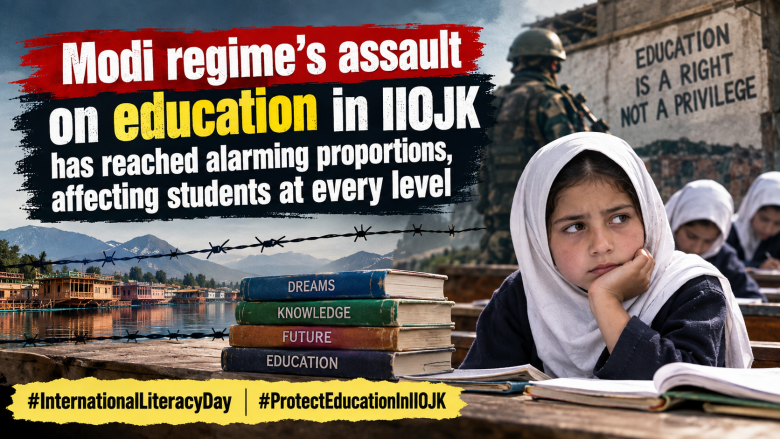
Islamabad: On International Literacy Day, observed globally on September 8, the intersection of human rights, political conflict and access to education in Indian illegally occupied Jammu and Kashmir remains a matter of serious concern.
A report released by Kashmir Media Service today said that as the world marks International Literacy Day, today, education — recognized as a fundamental human right — continues to be badly affected in the disputed territory by heavy militarization and the decades-long unresolved Kashmir dispute.
Education Under Pressure Amid Militarization

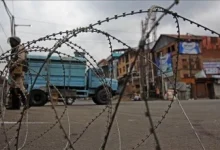
The report expressed concern over how Kashmiri students can concentrate on their studies while witnessing continued cordon-and-search operations, house raids, frisking, arrests, extensive deployment of forces, military camps, and mobile vehicles equipped with surveillance equipment and heavy weapons on roads and near educational institutions. It said the persistent presence of armed personnel and security installations creates an atmosphere of fear and uncertainty for students, teachers and families, undermining the development of a safe and stable educational environment.
Human rights advocates and regional reports have frequently pointed out that heavy militarization, cordon-and-search operations, house raids and arrests disrupt everyday life and affect the mental well-being of the population, with students particularly vulnerable to anxiety, fear and psychological distress.
Atmosphere of Fear Around Educational Institutions
The report said the intersection of International Literacy Day with the pervasive presence of Indian forces and security installations near educational institutions highlights a critical paradox in occupied Jammu and Kashmir, where the right to education is challenged by an environment of fear and insecurity.
Multiple academic studies and public-health assessments have documented the psychological impact of prolonged dispute, militarization, checkpoints and surveillance on young people, raising concerns about their ability to concentrate and learn effectively.
Atmosphere of fear: The physical proximity of security installations and frequent search and frisking activity around campuses can create feelings of surveillance and vulnerability, turning spaces intended for intellectual freedom into sources of apprehension.
Academic disruptions: Checkpoints, security protocols and sudden restrictions around educational institutions can cause delays, interrupt attendance and increase day-to-day stress among students.
Mental-health impact: Prolonged exposure to dispute and occupation-related uncertainty can contribute to anxiety, trauma and other psychological difficulties that interfere with students’ academic performance.
Falah-e-Aam Trust Schools Targeted
The report said the situation in occupied Kashmir deteriorated further after the abrogation of the territory’s special constitutional status by the BJP government on August 5, 2019. It deplored that the BJP government has banned hundreds of schools run by the Falah-e-Aam Trust across IIOJK and taken action against their institutions, depriving thousands of students of educational opportunities. The report said such measures have added to concerns over the future of students and the availability of educational institutions, particularly in communities already affected by prolonged conflict.
Educational Institutions Facing Administrative Action
The BJP administration officially sealed and banned the prominent seminary-cum-school Darul Uloom Jamia Siraj-ul-Uloom in the Imam Sahib area of Shopian district in late April 2026. Another case cited in the report concerns the Islamia Model School, which, according to the report, had been non-operational after being closed by the BJP government since 2022.
The attachment of its two double-storey buildings, six commercial shops and two kanals of land on September 3, 2026, is another example of the BJP regime’s policy of restricting Kashmiris’ access to local educational institutions.
Examination Controversies Deepen Students’ Frustration
The report also highlighted controversies surrounding competitive examinations in the territory. A fresh controversy emerged on August 24, 2025, after the Jammu and Kashmir Services Selection Board (JKSSB) conducted the Junior Engineer (Electrical) examination, with aspirants and political leaders raising allegations of mismanagement and a possible paper leak. Several users on social media platform X shared videos purportedly showing JKSSB aspirants solving questions together and, in some cases, using mobile phones. The videos circulated widely and further fuelled concerns regarding the conduct of the examination. Students also alleged that question papers had been available on social media before the examination began.
According to the report, from 2020 to 2025, numerous major examinations in the occupied territory faced controversies involving alleged paper leaks, recruitment irregularities, scams or prolonged legal disputes, leaving thousands of job-seekers frustrated.
Political Leaders Raise Questions Over Recruitment Exams
Chief Minister Omar Abdullah said on social media that JKSSB paper leaks had also occurred in 2022 under the BJP-appointed Lieutenant Governor’s administration. He pointed out that widespread controversies during that period led to the cancellation of recruitment examinations for several posts, including sub-inspectors, junior engineers and finance accounts assistants. The repeated controversies, the report said, have further undermined students’ confidence in the recruitment and examination system at a time when the region is already grappling with severe unemployment. Student activist Saquib Jan said such scandals deepen the despair of young people. “We have seen paper leaks and irregularities time and again, but those at the top enjoy complete impunity. Accountability has been buried and students are left to suffer while the system rots,” he said.
Schools Face Infrastructure and Staffing Crisis
The report said the government-school system in occupied Jammu and Kashmir is facing a dual crisis involving inadequate infrastructure and shortages of teaching staff. It said more than 1,300 to 1,500 schools operate with only one teacher, collectively serving more than 31,000 students.
Other challenges highlighted in the report include: Many school buildings approved as far back as 2008–2010 reportedly remain incomplete because of cost escalations and funding shortages, forcing students to study in old or dilapidated structures. Many rural public schools reportedly lack functional laboratories, libraries, adequate desks, clean toilets, reliable electricity and internet access. The administration has reportedly shut down or merged more than 4,300 government schools in recent years.
Conflict Continues to Undermine Children’s Education
The report said the unresolved Jammu and Kashmir dispute and the unrest associated with it have severely disrupted children’s education in IIOJK. It argued that prolonged conflict, militarization, insecurity and administrative restrictions have created conditions in which students struggle to enjoy uninterrupted and quality education.
While stating that the Indian BJP government has deprived the Kashmiri people of fundamental rights, including the right to education, the report urged the international community to pay greater attention to the plight of students in IIOJK. It called for international efforts toward resolving the Kashmir dispute in accordance with relevant United Nations resolutions, saying that a durable political settlement is essential for ensuring peace, stability and educational opportunities for future generations.