All-vegetarian BRICS dinner fuels debate on India’s Hindutva diplomacy
Congress slams veg-only menu, questions govt’s claims of pluralism
New Delhi: What was presented in the name of India’s cultural hospitality at the BRICS Summit has triggered a debate over the growing influence of the Modi government’s Hindutva politics on diplomatic spaces, after foreign leaders and delegates were served an exclusively vegetarian dinner at an official event in New Delhi.
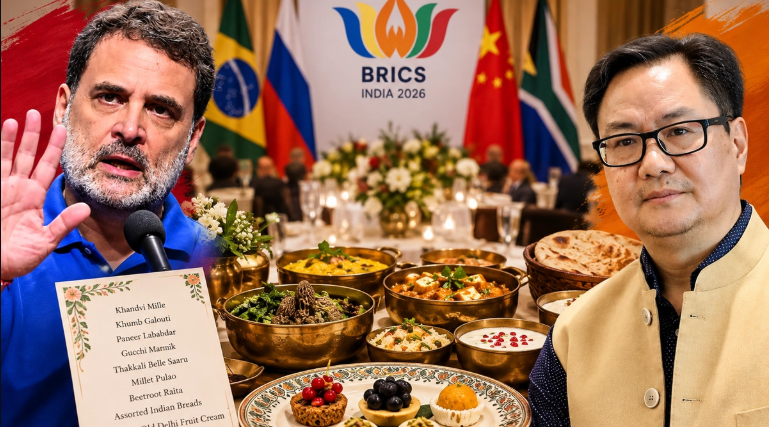
Prime Minister Narendra Modi hosted the BRICS dinner for leaders and delegates at Bharat Mandapam on Saturday, with the menu containing no meat-based dish. The dinner featured an array of vegetarian Indian delicacies, including khandvi mille, mushroom kebabs, paneer lababdar, Himalayan morel mushrooms, asparagus, millet pulao, beetroot raita and assorted Indian breads, followed by desserts such as jalebi and shahtoot phirni.
The menu drew sharp political attention the following day when Congress leader Rahul Gandhi pointed to India’s dietary diversity, stating that “80% of Indians are non-vegetarian” and highlighting the richness of Indian non-vegetarian cuisine.
The controversy has assumed a wider significance because India remains a deeply diverse society in terms of food, faith and cultural practices. Critics argue that imposing a strictly vegetarian menu at a high-level international gathering amounts to unnecessary interference in the dietary choices of foreign guests and projects the cultural preferences associated with Hindu majoritarian politics onto a multilateral diplomatic platform.
The criticism is particularly striking, they say, in a country that is among the world’s major exporters of meat, including buffalo meat, while Muslims and other minorities have faced violence and intimidation over alleged cow slaughter or beef consumption under the Modi government. Human Rights Watch has documented dozens of deaths in cow-related violence between 2015 and 2018, with Muslims comprising the overwhelming majority of those killed.
The BRICS dinner has therefore become a symbol, critics contend, of the widening gap between New Delhi’s projection of India as a pluralistic democracy and the growing influence of Hindutva-linked cultural preferences in public and official life.
Rather than reflecting the diversity of India and the BRICS community, they say, the choice of an exclusively vegetarian menu risks turning diplomatic hospitality into an expression of majoritarian cultural politics, raising questions about whether international platforms are increasingly being used to project the Modi government’s ideological worldview.
The controversy also contrasts with Modi’s own call at the summit for “inclusivity” in the adoption of technology and greater resilience and cooperation among BRICS nations. Critics argue that genuine inclusivity must extend beyond diplomatic rhetoric to respect diverse cultures, identities and personal choices.
The episode has consequently reignited debate over Hindutva’s expanding influence in India—not only on the country’s minorities but also on the way New Delhi presents itself to the international community.