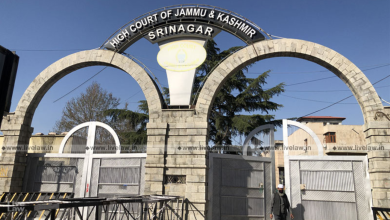
Court ruling exposes paradox in IIOJK regime’s property attachment policy

Srinagar: A court ruling that inheritance rights do not vest in a son during his living father’s lifetime has raised questions over the attachment of properties of Kashmiri people by Indian authorities while the owners or their parents are still alive.
According to Kashmir Media Service, Sub-Judge Pattan, Baramulla, Anjeet Singh, while hearing a property dispute, observed that under Muslim personal law, inheritance rights ordinarily arise only after the death of the property owner. The court also held that an unregistered family settlement was insufficient to establish an enforceable proprietary interest in the disputed immovable property.
The ruling assumes added significance in the context of property attachments carried out by Indian authorities in IIOJK, where properties belonging to Kashmiris have been attached or seized while the owners or their parents are still alive.


Critics have questioned the legal and humanitarian basis of such measures, particularly in cases where properties are attached or seized before any inheritance right could arise under Muslim personal law.
The contrast has raised concerns over the application of property rights in IIOJK. While inheritance rights ordinarily vest only upon the death of the property owner, Indian authorities have been accused of attaching or confiscating properties during the owners’ lifetime, depriving families of homes and assets and raising questions over due process, property rights and legal safeguards.