Sharjeel case exposes shrinking space for Muslim political thought: Indian journalist
Muslim intellectuals branded with simplistic labels instead of being heard: Asad
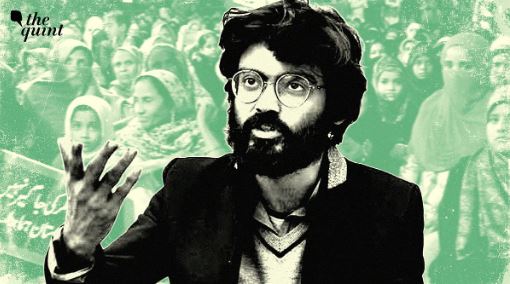
New Delhi: Journalist Asad Ashraf has highlighted what he described as the growing tendency in India to reduce complex Muslim political and intellectual thought to simplistic ideological labels, citing jailed scholar and activist Sharjeel Imam as a prominent example.
In a detailed social media post, Ashraf, who said he had known Imam for more than a decade as both a friend and a journalist, said he had witnessed Imam’s sustained engagement with questions concerning history, politics, constitutional rights and the position of Muslims in India.
Ashraf said Imam had consistently argued that there was a fundamental problem with the historiography of the Partition of Indian subcontinent and that the political questions shaping Muslim thought before 1947 needed to be revisited and critically examined.


According to Ashraf, Imam frequently connected contemporary debates with the ideas of historical figures , not necessarily presenting them as figures to be admired, but as important personalities in the evolution of Muslim political thought in pre-Partition India.
He further said Imam had raised questions relating to presidential orders, political representation and reservations for Muslims while arguing that the democratic rights and political concerns of Indian Muslims should be pursued within the country’s constitutional and democratic framework.
“His argument, as I understand it, is not a rejection of the democratic system, but an insistence that Muslims should engage with that system, understand its constitutional possibilities and seek to resolve their political questions through it,” Ashraf wrote.
Ashraf criticised the tendency to reduce Imam’s diverse arguments to the single label of “Islamist”, saying such categorisation prevents serious engagement with the political and historical ideas being advanced.
He argued that the issue extended beyond Imam and reflected a wider problem in the way Muslim intellectual and political thought is perceived in India.
“A Muslim who raises questions about history, representation, constitutional rights or the political future of the community can quickly be placed into a binary: either assimilated and acceptable, or Islamist and suspect,” he said.
Ashraf maintained that this binary leaves little room for disagreement, historical inquiry, constitutional argument and political complexity, particularly when Muslims articulate concerns about their political rights and representation.
He said Imam’s case therefore raised a broader question about whether Indian society was prepared to engage with Muslims as political thinkers holding diverse and sometimes uncomfortable views, rather than placing them into predetermined categories.
“Intellectual disagreement is possible without ideological caricature,” Ashraf concluded, arguing that this was precisely the space that needed to be reclaimed.