 Democracy is not merely the periodic exercise of casting votes; it is a political system founded on constitutional supremacy, equal citizenship, institutional independence, and the protection of minorities. These foundations appear to be under growing strain in India. Elections may continue, political parties may campaign, and governments may claim popular legitimacy, yet democracy itself can become an instrument of Hindu domination. India’s claim to being the world’s largest democracy stands at a critical juncture, as the growing influence of Hindu majoritarian nationalism raises serious questions about electoral integrity, minority rights, and the future of constitutional governance. The Indian Constitution risks being hollowed out by Hindutva politics when electoral majorities are used to weaken the very safeguards designed to restrain their power.
The controversy surrounding Chief Election Commissioner Gyanesh Kumar and the Special Intensive Revision (SIR) of electoral rolls has intensified these concerns. Allegations of arbitrary voter deletions, procedural irregularities, and the sidelining of dissenting Election Commissioners Sukhbir Singh Sandhu and Vivek Joshi have brought India’s electoral machinery’s independence under renewed scrutiny. If substantiated, such allegations would represent more than administrative failures; they would challenge the fundamental democratic principle that every eligible citizen must enjoy an equal right to participate in choosing a government. The controversy has also fuelled demands for accountability, including calls for the Chief Election Commissioner to resign or face impeachment, alongside demands for fresh elections in Bihar and West Bengal. These remain matters requiring scrutiny through verifiable evidence and constitutional procedures, but their political significance cannot be ignored.
The strength of democracy lies in the independence of the institutions that regulate political competition. An election commission must operate above partisan interests because its credibility depends on public confidence that every vote counts equally. When opposition parties challenge electoral procedures, citizens struggle to protect their voting rights, and commissioners reportedly raise objections to administrative decisions, the impartiality of the institution itself becomes a matter of national concern. The controversy also exposes a structural weakness in the appointment of India’s Chief Election Commissioner. The replacement of the Chief Justice of India with a Union Cabinet minister on the selection committee has raised questions about executive influence over an institution expected to oversee elections impartially. Although the legality of this arrangement must be determined through constitutional procedures, its implications for institutional independence deserve serious examination. The principle is straightforward: those who exercise political power must not control the rules of political competition to their own advantage. Democracy becomes vulnerable when the referee is perceived to be aligned with one of the competing teams.
The deeper crisis, however, extends beyond electoral administration. The rise of Hindu nationalist politics has increasingly placed India’s secular constitutional identity under pressure. The ideology associated with Hindutva, particularly in its majoritarian political manifestations, presents India primarily through a Hindu civilisational identity. Its critics argue that this vision marginalises citizens whose religious, cultural, or historical identities do not conform to the dominant national narrative. This is where democracy confronts a fundamental contradiction. Electoral majorities possess the authority to form governments, but they do not possess an unrestricted mandate to determine the rights, dignity, or citizenship of minorities. Constitutional democracy is not the dictatorship of the majority; it is a system in which majority rule operates within the boundaries of fundamental rights.

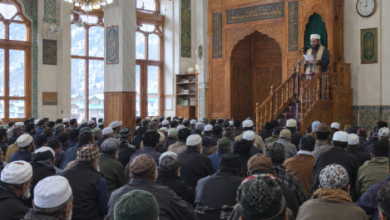
When religious identity becomes a criterion for political belonging, democratic participation risks becoming unequal. Muslims, Christians, and other vulnerable communities may find themselves increasingly exposed to discrimination, inflammatory rhetoric, religious polarisation, and questions about their place in the national community. Allegations concerning anti-minority violence, restrictions on religious expression, and discriminatory enforcement of laws further intensify anxieties about equal citizenship. The issue is not whether India should protect Hindu religious and cultural traditions. Every community deserves that protection. The real question is whether the state can uphold one community’s identity without compromising the constitutional rights of others.
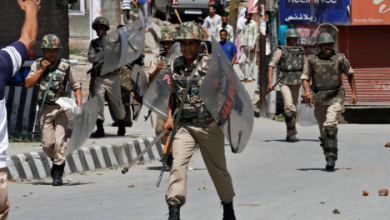
India’s constitutional promise rests on equality before the law, freedom of religion, and protection against discrimination. Articles 14 and 15 guarantee equality and prohibit specified forms of discrimination, while Articles 25–30 protect religious freedom and minority cultural and educational rights. Yet constitutional guarantees have lost their practical value when social hostility, political rhetoric, or discriminatory administration creates an environment in which vulnerable communities feel less secure. The Citizenship Amendment Act and debates surrounding citizenship verification have generated particular concerns among Muslims about the relationship between religious identity and citizenship. The abrogation of Jammu and Kashmir’s special constitutional status in August 2019 has also intensified disputes over federalism, political representation, civil liberties, and the rights of Kashmiris. These developments must be assessed through evidence, applicable law, and the experiences of affected communities. Nevertheless, a democratic state cannot dismiss minority concerns simply because the governing party commands an electoral majority.
The treatment of minorities is not a peripheral test of democracy; it is one of its most important measures. A political system demonstrates its democratic maturity not by how comfortably the majority exercises power, but by how effectively it protects those who lack the numbers to defend themselves through elections alone. The rights of minorities are not concessions granted by a government; they are constitutional guarantees that remain binding regardless of which party wins an election. Where these guarantees are weakened in practice, the credibility of democratic institutions inevitably suffers.
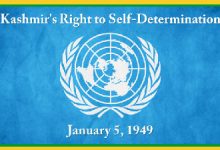
Kashmir presents an especially significant challenge to India’s democratic credentials. The democratic aspirations of Kashmiris cannot be reduced to electoral participation within existing political arrangements, because the territory’s disputed status and the question of self-determination remain unresolved. The dispute has a long history within the United Nations, including Security Council resolutions addressing its future. For Kashmiris advocating self-determination, the central question is not merely who represents them in an assembly, but whether their political aspirations and internationally recognised rights will receive meaningful consideration.
The restoration of electoral activity in occupied Jammu and Kashmir cannot, by itself, settle the broader dispute or replace meaningful political freedoms. The conduct of elections must be considered alongside the restoration of statehood, institutional autonomy, civil liberties, and the ability of people to express political dissent without fear. Elections may provide representative government, but they do not automatically resolve questions of self-determination, accountability, or the political status of a disputed territory. Nor should national security become a blanket justification for treating political dissent as inherently illegitimate. India’s international democratic standing will therefore depend not only on the conduct of elections but also on its willingness to address Kashmir’s political grievances through lawful, peaceful, and rights-respecting processes.
The danger confronting India is that democracy may gradually become a mechanism through which majoritarian power legitimises itself rather than a constitutional framework that restrains power. This transformation rarely requires the immediate abolition of elections. It can occur incrementally through weakened oversight institutions, diminished accountability, polarising electoral campaigns, pressure on independent voices, and the normalisation of unequal citizenship. A country can continue to hold elections while the institutions that make those elections genuinely free and fair steadily lose their independence. The survival of the ballot box, therefore, cannot be the sole measure of democratic health.
The remedy lies in strengthening independent institutions, ensuring transparent electoral procedures, protecting the rights of religious minorities, safeguarding press freedom, and preserving judicial independence. Allegations of electoral manipulation must be investigated impartially, with transparent evidence and effective remedies for citizens whose voting rights have been denied. Election officials must be able to discharge their responsibilities without political pressure, while governments must accept that accountability is not an attack on authority but a condition of democratic legitimacy. Equally, political parties must recognise that winning an election confers the responsibility to govern all citizens, not an exclusive right to define the nation in the image of the majority.
Ultimately, democracy cannot be measured solely by the size of an electoral majority. It must also be measured by the integrity of the process that produces that majority and the constitutional limits governing its exercise of power. India’s democratic future depends on a fundamental choice: whether it will remain a pluralistic constitutional republic in which every citizen enjoys equal dignity, or move towards a majoritarian order in which elections provide political legitimacy while minorities bear the cost. The ballot box is an instrument of democratic freedom only when every eligible citizen has a fair opportunity to use it and every citizen’s rights remain protected after the votes are counted.
Democracy is not the privilege of the majority to rule without restraint; it is the collective right of all citizens to live with dignity, equality, and freedom. When the India begins choosing which citizens deserve a voice, democracy is no longer merely in distress—it is in danger of becoming an instrument of its own undoing.