AIMIM chief Owaisi moves Indian Supreme Court against electoral roll revision
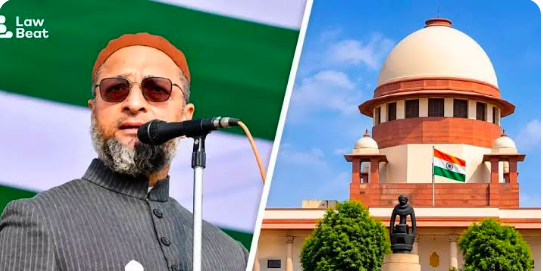 New Delhi: All India Majlis-e-Ittehadul Muslimeen (AIMIM) chief Asaduddin Owaisi has approached the Indian Supreme Court challenging the manner in which the Special Intensive Revision (SIR) of electoral rolls is being conducted, adding to mounting legal challenges to the Election Commission of India’s exercise.
Advocate Nizamuddin Pasha mentioned the petition before a bench comprising Chief Justice of India (CJI) Surya Kant and Justice Joymalya Bagchi on Wednesday, seeking its listing alongside similar petitions scheduled to be heard on Thursday.
The CJI said the court would consider the request to list the petition alongside the connected matters.
Legal challenges mount
Owaisi’s petition is the latest in a series of legal challenges to the Election Commission of India’s SIR exercise, which has drawn criticism over the revision of electoral rolls and concerns about the deletion of eligible voters’ names.


His move comes after Congress leader Rahul Gandhi and other opposition leaders approached the Supreme Court challenging the exercise.
A petition filed by Rahul Gandhi and 10 other opposition leaders seeks a halt to the SIR process and challenges what they describe as unilateral decisions by the Election Commission.
Several other petitions concerning the revision process and the deletion of voters’ names are also pending before the Supreme Court, which has agreed to hear a batch of related matters together.
Separately, Advocate Prashant Bhushan mentioned an application concerning the SIR exercise in Delhi and the requirement for voters whose names had been deleted to submit Form 6, which is used to apply for inclusion in the electoral rolls. The hearing of that application was advanced to October 28.
What is the SIR?
The Special Intensive Revision is an electoral roll verification exercise conducted by the Election Commission of India to update voter lists through intensive verification.
The exercise has faced legal challenges over the documents required for verification, the pace of the process and concerns about eligible voters being excluded from electoral rolls.
The Supreme Court of India has heard challenges to the exercise since it was introduced in Bihar in 2025. Subsequent phases covering other Indian states and Union Territories have prompted further petitions.