Has Modi’s Downfall Begun? (Part I)
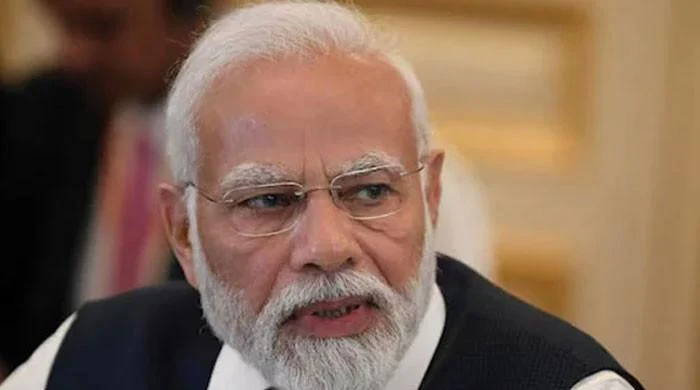 Electoral controversy, democratic backsliding, majoritarian politics and unresolved conflicts are testing the foundations of Narendra Modi’s political dominance.
Humayun Aziz Sandeela
Narendra Modi built his political authority on a compelling promise: that a strong leader, a muscular Hindu-nationalist identity and a rapidly growing economy would transform India into a formidable global power. For years, this combination helped the Bharatiya Janata Party (BJP) consolidate its electoral position and project Modi as the indispensable architect of a new India. Political rallies, religious symbolism and nationalist messaging reinforced the image of a leader capable of delivering decisive government and national resurgence.
But political dominance can conceal vulnerabilities that become visible only when public grievances begin to converge. Behind the spectacle of power, questions are mounting over electoral integrity, minority rights, economic opportunity and the independence of democratic institutions. The problem for Modi is not that every controversy necessarily threatens his government. It is that, taken together, these controversies are testing the credibility of the promises on which his political appeal rests.

The evidence does not establish that Modi’s downfall is inevitable. It does, however, point to growing pressures on his political model. India’s democracy is being tested not by one isolated dispute, but by the convergence of institutional distrust, public mobilisation and unresolved social grievances. The controversy surrounding the revision of electoral rolls has brought these tensions into particularly sharp focus.
The voter-roll controversy strikes at democracy’s foundations
The removal of approximately 130 million names from India’s electoral rolls through the Special Intensive Revision (SIR) has become a major political flashpoint. Reuters reported on October 13, 2026, that opposition parties and youth-led activists were protesting the exercise, arguing that it risked excluding eligible voters, particularly among poor, elderly, migrant and nomadic communities. The Election Commission maintains that the revision is intended to remove deceased, duplicate and ineligible entries. The scale of the deletions and the dispute over their consequences have prompted demands for greater transparency and effective safeguards for legitimate voters.
For an ordinary citizen, the issue is painfully simple: what happens when a person who has voted for years discovers that their name is missing from the electoral roll? What recourse does an elderly voter have, or a migrant worker who cannot easily return to their place of registration, if an administrative decision threatens their right to participate in an election?
These are not merely technical questions for election officials. They go to the heart of democratic citizenship. An election cannot command public confidence simply because ballots are cast and results announced. Voters must also trust that the system has not arbitrarily excluded eligible citizens and that anyone whose name is wrongly removed can have it restored without prohibitive delays or obstacles.
The BJP government and the Election Commission face an important distinction here. A revision of electoral rolls can be legitimate and necessary. Removing duplicate or invalid entries is not, by itself, evidence of manipulation. But the larger the exercise, the greater the obligation to demonstrate that it is accurate, transparent and open to independent scrutiny. Allegations of wrongful exclusion cannot be settled merely by repeating the stated purpose of the revision.
The political consequences are already visible. Opposition parties have demanded accountability, while the youth-led Cockroach Janta Party and other activists have helped turn the controversy into a wider public mobilisation. The response of the authorities has added another layer of concern, with protests, detentions and restrictions intensifying questions about the space available for peaceful dissent.
The SIR controversy does not, on its own, prove deliberate electoral manipulation. But a dispute involving millions of potentially affected voters cannot be brushed aside as routine political opposition. If the process is fair, transparent evidence and accessible appeals should help establish that fact. If legitimate voters have been wrongly excluded, they must be given an effective remedy. The credibility of future elections depends on the public being able to trust that the right to vote is protected regardless of political affiliation, religious identity or economic circumstances.
Democracy under an international stress test
Concerns about India’s democratic trajectory extend beyond its domestic political opposition. Freedom House’s Freedom in the World 2026 report assigned India 62 out of 100 and classified it as “Partly Free”, down from 63 in the previous edition. Its assessment raised concerns about discriminatory policies affecting Muslims, pressure on journalists and nongovernmental organisations, and the use of state institutions against political opponents. Freedom House also assessed Indian illegally occupied Jammu and Kashmir (IIOJK) separately, giving the territory a score of 38 out of 100.
These ratings are assessments by an independent research organisation, not judicial findings, and their methodology can be debated. Nevertheless, they provide an international measure of concerns about political rights and civil liberties that deserve substantive engagement rather than reflexive dismissal.
The deeper issue is the difference between possessing democratic institutions and ensuring that they function independently. Elections, courts, legislatures and constitutional guarantees are essential, but their existence alone does not settle questions about democratic health. Opposition parties must be able to compete meaningfully. Journalists must be able to investigate those in power. Civil society organisations must be able to scrutinise public policy. Citizens must be able to challenge government decisions without fearing arbitrary punishment.
A government may win an election and still face legitimate questions about how power is exercised between elections. A parliamentary majority grants authority to govern; it does not remove the obligation to protect the rights of those who voted against the winner.
This distinction matters particularly in India, where the BJP has enjoyed substantial political influence and Modi has cultivated an image of decisive leadership. The stronger a government becomes, the greater its responsibility to demonstrate that institutions are not merely instruments of the ruling party. Public confidence depends on whether the rules are applied impartially, including when the outcome is inconvenient for those in power.
The question is not whether India should be judged by an international ranking alone. It should not. The more important question is whether concerns about institutional independence, civil liberties and political competition are being addressed through credible reforms. Dismissing criticism without confronting the underlying evidence risks deepening the very distrust the government needs to overcome.
Hindutva and the cost of majoritarian politics
The BJP’s political model has relied heavily on Hindu-nationalist mobilisation. Its supporters regard Hindutva as an expression of civilisational pride and national identity. Critics argue that, under Modi, the boundary between Hindu cultural identity and Indian citizenship has become increasingly contested, leaving religious minorities concerned about their place in the national community.
The consequences are visible in controversies surrounding the Citizenship Amendment Act, anti-conversion legislation, demolitions described by critics as “bulldozer justice” and inflammatory rhetoric directed at Muslims and Christians. The government and its supporters reject allegations that the BJP’s policies are designed to discriminate against minorities, arguing that its laws and programmes serve national security, public order or broader development objectives.
Yet the cumulative effect of these policies and controversies cannot be assessed solely through official explanations. It must also be measured against the constitutional promise of equal citizenship. For a Muslim family facing threats, a Christian community concerned about restrictions on religious practice or a citizen whose home has been demolished without a process they consider fair, abstract assurances of national unity offer little comfort.
The India Hate Lab documented 1,318 in-person hate-speech events targeting religious minorities in 2025, a 13 per cent increase from 2024. Of these, 1,289, or approximately 98 per cent, targeted Muslims, either directly or alongside Christians. The organisation recorded incidents across 21 states, one union territory and the National Capital Territory of Delhi. Reuters reported the findings on January 13, 2026. The BJP has rejected allegations of discriminatory intent and has previously challenged the organisation’s conclusions as biased.
These figures represent incidents documented by the research organisation, not a census of every hate-speech event in India. Even with that limitation, the increase raises serious questions about the normalisation of religiously charged rhetoric in public life.
A political system that repeatedly mobilises citizens through religious antagonism risks making division a permanent feature of public debate. It can also create an environment in which targeting minorities becomes politically advantageous, while appeals for restraint are portrayed as weakness or appeasement.
The cost extends beyond minority communities. India’s national strength depends on the confidence of citizens who differ in religion, language, ethnicity and political belief. When people begin to suspect that their rights or belonging depend on their identity, the promise of unity becomes increasingly difficult to sustain. A government that seeks to project India as a global power must also demonstrate that equal citizenship is more than a slogan.
Manipur exposes the limits of nationalist rhetoric
The continuing consequences of the ethnic conflict in Manipur provide another severe test of the government’s claims about national cohesion. Violence involving Hindu-dominated Meitei and Christian-dominated Kuki-Zo communities since 2023 has caused deaths, displacement, destruction of homes and places of worship, and prolonged insecurity. The conflict has left communities divided by fear and mistrust, with many families facing uncertainty about whether they can safely return to their homes.
The situation remains fragile. The Indian Express reported on October 11, 2026, that at least nine people had been killed and around 14 houses set ablaze in a fresh outbreak of violence in Manipur’s hill districts over a period of approximately 24 hours. Prime Minister Modi assured the state government of assistance in restoring peace and normalcy.
For the people living through the conflict, national unity is not an abstract political slogan. It means being able to sleep without fear of gunfire, return to a village without fearing attack, rebuild a destroyed home and send children to school without uncertainty about their safety. The loss of security, livelihoods and community ties cannot be reversed through speeches alone.
Manipur is not merely a law-and-order problem. It is a test of whether the state can protect citizens across ethnic lines, restore confidence in public institutions and pursue a credible path towards reconciliation. Security operations may be necessary, but lasting peace requires political dialogue, accountability, rehabilitation and a willingness to address the grievances that sustain the conflict.
The central government’s responsibility is not limited to announcing security measures or promising development. It must demonstrate that protection does not depend on ethnic identity, political usefulness or proximity to the ruling establishment. Prolonged insecurity and displacement weaken the credibility of claims that a strong central government necessarily produces a stronger and more cohesive nation.
For Modi, the continuing crisis is a reminder that centralised authority cannot guarantee national cohesion on its own. A government may possess the power to deploy security forces and appoint administrators, but it cannot manufacture trust by decree. That requires the harder work of protecting communities, confronting failures and building a political settlement that people can believe in.
Kashmir and the unresolved question of consent
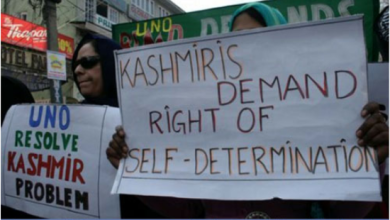
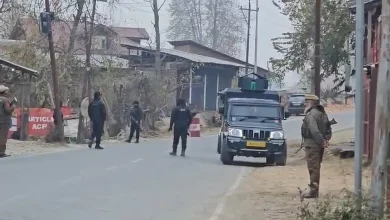
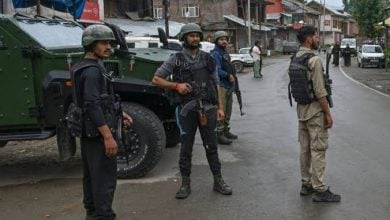
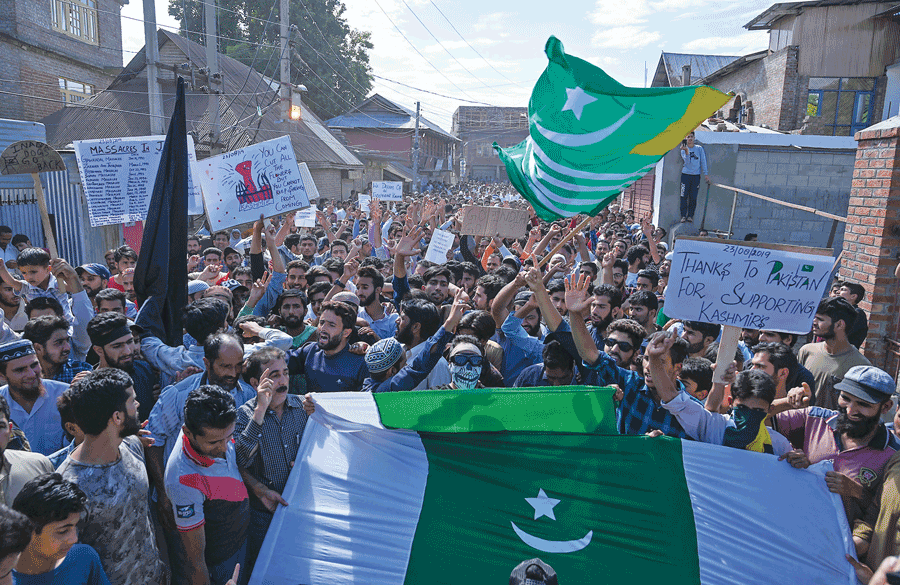
The revocation of IIOJK’s special constitutional status on August 5, 2019, remains another defining controversy of Modi’s tenure. The move was accompanied by extensive communication restrictions, political detentions and the reorganisation of the former state into two union territories. The government defended the changes as necessary for integration, security and development. Critics, including human-rights organisations, argued that the manner in which they were imposed curtailed political freedoms and weakened democratic consent.
Freedom House’s 2026 assessment gave occupied Jammu and Kashmir a score of 38 out of 100 and classified it as “Partly Free”, assessing the territory separately from India. Its report highlights the loss of autonomy following the 2019 changes and continuing concerns about political rights and civil liberties.
The central question is whether administrative integration can substitute for political consent. Roads, investment, public services and elections can all matter to people’s lives. But they cannot, by themselves, settle a dispute over political identity and self-determination. Nor can the absence of large-scale street protests automatically be interpreted as public acceptance where political expression and public assembly face restrictions.
The issue is not whether a government has the legal and administrative capacity to implement major changes. It is whether the resulting political arrangements command the confidence of the people affected by them. Durable legitimacy requires more than the capacity to impose decisions. It requires institutions that are responsive to rights, aspirations and peaceful demands for accountability.
Kashmir illustrates both the reach and the limits of centralised authority. Modi’s government demonstrated its capacity to reshape constitutional arrangements, but the enduring questions surrounding political representation and civil liberties show why administrative control cannot, on its own, resolve a deeper dispute over consent.
These pressures do not automatically translate into electoral defeat for the BJP. They do, however, raise a broader question about the sustainability of a political model that equates centralised power with national strength. If the government wishes to establish that its approach has delivered lasting stability, it must demonstrate not only administrative control but also public confidence and meaningful protection of rights.
The democratic and social challenges confronting Modi therefore cannot be separated from the question of performance. A government that promises national transformation must be judged not only by the authority it exercises, but also by the opportunities it creates, the communities it protects and the confidence it inspires. That leads to the next test of his political model: whether economic growth has delivered the security and opportunity promised to ordinary Indians.
To be continued…