Signs of BJP govt’s decline emerge as protests intensify in India
Minority concerns, unemployment, economic inequality and electoral disputes mount pressure on Modi govt
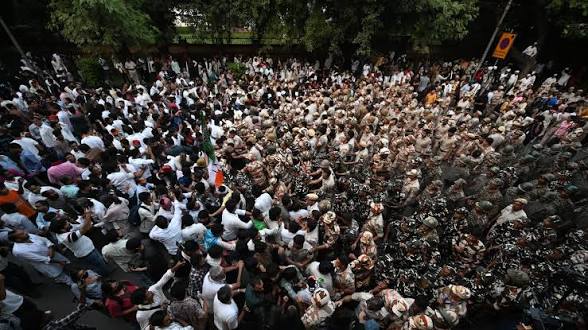
Islamabad : The BJP’s political dominance in India is showing signs of decline as protests, social grievances and discontent intensify among marginalized ethnic and religious minorities, young people and economically disadvantaged sections of society over the party’s Hindutva-driven governance.
According to Kashmir Media Service, India’s claim to being the world’s largest democracy, founded on secular and constitutional principles, is increasingly being questioned amid concerns over the state of democratic institutions, minority rights and civil liberties. Since Narendra Modi came to power in 2014, his government has eroded India’s democratic and secular traditions, while Muslims and other minorities have reported growing discrimination, insecurity and marginalization.
Indian intellectuals, political observers and opposition leaders have increasingly questioned whether a political system rooted in Hindu nationalism and religious majoritarianism can sustain national unity amid mounting grievances over political representation, economic opportunities, equal rights and civil liberties. Discrimination against minorities, youth unemployment and economic inequality remain among the major challenges confronting the Modi government. Critics argue that these pressures could weaken the BJP’s political standing and intensify demands for accountability. The emergence of the youth-led Cockroach Janata Party (CJP) has now emerged as a major challenge to the BJP.


The BJP government has faced sustained criticism over its Hindutva-driven politics, authoritarian governance and close ties with powerful business interests, developments that critics say have damaged India’s democratic image.
According to figures cited from V-Dem, India ranks 106th on the Electoral Democracy Index, with a reported score of 38, while Freedom House has awarded the country 62 out of 100. These assessments have fuelled debate over the quality of democratic freedoms, electoral fairness and institutional independence in India.
Questions about the influence of corporate power over policymaking have also attracted attention. During a regulatory dispute involving Starlink, Elon Musk reportedly questioned the influence of billionaire businessman Mukesh Ambani over India’s political and economic system, prompting renewed debate about the relationship between political power, state policies and wealthy business interests.
Electoral transparency has emerged as another major point of contention. The Special Intensive Revision (SIR) of electoral rolls has sparked controversy over the removal of large numbers of voter names, with claims citing figures ranging from 133 million to 134 million. More than 71 per cent of those reportedly affected were classified as absent or having shifted residence. The exercise has prompted protests by opposition parties, including the INDIA bloc, along with youth-led groups and other organizations. Police crackdowns and the detention of political opponents during demonstrations have further intensified concerns over civil liberties and the right to dissent.
According to data from the Armed Conflict Location and Event Data (ACLED) project, 20,606 protests were recorded in 2025 and another 18,074 by September 2026. These figures point to growing public discontent in the so-called world’s largest democracy.
In Indian illegally occupied Jammu and Kashmir (IIOJK), the unilateral abrogation of Article 370 in August 2019 was followed by sweeping restrictions, communication shutdowns and tighter controls on political activity and freedom of expression. The continued deployment of large numbers of Indian troops and restrictions on civil liberties have kept the rights and political aspirations of the Kashmiri people at the centre of international debate.
Concerns over the treatment of religious and ethnic minorities have also persisted across India. Critics have pointed to the Citizenship Amendment Act (CAA), demolitions of Muslim homes and religious structures, and the ethnic violence in Manipur as examples of growing communal tensions and political polarization.
The human cost of the Manipur violence has been severe, with reported estimates indicating that between 260 and 306 people were killed, around 60,000 displaced and more than 360 churches destroyed. The violence has raised serious questions about the protection of vulnerable communities and the authorities’ response to ethnic conflict.
Reports also indicated that hate incidents targeting minorities reached 1,318 in 2025, with Muslims reportedly targeted in 98 per cent of the cases. These figures have intensified concerns about religious intolerance, communal violence and the ability of minority communities to exercise their rights safely.
Economic pressures add to the government’s challenges. Claims that youth unemployment reached 16.2 per cent by mid-2026 have highlighted concerns over job creation, economic opportunity and the prospects facing India’s younger generation.
When public confidence in democratic institutions erodes, minority communities feel increasingly vulnerable, economic opportunities remain out of reach and political and economic power appears concentrated among a small elite, governments face growing pressure to address public grievances. India’s deepening social and political divisions have therefore raised questions about the long-term sustainability of the BJP’s political dominance.
The central question is whether the Modi government can respond effectively to these political, economic and social challenges or whether mounting discontent will translate into a significant electoral setback, bringing an end to saffron party’s political dominance.
The June 2024 general election demonstrated that the BJP could no longer secure a parliamentary majority on its own. Although it emerged as the largest party, winning 240 seats in the Lok Sabha, it relied on its National Democratic Alliance (NDA) partners to form the government, enabling Modi to begin his third consecutive term as prime minister.
Since then, allegations of electoral irregularities, controversy over the SIR process and criticism of the Election Commission have continued to feature in opposition campaigns.
Despite allegations of collusion with the Election Commission and controversy surrounding the Special Intensive Revision (SIR) of electoral rolls, the BJP managed to form governments in West Bengal and several other states.
However, the growing mobilization of students, young people and civil society groups, alongside renewed efforts by the Congress and other opposition parties to challenge the BJP, could shape the political landscape ahead of the 2029 general election. Whether these developments translate into an electoral defeat for Modi will depend on the opposition’s ability to build a united political alternative, address voters’ concerns and convert public discontent into electoral support.