National debate calls for administrative reforms in Pakistan
Devolution, stronger local governments, constitutional consensus stressed
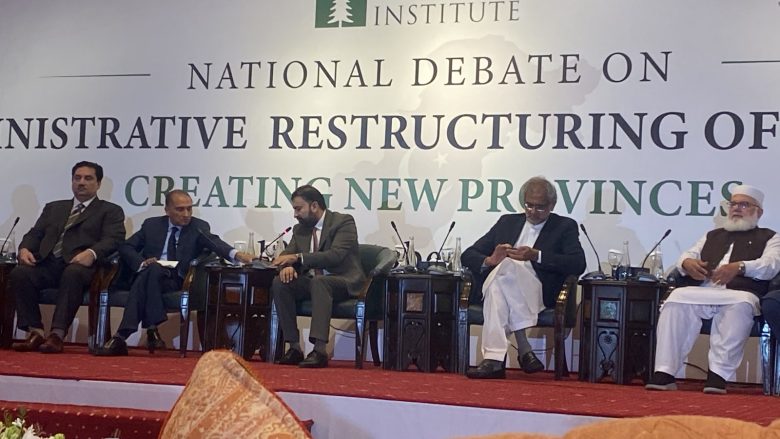
Islamabad: Political leaders and policy experts have called for reforms to improve governance across Pakistan. They discussed creating smaller administrative units and empowering local governments.
The debate titled “National Debate on Administrative Restructuring of Pakistan – Creating New Provinces” brought together political representatives, government officials and civil society members.
The event was held at Serena Hotel, Islamabad on Monday.


Participants examined options for improving public service delivery and strengthening administrative efficiency.
Balochistan Chief Minister Mir Sarfraz Bugti highlighted the province’s vast geographical expanse and persistent administrative challenges. He said governing the entire province effectively from Quetta was difficult. Remote areas face long distances and limited access to healthcare and other basic facilities. He supported creating new provinces or administrative units on administrative grounds, rather than ethnic or linguistic lines. He argued that smaller units could bring government closer to people and improve service delivery.
Former federal minister Asad Umar identified excessive centralisation and declining public trust as major governance challenges. He stressed the need to bring people into the system and involve them meaningfully in making it successful. He stressed that no administrative system can deliver lasting results without involving citizens, highlighting the importance of empowered local governments, grassroots democracy and people-centered reforms.
Former federal minister Khurram Dastgir Khan stressed that political consensus must be developed before undertaking major administrative restructuring. He said creating new provinces or administrative units required consultation among political parties and other stakeholders. He emphasised that reforms should follow constitutional procedures and address public needs.
Other participants called for constitutional compliance, political consensus and careful financial assessments. They stressed that proposed administrative changes must remain economically sustainable.
Several speakers also advocated stronger local governments and greater fiscal devolution. They argued that citizens needed easier access to public services and responsive institutions.
The debate also highlighted concerns about centralisation and declining public trust. Participants urged political stakeholders to develop a consensus-based reform agenda.
The discussions underscored the need to assess administrative restructuring alongside constitutional, financial and governance reforms