Modi govt’s ‘Viksit Bharat’ chants hollow as Manipur burns
New Delhi: While the Indian government continues to promote the vision of a developed India, Viksit Bharat by 2047, Manipur remains trapped in multi-front ethnic bloodshed that has already claimed 306 lives and left 49 people missing, with the state’s administrative writ visibly collapsing under the weight of ongoing violence and a frozen census exercise.
According to Kashmir Media Service, these figures were shared by Manipur Home Minister Govindas Konthoujam in the state Assembly in early September 2026, covering the period from the outbreak of violence on 3 May 2023 up to 31 August 2026. The conflict, which began between Meitei and Kuki-Zo communities, has since expanded into fresh rounds of killings involving Naga groups as well.
Independent conflict tracker ACLED has documented nearly 50 civilian fatalities from Naga-Kuki clashes alone since February 2026. The bloodshed continued into late 2026. On 9–10 October, eight people from Kuki and Naga communities were killed in Kamjong and Kangpokpi districts. On 19 October, three Meitei villagers died in an ambush near the Imphal East–Kangpokpi border. In early November, five more Kuki men were killed in Noney and Kangpokpi districts.
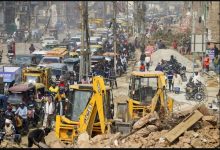
More than 60,000 people remain displaced, many still living in relief camps more than three years after the violence began. Roughly 30,000 security personnel have been deployed, yet they have failed to restore lasting order. President’s Rule was imposed in February 2025 after the previous state government collapsed under the weight of the crisis and was lifted in February 2026. The new BJP-led government continues to confront armed militias, abductions, arson and parallel ethnic authorities across both hill and valley districts.
Buffer zones, movement restrictions and repeated demands for additional forces have not concealed the reality: the state’s writ has visibly collapsed. Ethnic militias exercise effective control in large parts of the hills and valleys, rendering official authority nominal in many areas.
The depth of the breakdown was underscored on 4 November 2026, when the Manipur High Court directed that the census exercise remain on hold until 30 April 2027. The court cited demographic upheaval caused by the conflict, large-scale displacement, abandoned houses, alleged illegal settlements and distorted population records, as reasons why a reliable count is currently impossible. Petitioners had also sought fresh delimitation in light of the changed realities on the ground.
National slogans of a developed, unified India ring hollow when one northeastern state remains locked in multi-front ethnic violence more than 40 months after the original Meitei-Kuki eruption and cannot even conduct a basic population census. The contrast between the polished rhetoric of Viksit Bharat in the capital and the continuing bloodshed, displacement and administrative paralysis in Manipur exposes a profound failure of governance and the limits of centralised political messaging when confronted with deep-rooted ethnic conflict