Economist Jayati Ghosh warns of ‘inequality emergency’ in India, says disparity worse than colonial era
Over one lakh workers to march to Parliament on December 1, demanding taxes on super-rich and better labour rights
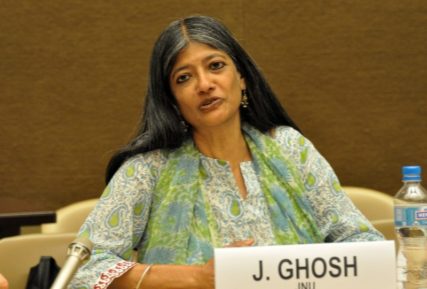
New Delhi: Eminent Indian economist Jayati Ghosh has warned that India is facing an “inequality emergency”, saying that economic disparity in the country has worsened beyond levels witnessed during the colonial period.
According to Kashmir Media Service, Ghosh made the remarks at a press conference at the Press Club of India in New Delhi, jointly addressed by leaders of the Centre of Indian Trade Unions (CITU), who announced a Workers’ March to Indian Parliament on December 1.
Over one lakh workers, including over 50,000 women, are expected to participate in the march to demand a universal pension of Rs 21,000, a minimum wage of Rs 42,000, taxation of the super-rich and other labour-related rights.
The press conference, chaired by CITU national president Sudip Dutta, highlighted the broader political, social and economic context of workers’ struggles and protests. CITU general secretary Elamaram Kareem and national secretary A.R. Sindhu also outlined the demands and objectives of the proposed march.


India’s deepening inequality
Ghosh, a former professor at the Centre for Economic Studies and Planning (CESP), Jawaharlal Nehru University (JNU), expressed support for the march, describing it as a historic occasion amid what she termed an “inequality emergency”. She said the country’s most pressing challenges included inadequate and poor-quality employment and the failure to ensure access to basic necessities for all.
“We are seeing a significant decline in real wages,” she said, calling for the restoration of public wealth. Citing studies, she said economic inequality in India had surpassed levels recorded during the colonial era. Referring to examples from Colombia and Brazil, she advocated wealth and inheritance taxes on the super-rich as initial measures to address the growing inequality.
Workers key demands
CITU general secretary and former MP Elamaram Kareem said workers would demand repeal of the four Labour Codes, restoration of the Mahatma Gandhi National Rural Employment Guarantee Act (MGNREGA), and recognition of workers employed under the scheme with all their entitlements. The demands also include a minimum wage of Rs 42,000, a minimum monthly family income of Rs 42,000 for self-employed workers and a universal pension of Rs 21,000.
Kareem further called for filling vacant posts in the public sector, regularisation of contract workers, enforcement of workplace safety standards and an end to the criminalisation of trade union activities and strikes. He also called for an end to land grabbing and guarantees of rehabilitation, resettlement and employment.
CITU leaders also demanded the scrapping of the Special Intensive Revision (SIR) of electoral rolls and the resignation of Chief Election Commissioner Gyanesh Kumar.
Intellectuals back workers’ march
Meanwhile, more than 100 intellectuals and academics, including former vice-chancellors, scientists, filmmakers, writers and rights activists, expressed solidarity with the Workers’ March to Parliament. A joint statement supporting the march was also released at the press conference.
“The underlying thread of all these protests is the ever-deteriorating living and working conditions of working people, and hopelessness among the young generation. They are realising that the Modi government’s policies are not geared to improving the lives of the people, but only to boost the profits of a handful of obscenely wealthy elites, and that the government uses brutal authoritarian crackdowns, divisive hate propaganda, a subservient media and even an attack on citizenship to dismantle the struggle against these policies,” the statement said.
Media silence on workers’ struggles
The signatories also criticised sections of the mainstream media for neglecting workers’ hardships and failing to adequately cover their protests, thereby depriving their struggles of public attention.
“How can workers be expected to keep the wheels of the economy moving without securing their basic right to life, a sustaining livelihood, and not just an ever endangered survival?” the statement asked.