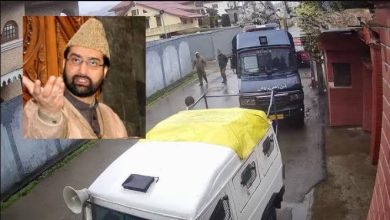
Vande Mataram row: Police action against Maulana Qasmi sparks widespread criticism in IIOJK
Mirwaiz, Mehbooba, Ruhullah and religious scholars condemn action, question pressure on religious voices
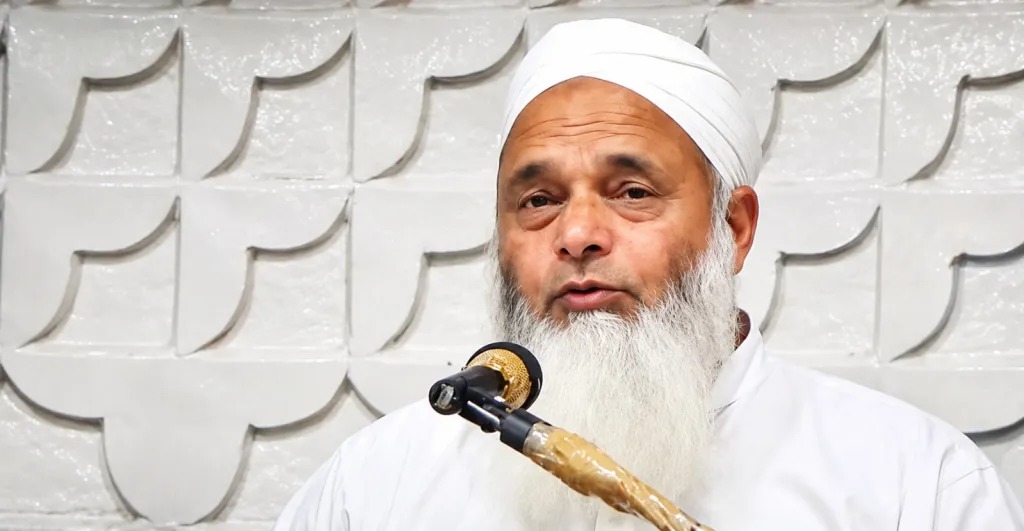
Srinagar : In Indian illegally occupied Jammu and Kashmir (IIOJK), the summoning of prominent Islamic scholar Maulana Rahmatullah Mir Qasmi by Indian police over objections to the playing of Vande Mataram at a Waqf Board function in Srinagar has triggered widespread criticism from religious leaders and political figures in the territory.
According to Kashmir Media Service, Qasmi, rector of Darul Uloom Raheemiya, one of Kashmir’s largest Islamic seminaries in Bandipora, was summoned by Indian police following objections raised by Muslim religious organisations and scholars to the rendition of the Indian national song at the event.
Mirwaiz questions pressure on religious voices
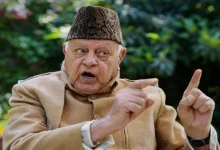
Senior APHC leader Mirwaiz Umar Farooq expressed concern over the police action, saying Qasmi had been summoned to a police station and reprimanded a day earlier. He questioned whether religious leaders could express concerns about matters affecting their faith without facing administrative pressure, stressing that coercion in religious matters was unacceptable.
Islamic scholar Mufti Shama’il Nadwi also voiced support for Qasmi, praising him for speaking against attempts to normalise Vande Mataram and promote its compulsory recitation. He called on religious scholars to defend Islamic beliefs and Muslims’ right to practise their faith freely, emphasising the principle of Tawheed, or the oneness of God.
Political leaders condemn police action
Peoples Democratic Party (PDP) president Mehbooba Mufti described the summoning as an attempt to intimidate religious voices for expressing disagreement. “Is expressing disagreement now a crime? Has freedom of conscience and expression become conditional on agreeing with those in power?” she asked. She said a scholar of Qasmi’s stature and age deserved dignity rather than harassment for expressing his views.
Former Indian parliament member from Srinagar Agha Syed Ruhullah Mehdi also condemned the action, calling it deplorable and demanding that police explain the legal basis for summoning the scholar. He said the action followed objections raised by the Muttahida Majlis-e-Ulema (MMU) to the inclusion of Vande Mataram at the Waqf Board function. Describing the harassment of a respected religious scholar as a red line, he sought an immediate explanation from the police.
Vande Mataram played at Waqf Board event
The controversy erupted on November 23 when Vande Mataram was played at a function organised by the IIOJK Waqf Board at the University of Agricultural Sciences and Technology in Srinagar. The event was organised by Waqf Board chairperson and BJP leader Darakhshan Andrabi and attended by Indian Minority Affairs Minister Kiren Rijiju, along with political leaders and religious figures.
Videos showing Muslim clerics standing during the rendition subsequently circulated on social media, drawing criticism from the Muslim community. On November 25, several clerics who had attended the event issued a video statement expressing regret and seeking Allah’s forgiveness for their participation.
MMU reaffirms Islamic belief of Tawheed
The incident prompted the MMU, an umbrella body of Islamic religious institutions and schools of thought in IIOJK led by Mirwaiz Umar Farooq, to condemn the inclusion of the song. The organisation said, “Any expression or practice that attributes divinity to the motherland is contrary to the fundamental Islamic belief of Tawheed.”
The MMU also questioned the playing of Vande Mataram at an event organised by the Waqf Board, whose responsibility is to safeguard Muslim religious endowments and their sanctity. It said the move had hurt the religious sentiments of Kashmiri Muslims and voiced concern over the increasingly routine inclusion of the song at official functions in the Muslim-majority territory.