Restoring Normalcy in Azad Kashmir: Rejecting Disruption for the Sake of the People
Abdul Samad
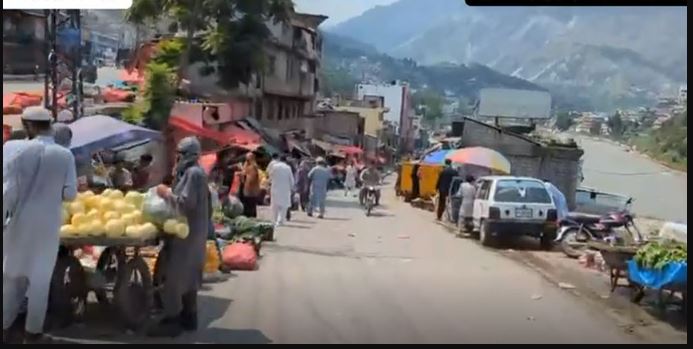
The recent turmoil in Azad Jammu and Kashmir has tested the resilience of its people. With the Joint Action Committee declared outlawed and effectively sidelined, the region is witnessing a gradual return to normalcy. Life in most districts has resumed its rhythm, elections are moving forward despite restrictions under Section 144, and ordinary citizens are once again prioritizing daily existence over prolonged street agitation. Yet the episode leaves important lessons about leadership, external interference, and the true cost of unrest.
Prolonged demonstrations and protests, while rooted in grievances, have disproportionately burdened common Kashmiris. Markets stayed shuttered, schools closed, and essential services were disrupted for days. Families already facing economic pressures found themselves further strained by lost wages and rising prices of basic commodities. The sight of one leader delivering fiery speeches from the stage while another simultaneously appealed for dialogue exposed a lack of coherence within the Joint Action Committee. This inconsistency undermined public trust and prolonged uncertainty. More damaging was the committee’s own decision to walk out of an ongoing dialogue process, an action that shifted responsibility for the breakdown away from the authorities and onto the protest organizers themselves.

The human cost has been tragic. The loss of lives among both civilians and security personnel during the unrest remains deeply regrettable. Government forces exercised notable restraint for over a week and a half, avoiding escalation even as tensions rose. Such measured conduct deserves recognition, especially when contrasted with the visible suffering inflicted on the very population the protests claimed to champion. In Rawalakot, where normalcy has lagged behind other districts, the lingering effects of roadblocks and sporadic clashes continue to hinder recovery, underscoring how localized resistance can delay collective healing.
Equally concerning is the emerging realization that the Joint Action Committee was penetrated by elements pursuing agendas unrelated to local welfare. Malicious and factually dubious narratives were injected into the movement, steering it toward outcomes that served third-party interests rather than the people of Azad Kashmir. Civil society and ordinary citizens have begun to recognize this pattern. When a movement’s internal contradictions become this visible—fiery rhetoric paired with contradictory calls for talks, followed by withdrawal from negotiations—the public rightly questions whose interests are truly being served. Historical precedents in the region show that externally influenced agitations often fracture communities without delivering sustainable gains.
Against this backdrop, the resumption of the electoral process stands as a constructive development. Thousands of citizens accompanied candidates to file nomination papers across districts, demonstrating that political participation remains the preferred channel for change. That this occurred despite Section 144 restrictions underscores the determination of both candidates and voters to uphold democratic mechanisms. The exception of Rawalakot highlights localized pockets of resistance, yet even there the broader trend points toward stabilization. Elections offer a structured avenue to address grievances through representation rather than through indefinite shutdowns that erode public confidence.
Azad Kashmir’s people have historically valued stability and incremental progress over imported slogans or disruptive experiments. When external actors or hidden interests attempt to hijack local platforms, the result is rarely empowerment and often prolonged hardship. The current moment offers an opportunity to reaffirm that governance and welfare are best advanced through institutions, elections, and dialogue rather than indefinite shutdowns. Economic indicators already reflect the benefits of returning normalcy, with reopened shops and resumed transport services easing daily burdens on households.
Moving forward, all stakeholders must prioritize de-escalation. Outlawed groups that have lost public legitimacy should not be permitted to derail the return to routine. At the same time, legitimate grievances deserve structured channels for redress rather than being allowed to fester into cycles of protest and crackdown. The government’s demonstrated restraint provides a foundation; it must now be matched by responsible behavior from political actors who genuinely seek the region’s betterment. Civil society organizations can play a vital role in fostering community-level reconciliation and monitoring any resurgence of divisive tactics.
Ultimately, the people of Azad Kashmir have made their preference clear by resuming daily life and engaging with the electoral process. They have seen through attempts to prolong disruption under the guise of advocacy. The path ahead lies in rejecting third-party agendas, restoring full normalcy, and focusing collective energy on development, employment, and services that directly improve lives. Only then can the sacrifices of recent weeks translate into lasting stability rather than repeated cycles of unrest. Continued vigilance against infiltration and a commitment to inclusive, constitutional dialogue will ensure that Azad Kashmir emerges stronger and more united.
The writer is AJK based journalist and can be reached at: asamad@gmail.com
Note: The views expressed in this article are solely those of the author and do not necessarily reflect the editorial position of KMS.