The Quiet Catastrophe: Drug Addiction and the Unravelling of IIOJK’s Youth
 Sarah Rasul Taus Banihali
History is often written with the clangour of artillery and the grandeur of overt conflict, yet it is the silent, invisible forces that frequently inflict the deepest wounds. Among these insidious devastations is the steadily mounting epidemic of drug addiction in Indian illegally occupied Jammu and Kashmir (IIOJK)—a catastrophe that creeps quietly into the heart of society, gnawing at the moral, intellectual, and generational fibres ofa people long tempered by endurance.
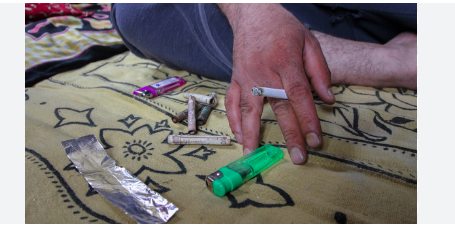
Recent accounts indicate that over a million souls across IIOJK have succumbed to substance dependence, the overwhelming majority being youth. These numbers represent young men and women—scholars, artists, and leaders in waiting—heirs to profound cultural refinement. Their descent into addiction is not merely personal loss; it is collective diminishment, a corrosion of hope dimming the region’s future.
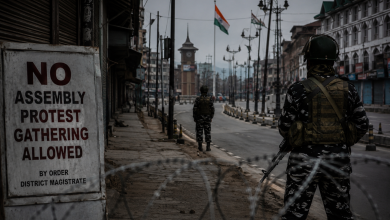
The origins of this crisis are found not in frailty of character but in prolonged exposure to uncertainty, instability, and psychological strain. For decades, occupied Jammu and Kashmir has existed in suspended normalcy, where daily life is shattered by political upheaval, curfews, lockdowns, and intrusive operations. Generations have grown up under surveillance and insecurity, their futures unanchored, their aspirations suspended. These conditions mould consciousness itself.


Yet this epidemic cannot be understood without confronting the sinister designs of the occupying power. There exists evidence of state-sponsored narcotic proliferation—a calculated strategy to ensure that younger generations yearning for rights and resisting occupation remain pacified and incapacitated, unable to mount the resistance that justice demands. Simultaneously, the occupation administration has facilitated the opening of alcohol shops in length and breadth of Kashmir, further corroding the social fabric and diverting young minds from the pursuit of dignity toward artificial oblivion.
Sociological studies reveal the profound effect of protracted conflict upon young minds. Hope, the fuel of human endeavour, becomes fragile. Ambition erodes under the shadow of oppression. In this vacuum, narcotics emerge as counterfeit refuge—an illusory balm for anxieties that refuse to abate. Heroin has proven a predator of consciousness, extinguishing clarity, seducing mind and body into silent captivity. Hospital admissions for heroin-related complications have surged, bearing witness to the epidemic’s silent advance.
Yet consequences extend far beyond the individual. Families—the moral backbone of society in Indian occupied Kashmir—shatter under grief and helplessness. Parents witness children transformed into strangers. Communities, once knit by shared trust, are hollowed by despair. Addiction weakens not only bodies but the threads of solidarity sustaining collective life.
Most grievously, this scourge strikes at continuity of cultural inheritance. Society depends upon youth to carry forward memory and aspiration. When youth are consumed, the chain frays. Voices fall silent; minds remain unrealised. The creative and social capital of Indian occupied Kashmir is quietly eroded, leaving a vacuum whose consequences may be felt for generations.
Worse still, broader forces perpetuating despair cannot be ignored. Generations raised under curfews and humiliating searches endure relentless psychological strain. Depression and helplessness bloom in this harsh soil, driving youth into temporary refuge. Instead of nurturing potential, oppression has forced a generation into silence, despair, and addiction.
The history of Indian illegally occupied Jammu and Kashmir testifies to extraordinary resilience. Its people have endured upheaval with dignity, preserving identity and memory. Its poets have articulated resistance; its scholars have contributed to heritage. Yet addiction is uniquely perilous because it dissolves society from within, eroding the very vitality sustaining life and progress.
This crisis must therefore be addressed not solely as a medical emergency but as a moral and civilisational imperative. Rehabilitation demands restoration of hope, purpose, and opportunity. Youth must receive education leading to meaningful employment and social environments that nurture dignity. Families must reclaim their sacred role as guardians. Silence and stigma must yield to compassion and collective vigilance. Addiction manifests societal wounds demanding healing. Institutions bear profound responsibility; functional rehabilitation centres and education are essential. Neglect of youth imperils society.
The tragedy of addiction in IIOJK is ultimately stolen possibility. Each young life surrendered to narcotics represents a diminished future, a contribution unrealised. Yet within this darkness, renewal remains possible. Human resilience, though tested, is rarely extinguished. The preservation of the future depends upon the preservation of its youth. Their protection is civilisational survival. For in the strength and hope of young people lies the guarantee that a wounded society may yet endure and flourish again.
The Writer is a social commentator focusing on affairs of Indian occupied Kashmir. She can be reached at sarahrasul@gmail.com