Orchard owners face eviction as Delhi intensifies assault on Kashmir’s agricultural economy
#ModisAntiKashmirAgenda
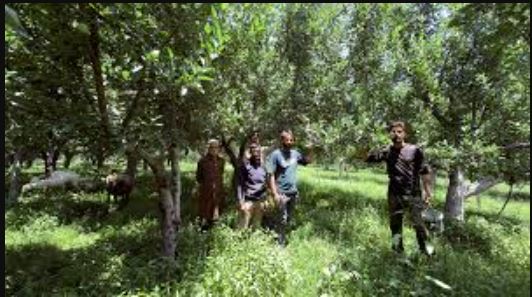
Srinagar: In Indian illegally occupied Jammu and Kashmir, a fresh wave of eviction notices to orchard owners in Shopian and the destruction of hundreds of fruit trees in Kulgam have reinforced concerns that the economic backbone of the Kashmiri people is being systematically targeted through policies and actions that threaten their livelihoods and traditional way of life.
According to Kashmir Media Service, dozens of orchardists in Allowpora and adjoining areas of Shopian district have been served eviction notices directing them to vacate land cultivated by their families for decades. The notices affect nearly 70 families whose livelihoods depend entirely on horticulture.
Farmers say the authorities have threatened legal action, including fines and imprisonment, while providing no assurance of rehabilitation or compensation.


The move has triggered widespread fear among residents, many of whom have invested their life savings in developing apple orchards inherited from their ancestors.
Orchard owners said the land represents not only their source of income but also a family legacy built through generations of hard work. They warned that losing the orchards would push entire families into poverty, unemployment and social distress in a region already facing a high unemployment rate.
The eviction drive comes amid growing resentment over previous land acquisitions in south Kashmir, where thousands of kanals of agricultural land were taken for industrial and infrastructure projects.
Affected residents maintain that many families were left without adequate compensation or rehabilitation, deepening concerns that the latest notices are part of a broader campaign to dispossess local people of their land and economic resources.
Adding to these concerns, unidentified men in plainclothes recently chopped down and uprooted more than 500 high-density apple plants in Hatipora area of Kulgam district, causing losses estimated at over Rs 2.5 million. The orchard had been developed under a modern cultivation model aimed at improving productivity and income. Local residents described the destruction as a direct attack by Hindutva forces on the livelihood of Kashmiri families and a blow to the horticulture sector, which sustains thousands of households across the occupied territory.
Political analysts and civil society members say the incidents reflect a disturbing pattern in which Kashmir’s agricultural economy is increasingly coming under pressure. They note that while orchardists are being threatened with eviction from lands cultivated for generations, valuable fruit plantations are also becoming vulnerable to vandalism and destruction, creating a climate of insecurity among farming communities.
Observers argue that such measures appear aimed at weakening the economic resilience of Kashmiris and eroding their attachment to land that has sustained their communities for generations. KMS-2K