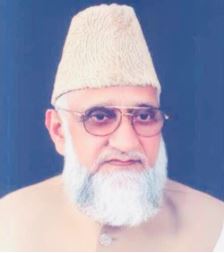
There are many people whom I owe a great deal—my parents, family, teachers, friends and countless others in society who have shaped my values. Yet, if I am asked to name the one man who influenced and nurtured my political beliefs, the answer is unhesitating: Sardar Muhammad Abdul Qayoom Khan, affectionately and historically remembered as Mujahid-e-Awwal—the First Warrior of Kashmir’s freedom struggle. He was not merely a politician; he was a soldier, a strategist, an international-relations thinker and, above all, a man whose foresight often left those around him astonished.
Sardar Abdul Qayoom Khan was born on 4 April 1924 in Ghaziabad, in the Bagh district of the princely state of Jammu and Kashmir. Coming of age in a turbulent era, he witnessed the twilight of British rule and the explosive birth of the Kashmir dispute. When the people of Poonch rose against the autocratic rule of the Dogra maharaja in 1947, Qayoom Khan was among the first to take up arms. His courage and leadership in those early days earned him the title Mujahid-e-Awwal. He did not fight as a mercenary or a partisan of any narrow faction; he fought because he believed that the people of Jammu and Kashmir had been denied their right to decide their own future. That conviction remained the lodestar of his entire life.
In the decades that followed, he became the most dominant political figure in Azad Jammu and Kashmir. He served multiple terms as President and Prime Minister of the territory, guiding its infant institutions through periods of uncertainty, external pressure and internal discord. Whether in office or in opposition, he never allowed the Kashmir cause to be reduced to a mere slogan. While others were content with emotional rhetoric, Qayoom Khan insisted on understanding the geography of the state, the balance of power in South Asia and the mechanics of international diplomacy. He knew that a liberation movement without a map of the world would eventually lose its way.
What distinguished him was not only his standing among his own people but the esteem in which he was held across borders and continents. In Pakistan, he commanded the respect of successive governments, military establishments and civil society alike, not through flattery but through the force of his arguments and the consistency of his principles. His stature extended far beyond South Asia. In the capitals of the Islamic world, in European parliaments and in Washington, he was received as a statesman rather than a provincial politician. Indian civil society leaders, European parliamentarians and even senior officers of royal armies sought his counsel, recognising in him a leader who spoke the language of justice with the precision of a diplomat. This global regard was no accident; it was the reward of a lifetime spent articulating the Kashmir cause with reason, dignity and an unshakeable commitment to dialogue.
I came to understand this side of him through a personal encounter that changed the course of my own political thinking. When I first arrived in Muzaffarabad in search of support for the Kashmir freedom struggle, I was a young and relatively unknown activist, travelling with a small group of friends. We had crossed over from Indian-occupied Kashmir, where, at that time, the movement was largely united against Indian occupation, whether one spoke of the Jammu and Kashmir Liberation Front or other groups. Muzaffarabad, however, was a different world. It was polluted by ideological divisions. The divide was not only among local parties; even those who had earlier crossed the Line of Control were caught in a bitter battle of ideologies. Much of this stemmed from top leaderships that offered popular slogans and fiery rhetoric but little vision for the future—no sense of the geographical boundaries of Jammu and Kashmir, its strategic location or its place in international relations.
In that confusing atmosphere, I asked colleague Ghulam Muhammad Wani—(Gul Wani Sahib)—to arrange a meeting with Sardar Sahib. Gul Wani Sahib was a firm believer in an independent Kashmir and an important member of the JKLF. His home in Muzaffarabad, however, was open to all ideologies, a rare island of tolerance in a sea of factionalism. He was reluctant at first, warning that his own organisation would be unhappy if he helped me meet a man they viewed with suspicion. But we had no other route. Sardar Sahib was President of Azad Kashmir at the time.
All of us who attended that meeting had arrived with prejudices. In the polarised environment of Muzaffarabad, one rarely heard a good word about Sardar Sahib from any camp. Yet that single meeting transformed us. It did not merely change my opinion of the man; it broadened the entire canvas of my understanding about resistance, politics and the long road a freedom movement must travel. I still do not know what convinced him to hold me close to him afterwards, but what he said in that room turns page by page in my mind even today. He predicted events that have since unfolded and others that are unfolding now. In a region where most leaders could see no further than the next rally, he possessed genuine foresight.
Sardar Sahib was unique because he combined several roles that are rarely found in one person. He was a political leader who could mobilise the masses, a military commander who understood the realities of armed struggle, and an international-relations expert who could place the Kashmir dispute in its global context. He had the courage to sit with his enemies and political opponents, because he believed in engagement, not vendetta. In an age when many politicians demand a role, he created his role through action, intellect and sheer persistence. He never allowed any Pakistani government to retreat from its commitment to Kashmir; instead, he provided the moral and political compass that kept the cause on the national agenda without reducing Azad Kashmir to a mere dependency.
Looking back, I wish the wider leadership of the Kashmiri movement had acted on his advice. Things might have been far better on the political front. He understood that slogans could energise a people but could not replace strategy. He understood that alliances could be built even with those one disagreed with, provided the ultimate goal—the right of self-determination for the people of Jammu and Kashmir—remained sacred. And he understood that the struggle was not a single battle but a long war of patience, persuasion and principle.
Sardar Muhammad Abdul Qayoom Khan passed away on 13 July 2019, leaving behind a legacy that few in the history of Azad Jammu and Kashmir can match. For those of us who were fortunate enough to know him, his loss is not merely the loss of a leader; it is the loss of a teacher who could see around corners. His life reminds us that true leadership is not about shouting the loudest or hating the most; it is about understanding the world as it is, holding fast to one’s principles, and having the wisdom to prepare for a future that others cannot yet see.
In an era of shrinking attention spans and ideological echo chambers, the example of Mujahid-e-Awwal is more relevant than ever. His struggle was not for personal power but for a people’s right to choose their destiny. That struggle continues, and in continuing it, we would do well to remember the man who not only fought for Kashmir’s freedom but also taught us how to think about it.
The writer is chairman Kashmir Institute of International Relations (KIIR) and can be reached at: [email protected]