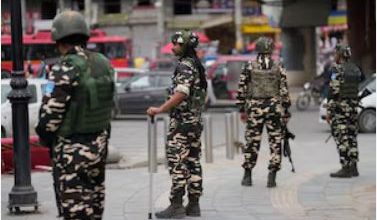
 The major blow came on August 5, 2019, when the ruling BJP revoked Indian illegally occupied Jammu and Kashmir’s special status by abrogating Articles 370 and 35A of the Indian constitution. In the days leading up to August 5, there were clear indications that an unprecedented move was underway. The annual Hindu pilgrimage was curtailed, schools and universities were closed, visitors were ordered to leave, telephone and internet services were suspended, local political leaders were placed under house arrest, and tens of thousands of additional Indian troops were deployed across the territory. The developments culminated in New Delhi’s unilateral revocations of Articles 370 and 35A, which had formed the basis of Jammu and Kashmir’s constitutional relationship with India for nearly 70 years.
Under the Constitution of India, which came into force on January 26, 1950, Article 370 granted Jammu and Kashmir a special constitutional status, providing it with significant autonomy, including its own Constitution, a separate flag, and legislative powers over all matters except defence, foreign affairs and communications. Article 35A, introduced through a Presidential Order in 1954, empowered the Jammu and Kashmir legislature to define “permanent residents” and confer upon them special rights and privileges, including in matters of land ownership, public employment and scholarships. These constitutional provisions remained in force until they were effectively abrogated by the BJP-led Indian government on August 5, 2019.
The removal of Article 370 led to continued protests across the Kashmir Valley. The Kashmiri people expressed outrage, dissatisfaction, and anxiety over losing their unique position, as well as their worries that their political, cultural, and economic rights would be curtailed. Muslims in Kashmir were particularly upset by the BJP government’s move, fearing loss of their land rights and demographic changes in the territory. Despite the restrictions imposed by the authorities, protests and clashes with Indian forces were reported in various parts of the territory.
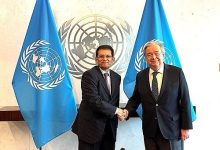
In reality, civil rights do not exist in occupied Kashmir. While pro-India political, social, and media organizations portray the silencing of Kashmiris’ voices as a sign of peace, the reality is that Kashmir has descended into the Dark Ages once again and can be compared to a prison where Indian oppression and terror reign. Neutral observers, including those associated with the United Nations, have acknowledged that the independent media has been brutally suppressed in the occupied region and that media organizations exposing Indian atrocities to the global community have been forced to shut down. India claims to have ushered in a new era of development and progress in occupied Kashmir. However, the reality is that around 5,000 Kashmiri men and women have lost their jobs, according to a survey conducted by the Kashmir Chamber of Commerce and Industry.
According to a report, thousands of Kashmiris are still imprisoned in occupied Kashmir and are unable to defend themselves in accordance with the law and the principles of justice. Additionally, hundreds of young people, including minors, are detained in Indian prisons without their voices being heard. To prevent the truth from coming to light, India has imposed strict censorship on the media, severely restricting journalistic freedom and preventing reports on the conditions faced by millions of Kashmiris.
In order to restrict mobile and broadband internet access, the Indian government has repeatedly imposed internet shutdowns in Kashmir. IIOJK recorded 53 internet shutdowns in 2019. The restrictions on internet and social media services in Jammu and Kashmir were criticized by Michel Forst and David Kaye, the UN Special Rapporteurs on human rights defenders and on the promotion and protection of the right to freedom of opinion and expression. They said the restrictions had the “character of collective punishment” and had a “disproportionate impact on the fundamental rights of everyone in Kashmir.”
In pursuit of its poisonous Hindutva ideology, the BJP has taken steps aimed at altering the demography of the region. According to a document issued by the Indian government, around 4 million domicile certificates have been granted to individuals seeking to settle in IIOJK. Nearly 3,000 similar certificates were also issued to members of the Nepali Gurkha community and certain members of the Valmiki community. This policy mimics the establishment of illegal Israeli settlements after 1948, when Jews from all over the world were encouraged to settle in Palestine.
The rogue administration of Modi aims to change the demographic composition of IIOJK similar to the Israeli settler colonial project in Palestine. By separating Ladakh from Jammu and Kashmir and creating a separate union territory, New Delhi initiated a process that could affect the region’s Muslim demographic composition. Following the revocation of IIOJK’s special status and the introduction of new domicile laws, India has taken steps that are intended to transform the territory by altering its demographic character.
The demographic composition of IIOJK must also be protected in order to safeguard the interests of the Kashmiri people. Even within the framework of India’s constitution and the widely acknowledged principle of constitutional propriety, the Indian government is morally and legally obligated to refrain from exercising powers granted under a contentious Act.
Kashmiris have been striving for their fundamental rights for more than 70 years. The people of Kashmir have repeatedly been let down by the international community. The resolution of this long-standing dispute requires collective efforts and granting the people of IIOJK their inalienable right to self-determination, as envisaged in the relevant United Nations resolutions. Urgent action is needed in this matter, as the Kashmiri people have already endured decades of suffering and alienation, while a wide gap remains between their aspirations and India’s efforts to annex the region.
The writer is an Islamabad-based journalist