Yasin Malik’s affidavit highlights human cost of Kashmir dispute
JKLF chief urges Kashmiris to unite beyond political differences
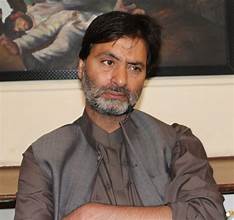
Islamabad: Kashmiri political leader Muhammad Yasin Malik’s affidavit has renewed attention to his long incarceration, his disputed prosecution and the profound human cost of the Kashmir conflict, while underscoring the need for unity among the Kashmiri people and diaspora.
According to Kashmir Media Service, Malik, reportedly in his 25-page affidavit being distributed by his friends on social mdia, disputed allegations against him, arguing that he had been falsely implicated in a case revived decades later. He also questioned the circumstances surrounding the proceedings against him, citing his interactions with senior Indian officials following his release in 2000.
Malik stated that India’s the-then senior Intelligence Bureau official Ajit Kumar Doval had arranged meetings involving IB Director Shyamal Dutta and Brijesh Mishra, then National Security Adviser to IndiaN Prime Minister Atal Bihari Vajpayee. He said he was told that Vajpayee wanted him to remain healthy and participate in peace and dialogue efforts. Malik also said he was issued a passport to travel to the United States and United Kingdom for medical treatment and was informed that the Indian government had offered financial assistance for his treatment, which he declined.

The Kashmiri leader maintained that these circumstances raised questions about the prosecution’s present allegations against him and argued that the case had acquired political dimensions.
According to the affidavit, Malik also reflected on his family and the possibility of facing death. He addressed his mother, wife Mushaal Malik and his 13-year-old daughter, Razia Sultana, expressing concern over the suffering his prolonged imprisonment had caused his family.
He also invoked his faith and said that, after seeking guidance through Istikhara prayer, he decided not to contest the trial proceedings further. He made clear, however, that his decision should not be construed as an admission of guilt or acceptance of the prosecution’s allegations.
In a striking passage, Malik requested capital punishment, describing his affidavit as his “final statement of conscience” and submitting his fate to Allah.
The affidavit has also prompted renewed calls for Kashmiri society to overcome internal divisions and political rivalries. Political differences, observers said, should not become a reason for Kashmiri people to question one another’s humanity or label those holding different views as enemies.
They stressed that unity does not mean uniformity, but requires the ability to disagree without hatred, debate political strategies without dehumanisation and maintain solidarity on fundamental questions of dignity, justice and the political future of Kashmir.
The international community has also been urged to closely examine Malik’s case and use lawful and diplomatic avenues to ensure justice and protection of human rights.
The developments have underscored that the Kashmir dispute remains unresolved and that the suffering of Kashmiri political prisoners and their families cannot be separated from the broader question of the Kashmiri people’s right to self-determination.
The people of Kashmir and the global Kashmiri diaspora, therefore, face a larger challenge: to set aside personal rivalries, preserve unity and collectively pursue justice, dignity and a peaceful resolution of the Kashmir dispute in accordance with international law and the aspirations of the Kashmiri people.