Geneva report exposes systemic discrimination, rights violations against Muslims in India
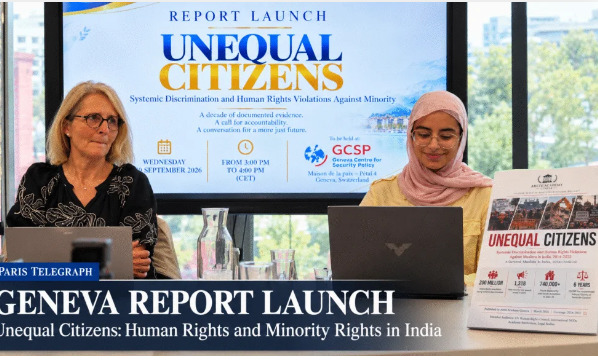
Geneva: A new report examining allegations of systemic discrimination, violence, arbitrary detention and other human rights violations against Muslims in India was formally presented in Geneva, raising fresh concerns over India’s treatment of its Muslim minority.
The report titled “Unequal Citizens: Systemic Discrimination and Human Rights Violations Against Muslims in India, 2014–2025” was published by Arete Academy Geneva in March 2026 and was launched at the Geneva Centre for Security Policy (GCSP), Maison de la Paix, Geneva, on September 30.
The launch event was moderated by Ms. Imen Belhoucine of Jean Moulin Lyon III University, France, and brought together researchers, legal experts, academics and youth advocates.The panel included Sibylle Rupprecht, international advocacy and ethical-leadership specialist with experience of working with the European Union and United Nations; Zareena Abdul Azeez, attorney and international human rights activist who addressed the legal dimension including discrimination, equality, due process, religious freedom and arbitrary detention; Solomon Ngoussi of Jean Moulin Lyon III University, who represented the academic perspective; and Amal Muzammil, youth advocate for minority rights and empowerment.

According to the report, it examines developments over an 11-year period from 2014 to 2025 and brings together legal analysis, documented cases, statistical data and material from international human rights sources. It covers legislation, policing, detention, property demolitions, communal violence, religious freedom, hate speech and social marginalization.
The publication says its research draws on publicly available material from United Nations human rights mechanisms, the Office of the UN High Commissioner for Human Rights (OHCHR), Human Rights Watch, Amnesty International, the US Commission on International Religious Freedom, judicial records and media reports.
The report cites 132 alleged encounter killings between January and August 2025, along with figures for police and judicial custody deaths, attributing the data to India’s National Human Rights Commission (NHRC), Human Rights Watch and OHCHR. It also examines the December 2019 anti-Citizenship Amendment Act protests in Uttar Pradesh, presenting figures relating to deaths, arrests, FIRs and property demolitions targeting Muslim communities.Several issues raised in the report have also been flagged independently by UN mechanisms. In a statement on February 25, 2026, UN Special Rapporteurs Alice Jill Edwards and Morris Tidball-Binz called for independent investigations into allegations of extrajudicial killings, torture-related deaths and injuries involving Indian law-enforcement officials, particularly in Uttar Pradesh and Assam, affecting Muslims, Dalits and Adivasis. They said if substantiated, the allegations could amount to serious violations of the rights to life, freedom from torture and non-discrimination.
The organisers said the report is intended for an international audience including the UN Human Rights Council, international NGOs, academic institutions and legal bodies, and is aimed at examining whether patterns identified across different periods and institutions raise broader questions about equality before law, due process and protection of minority rights in India.