Amit Shah’s 2029 drug-free India promise faces questions amid thriving drug mafias
Critics say drug networks and black-money operations continue despite years of BJP rule
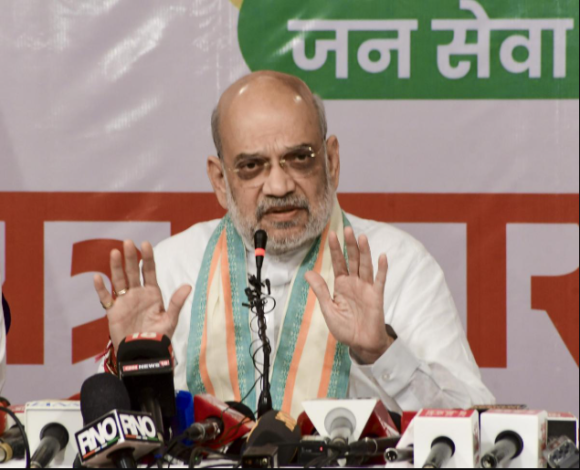
New Delhi: Indian Home Minister Amit Shah’s announcement to make India “drug-free” by December 31, 2029, has been criticized as political theatrics, with drug mafias, black-money networks and open drug markets continuing to operate across the country.
Critics say Amit Shah’s promise comes after 14 years of failure to curb the drug trade, with illicit financial networks and organised criminal groups remaining active across India. They argue that the government has set a distant deadline while drug mafias, black-money networks and drug markets continue to operate despite having had several years to take effective action. After allowing the drug trade to flourish for the past 14 years, Amit Shah has now pledged to eliminate it by the end of 2029.
Critics further said that the BJP-led Indian government is turning regions where freedom movements are underway into drug-trafficking corridors. They say Muslims and individuals opposed to the BJP are being targeted, while effective action against major drug networks and their financial infrastructure remains lacking. They contend that the Indian government cannot completely eliminate the drug trade within the announced timeframe because drugs and related illegal businesses have become deeply entrenched throughout the country.

Indian illegally occupied Jammu and Kashmir (IIOJK) is also affected by heroin and charas, a cannabis resin product, while drug injection use has reportedly been increasing in parts of the Kashmir Valley and other areas. Critics say that heroin and charas are being spread in IIOJK under official patronage to divert young people from the freedom movement and discourage them from raising their voices for their rights. They further argue that the Modi government is exploiting the drug crisis to advance a political narrative against Kashmiris rather than addressing the problem effectively.
Bollywood has been accused of serving as a channel for laundering black money generated through the drug trade. Indian Punjab remains a major centre of the country’s opioid-drug crisis. Districts such as Amritsar, Tarn Taran, Ferozepur and Gurdaspur have been severely affected by heroin, commonly known as “chitta”, and synthetic opioids.
Manipur and northeastern India are major drug-trafficking and consumption corridors linked to the Golden Triangle. Moreh, on the Manipur–Myanmar border, along with routes through Nagaland and Mizoram, serves as a channel for the movement of heroin, methamphetamine, commonly known as “yaba” in tablet form, and precursor chemicals used in drug manufacturing.
Ethnic conflicts and weak governance under the Modi government have further strengthened drug mafias. Cannabis cultivation also continues in some hilly areas.
Elsewhere in India, drug markets remain firmly established in Rajasthan, Gujarat, Maharashtra and Goa, where land and maritime routes are used for trafficking. Cannabis cultivated in the high-altitude regions of Himachal Pradesh and Uttarakhand supplies domestic and international markets.
Delhi-NCR, Mumbai, Bengaluru and Hyderabad are major urban centres for the distribution and consumption of heroin, cocaine, MDMA and illegally marketed pharmaceutical opioids. Coastal networks in Kerala and Tamil Nadu also feature in the trafficking of cannabis and synthetic drugs.
National surveys conducted by the Ministry of Social Justice and Empowerment and the All India Institute of Medical Sciences (AIIMS), alongside assessments by the Narcotics Control Bureau (NCB), have long documented the use of opioids, cannabis and sedative drugs across India. Punjab, northeastern India and parts of northern India have been identified as areas of particular concern.
India lies between the Golden Crescent and the Golden Triangle, two major international drug-trafficking regions. Heroin and methamphetamine are transported through India, while drugs are also manufactured or processed within the country. Chemicals used in pharmaceutical manufacturing have likewise been diverted into illegal markets. Major seaports, including Mumbai/JNPT, Mundra, Chennai, Kochi and Kolkata/Haldia, as well as international airports in Delhi, Mumbai, Bengaluru and Hyderabad, have remained active drug-trafficking routes.
On September 19, 2021, authorities seized 2,988 kilograms of heroin at Adani Ports and Special Economic Zone (APSEZ), Mundra. The seizure was among the largest single-operation heroin seizures in India, with the consignment estimated to be worth thousands of crores of rupees.
Parliamentary data have also highlighted the role of Gujarat’s ports, including Mundra, in drug seizures at major ports. Inland highway networks connect northeastern India and Punjab with major urban centres, facilitating the movement of illicit drugs, while dark-web platforms and courier networks are also used to distribute synthetic substances.
These trafficking networks generate substantial illicit proceeds for organised criminal groups. Trafficking in methamphetamine and “yaba” tablets originating through Myanmar continues to increase, while Indian ports and airports have also been identified as transit points in investigations involving cocaine shipments linked to Latin American drug networks.
The scale of drug seizures, however, does not by itself establish the overall extent of trafficking or the effectiveness of enforcement efforts; rather, the quantities seized highlight the scale of the country’s extensive drug trade, which continues to generate black money for drug mafias.
In July 2026, the United States launched “Operation Hardball”, a multinational operation targeting organised criminal groups based in or linked to India. Under the operation, 37 defendants allegedly associated with groups linked to Lawrence Bishnoi, Jaggu Bhagwanpuria and Ravinder Dhanda were indicted.
Authorities arrested 24 individuals across the United States, Canada and Europe and seized approximately 1,000 kilograms of cocaine, along with heroin, firearms and cash.
US prosecutors described these networks as international criminal organisations with roots in India, involved in large-scale drug trafficking, organised crime, extortion and violence. Indian nationals and people of Indian origin have been accused of operating international drug networks transporting cocaine and methamphetamine across multiple continents.
Global drug reports issued by the United Nations Office on Drugs and Crime (UNODC) and assessments by the International Narcotics Control Board (INCB) ) have repeatedly identified India as a significant hub for drug trafficking and processing, supplying markets in Africa, the Middle East, Southeast Asia, Europe and other regions. Indian ports and special economic zones have also featured in major drug-seizure cases.
South Asian trafficking networks linked to markets in Africa, the Middle East and Central Asia have been documented, while opioid pharmaceuticals manufactured in India and chemicals used in their production have been detected abroad.
Despite this documented record, Amit Shah continues to declare that India will become drug-free by the end of 2029. Critics argue that, after more than a decade in power, the government is asking for another three and a half years to achieve better coordination among enforcement agencies.
The government statements repeat the same old promises: stronger borders, financial investigations, reduced drug demand and leadership by the Narcotics Control Bureau. The results so far remain unchanged: open trafficking routes, thriving black-money markets and entrenched drug mafias in Punjab, Manipur, the Kashmir Valley and major ports, including Mundra.
Critics contend that setting a deadline at the end of 2029 is not, by itself, a comprehensive strategy to dismantle drug networks but a policy of political protection. They warn that if heroin, methamphetamine and illicit financial flows continue into 2030, the government may announce another set of measures without addressing the underlying problems.
International reports and enforcement operations have highlighted the cross-border reach of drug-trafficking networks. What remains missing, critics say, is sustained and effective action capable of genuinely dismantling these drug mafia networks and the underlying infrastructure that sustains their black-money operations.