- Humayun Aziz Sandeela

For Jammu and Kashmir, 27 October 1947 was more than the beginning of an Indian military presence; it was the moment when a profoundly contested political question became inseparable from military power. Indian troops landed at Srinagar on that day against the wishes of the Kashmiris, transforming a rapidly escalating crisis over the future of the princely state into a conflict whose political, territorial and human consequences have endured for nearly eight decades.
The landing did not resolve the question of Kashmir’s political future. Instead, it embedded that question within war, territorial division and competing claims of sovereignty. What followed was the first India-Pakistan war, the division of the former princely state, intervention by the United Nations and repeated international efforts to establish a framework through which the people of Jammu and Kashmir could determine their political future.
Nearly eight decades later, the consequences remain visible. The territory is divided by the Line of Control, generations of Kashmiris have grown up amid conflict and militarisation, and the question of who has the legitimate authority to determine Kashmir’s final political status remains fiercely contested. Time has altered the political and constitutional landscape, but it has not resolved the dispute that emerged in 1947.

For India, 27 October is rooted in its account that Maharaja Hari Singh acceded to India on 26 October, and that the subsequent deployment of troops was therefore a lawful response to an external attack. For Pakistan and the Kashmiri leadership, however, the chronology and circumstances surrounding the accession remain deeply contested, while the subsequent international record is seen as evidence that the final disposition of Kashmir was never regarded, at least in the early years, as a matter settled beyond question.
That divergence is central to understanding why 27 October continues to carry such political significance. The controversy is not simply about where troops landed or when a document was signed; it concerns the larger question of whether military intervention could determine the political destiny of a territory whose future had yet to be conclusively settled.
The events of October 1947 consequently created a chain of developments that continues to shape South Asian politics: war, United Nations intervention, proposals for a plebiscite, territorial division, successive rounds of conflict and diplomacy, and, decades later, the sweeping constitutional changes imposed by India in August 2019.
For Kashmiris who observe 27 October as Black Day, the date therefore represents more than a historical anniversary. Their argument is that neither the passage of time nor the consolidation of Indian control on the ground can substitute for a political settlement addressing the aspirations of the people of Jammu and Kashmir.
A state caught between Partition and political choice
For Kashmir, the roots of the crisis lay in the political upheaval surrounding the Partition of British India.
At the time of Partition in August 1947, Jammu and Kashmir was one of the largest princely states in the subcontinent. Its population was overwhelmingly Muslim, while its ruler, Maharaja Hari Singh, was a Hindu.
The end of British rule placed princely states in a new and uncertain political environment. In Jammu and Kashmir, geography, demography, competing political aspirations and the strategic interests of India and Pakistan combined to create a crisis.
Pakistan and the Kashmiri leadership have consistently maintained that the future of the state could not legitimately be determined through a unilateral decision by a ruler whose political authority was already being challenged by his subjects. They point to the territory’s Muslim-majority population, its geographical contiguity with Pakistan and the political aspirations of its people.
Beneath these competing political positions lay a fundamental question: who had the right to decide the future of Jammu and Kashmir?
That question became increasingly urgent as the political and security crisis intensified after Partition.
The crisis of October
By October 1947, Jammu and Kashmir had entered a period of intense political and military turmoil. Violence had engulfed parts of the region, political tensions had deepened and armed forces were moving towards the Kashmir Valley.
As the crisis intensified, the Maharaja’s administration sought Indian military assistance. What followed remains one of the most contested episodes in the history of the dispute.
According to India’s official position, Maharaja Hari Singh signed the Instrument of Accession on October 26, 1947, and India accepted the accession before flying troops into Srinagar the following day. New Delhi maintains that its military intervention was lawful and undertaken at the request of the ruler.
The chronology of Kashmir’s accession has also been subjected to sustained historical scrutiny. British historian Alastair Lamb, after comparing V.P. Menon’s official account with the recollections of key Indian officials and contemporary British records, questioned whether the Instrument of Accession could have been signed on 26 October 1947, as India maintains. His doubts were reinforced by discrepancies between Menon’s account and the recollections of Kashmir’s Prime Minister C.M. Mahajan, as well as by the diary of British Deputy High Commissioner Sir Alexander Symon, which placed Menon in Delhi on 26 October and indicated that he intended to travel to Jammu only the following day.
Historian Victoria Schofield subsequently examined the same chronology and additional British diplomatic evidence, including a communication indicating that Menon had not yet returned from Jammu on 27 October, while Indian troops were already being flown into Srinagar.
Taken together, these accounts do not by themselves settle the legal question of accession, but they complicate the conventional chronology and leave open a fundamental historical question: whether the Instrument was executed before the arrival of Indian forces, or whether the military intervention preceded the formal accession.
Pakistan and the Kashmiri leadership reject India’s interpretation. They question the circumstances in which the Instrument of Accession was executed and argue that the arrival of Indian troops fundamentally altered the situation before the people of Jammu and Kashmir had been given an opportunity to determine their political future.
The controversy therefore extends beyond the authenticity or timing of a historical document. It goes to the larger question of political legitimacy and the authority to determine the future of a disputed territory.
October 27: the troops land
Against this contested backdrop, Indian troops were flown into Srinagar on October 27, 1947. The military airlift marked a decisive transformation in the crisis, bringing military power to the centre of the struggle over Kashmir’s political future.
Military confrontation intensified and the first India-Pakistan war over Jammu and Kashmir followed. What had begun as a crisis surrounding the future of a princely state rapidly became an international conflict between the two newly independent countries.
For Kashmiris, the significance of the troop landing lies not only in the military operation itself but in what it changed politically. The question of Kashmir’s future would henceforth be negotiated, contested and resisted against the backdrop of armed conflict and territorial control.
The consequences were far-reaching. The conflict divided the former princely state, established competing zones of administration and eventually produced the ceasefire line that later became the Line of Control.
Yet the military confrontation did not produce a final political settlement. Instead, the dispute moved from the battlefield towards diplomacy and international intervention.
The promise of the people’s will
One of the most consequential developments after the troop landing was the emergence of an explicit political commitment to allow the people of Jammu and Kashmir to have a role in determining the territory’s future.
The documentary record from the weeks that followed is particularly important.
India’s Governor-General, Lord Mountbatten, stated that “the question of the State’s accession should be settled by a reference to the people”.
Jawaharlal Nehru expressed the same principle in a telegram on October 27, 1947, stating that “the question of accession in any disputed territory or State must be decided in accordance with wishes of people and we adhere to this view”.
The following day, Nehru reiterated that the accession was “subject to reference to people of State and their decision”.
On October 31, he went further, describing India’s assurance as one made not merely to Pakistan but “also to the people of Kashmir and to the world”. He stated that after peace and order were restored, India would leave the decision regarding the state’s future to its people.
The commitment was repeated in subsequent weeks.
In a November 21 communication to Pakistan’s Prime Minister Liaquat Ali Khan, Nehru stated that once peace had been established, “the people of Kashmir should decide the question of accession by plebiscite or referendum under international auspices such as those of the United Nations”.
In another communication, he proposed that India and Pakistan jointly request the United Nations to conduct a plebiscite. He also stated that where there was a dispute over accession, the final position should be ascertained through “reference to the will of the people”.
Even in private correspondence with Maharaja Hari Singh on December 1, 1947, Nehru acknowledged that the proposed settlement involved “a plebiscite under U.N.O.”, writing: “we are bound down to that proposal”.
These statements do not, by themselves, resolve the competing legal interpretations of accession. India maintains that the Instrument of Accession legally integrated Jammu and Kashmir into India. Pakistan and the people of Kashmir, however, argue that the subsequent commitments and the UN process demonstrate that the final political disposition remained subject to the will of the Kashmiri people.
What the historical record does establish is that, in the immediate aftermath of October 27, India’s political leadership repeatedly linked the future of Jammu and Kashmir to the wishes of its people.
That commitment became the basis for the next major phase of the dispute: its internationalisation through the United Nations.
Kashmir reaches the United Nations
On January 1, 1948, India took the Kashmir issue to the United Nations Security Council.
The move transformed the dispute from a military confrontation into an international political question.
The United Nations considered the matter and adopted a series of resolutions concerning the future of Jammu and Kashmir. The most significant was Security Council Resolution 47, adopted on April 21, 1948.
The resolution envisaged a process involving the restoration of peace and order, demilitarisation and a plebiscite through which the people of Jammu and Kashmir would determine the future of the territory.
The UN Commission for India and Pakistan subsequently developed this framework further.
For the people of Jammu and Kashmir, the UN process was significant because it placed their political future within an internationally discussed framework rather than treating the dispute solely as a matter of bilateral territorial control.
But the proposed settlement was never implemented.
Decades passed. Governments changed. Wars were fought. Agreements were signed and the Line of Control replaced the old ceasefire line. Yet no final settlement emerged.
The plebiscite that never came
For Pakistan and the Kashmiri leadership, the unfulfilled plebiscite remains one of the central failures in the history of the dispute.
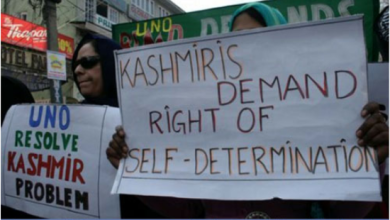
The right to self-determination is not viewed merely as an abstract political slogan. It is seen as a commitment arising from the history of the dispute, the repeated public assurances of Indian leaders and the resolutions adopted by the United Nations.
The Kashmiri struggle has therefore continued around one central demand: that the people of Jammu and Kashmir should be allowed to determine their political future without coercion.
The All Parties Hurriyat Conference has consistently maintained that no unilateral action by India can replace that right. Pakistan, meanwhile, continues to argue that durable peace in South Asia is impossible without a just settlement of the dispute in accordance with the relevant UN resolutions and the aspirations of the Kashmiri people.
Yet the passage of time has made the dispute increasingly complex. Instead of moving towards self-determination, Kashmiris believe that the political space available to them has steadily contracted.
The situation changed dramatically again in August 2019.
From October 1947 to August 2019
For Kashmiris and Pakistan, August 5, 2019, represented not a break from the history of the dispute but a profound new phase.
The Bharatiya Janata Party government, led by Narendra Modi, revoked the special constitutional status previously enjoyed by Jammu and Kashmir under Articles 370 and 35A of the Indian Constitution. The territory was divided and placed under direct federal control.
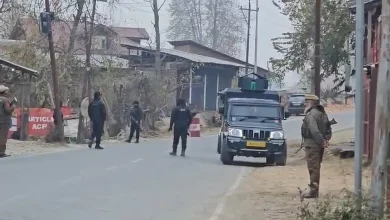
The decision was accompanied by a major security lockdown, communications restrictions, the detention of political leaders and restrictions on public life.
For the APHC, Pakistan and a large section of the Kashmiri population, these measures represented a new phase in the decades-long conflict.
The subsequent changes in domicile rules, land regulations, electoral boundaries and administrative structures deepened concerns that New Delhi was seeking to alter the demographic and political character of the Muslim-majority territory.
Kashmiri leaders argue that India is seeking to reshape the territory’s future through demographic and administrative measures. Pakistan has repeatedly raised these concerns internationally, warning that unilateral actions cannot alter the disputed status of Jammu and Kashmir.
From this perspective, August 2019 represents the latest major chapter in a dispute whose modern history began with the crisis of 1947.
A land divided, a people separated
The conflict that began in 1947 eventually divided the historic territory of Jammu and Kashmir between India and Pakistan.
The Line of Control today separates families, communities and regions. For ordinary Kashmiris, this division has had profound human consequences.
Families have remained separated for generations. People have lost access to ancestral homes and relatives. Communities that once existed within a single political and geographical space have been divided by a heavily militarised frontier.
The Line of Control represents the military reality of the present, but it has not resolved the political question.
As the decades have passed, the division has become more physically entrenched while the dispute over Kashmir’s final status has remained unresolved.
The human cost
The history of Kashmir is often told through military deployments, diplomatic negotiations and international resolutions. Behind these developments lies the experience of the people who have lived through the conflict.
Every generation has inherited its consequences.
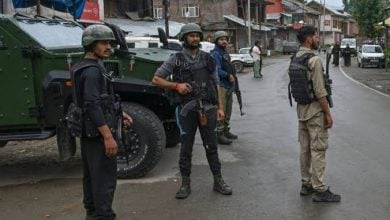
During the last 37 years people in Indian illegally occupied Jammu and Kashmir have borne the brunt of Indian military operations, as reflected in the following figures:
| January 1989 till September, 20261989 till July, 2026 | |
| Total Killings | 96,507 |
| Custodial/Fake Encounter Killings | 7,426 |
| Civilian Arrested | 184,756 |
| Structures/Houses Destroyed/Damaged | 110,614 |
| Women Widowed | 22,993 |
| Children Orphaned | 108,011 |
| Women gang-raped/Molested | 11,285 |
The figures represent not merely statistics but the human cost carried by successive generations of Kashmiris.
One generation witnessed the first troop landings and the beginning of war. Another lived through decades of political conflict. A later generation witnessed mass resistance and armed struggle in the late 1980s and early 1990s. The present generation of people living in occupied Jammu and Kashmir has experienced the communication restrictions, political detentions and restructuring that followed August 5, 2019.
For them, October 27 is not ancient history. It remains part of the political memory through which the present is understood.
In IIOJK, political leaders have been detained, activists and human-rights defenders have faced restrictions, media organisations have operated under pressure, public demonstrations have been curtailed and Kashmiri voices demanding self-determination have faced restrictions.
The APHC leadership itself has been subjected to arrests, detention and restrictions over the decades.
Yet the political demand for self-determination has survived.
Why Kashmiris remember October 27
Each year, Kashmiris on both sides of the Line of Control and across the world mark October 27 as Black Day.
In Azad Jammu and Kashmir and Pakistan, rallies, seminars and demonstrations express solidarity with the people of Indian illegally occupied Jammu and Kashmir. Across the world, members of the Kashmiri diaspora use the occasion to draw attention to the unresolved dispute and continuing human-rights concerns.
For the APHC, the day remains an expression of political resistance. For Pakistan, it represents a reaffirmation of political, diplomatic and moral support for the Kashmiri people’s right to self-determination.
For Kashmiris, it is a day of remembrance — but also a reminder that the political question emerging from 1947 has never received a final settlement.
The observance therefore challenges the assumption that the passage of time alone can transform a contested political question into a settled one.
An unfinished chapter
Seventy-nine years after Indian troops first landed in Srinagar, the central question remains unanswered: who will determine the future of Jammu and Kashmir?
India maintains that the question has been settled and regards Jammu and Kashmir as an integral part of the Indian Union. Pakistan rejects this position and maintains that the territory remains internationally disputed. The Kashmiri leadership argues that neither India nor Pakistan should determine the future of the people without their participation and consent.
This is why October 27, 1947, remains politically relevant.
The date marks a decisive moment in the militarisation of the dispute, but the historical record that followed also produced international commitments and a UN process centred on the political future of Jammu and Kashmir.
The events following August 5, 2019, have added another layer to that unresolved history. The continued dispute over political rights, constitutional status, representation and demographic change has ensured that the question remains embedded in South Asian politics.
For Kashmiris, the passage of nearly eight decades has not diminished the demand for a political settlement.
The first Indian troops landed in Srinagar on October 27, 1947.
The landing was followed by war. The war was followed by international intervention. The international process produced resolutions. Those resolutions envisaged a political mechanism for determining the territory’s future.
That mechanism was never implemented.
Generations passed.
The territory remained divided.
And the political question that emerged in 1947 survived the passage of time.
That is why October 27 is remembered as Kashmir Black Day.
It is remembered because, for millions of Kashmiris, it marks the moment when military power became inseparable from the struggle over their political future.
It is remembered because the promise of self-determination remains, in the eyes of Pakistan and Kashmiri political leadership, unfulfilled.
And it is remembered because Kashmir’s political status remains contested despite decades of conflict, diplomacy, constitutional change and international engagement.
Nearly eight decades after the first troops landed in Srinagar, the Kashmir dispute remains unfinished.
Indian troops landed on October 27, 1947. But the political question of Kashmir did not end with them.