Jammu Genocide and the Condition of Occupation
Any history that starts after the genocide has already decided that the oppressed are not entitled to their own dead
Syed Shahbaz Kashmiri
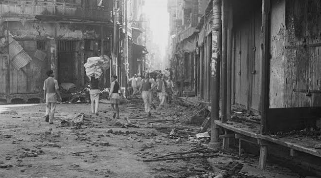
The events that unfolded across the plains of Jammu in the autumn of 1947 constitute one of the most systematically obscured episodes in the modern history of the region. It was not an undifferentiated outbreak of communal violence of the kind that accompanied partition elsewhere but a clear genocide of the Muslim population in large tracts of the region. Caravans moving towards the border were attacked in daylight, villages were emptied and the scale of killing and flight was sufficient to alter the demographic character of the province before any stable political settlement had been reached. The subsequent treatment of these events by successive governments in Delhi and by the puppet political leadership that emerged in the Valley transformed an act of physical elimination into an act of historical elimination as well.
The refusal to record the killings with any precision, the neglect of surviving testimonies and the deliberate exclusion of the episode from school curricula and official commemorations were part of a coherent strategy. Once the first and foundational violence is removed from public memory, every later expression of resistance can be presented as sudden, unrooted and therefore criminal rather than as the continuation of an earlier refusal to accept dispossession. Sheikh Abdullah performed an essential service in this regard by ensuring that the Valley remained effectively insulated from knowledge of what had already taken place on the plains. The blood that had been spilled was kept outside the horizon of collective political consciousness so that the claim to represent the will of the people could proceed without reference to those who had been removed from the people.
To erase a population it is not sufficient to destroy their houses or to drive them across a border. Their dead must also be rendered unnameable and the circumstances of their displacement must be rewritten as mutual tragedy or voluntary migration. The absence of named graves, of public mourning and of any official day of remembrance was the enforcement of this second and quieter violence. Silence was elevated into a civic virtue and those who continued to speak of the missing were treated as carriers of an inconvenient and potentially subversive past. The same logic has been refined rather than abandoned. Contemporary textbooks begin the history of the territory at the moment of highly controversial “accession” and end it with claims of development while every subsequent demand for accountability is reclassified as terrorism. The oppressor supplies both the narrative of origin and the measure of legitimacy.
Memory, however, does not yield easily to oppressors’ convenience. It persists in the incomplete accounts of those who still possess keys to houses that no longer stand, in dialects that crossed the new border and in lineages that continue to register an absence whose cause has never been publicly acknowledged. To recover and to speak of Jammu Genocide is therefore not an exercise in retrospective grievance. It is a refusal to allow the present order to sever itself from its founding act of clearance. Any history that begins after the killing has already chosen its side and any politics that treats the demand for remembrance as a threat has already declared that the oppressed are not entitled to their own dead. The task is to insist, without euphemism or apology, that the genocide was not a regrettable episode but the condition of the occupation that followed.