Article: RSS: The ideological spine and political shadow of India’s power
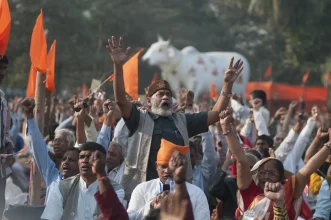 Dr Waleed Rasool
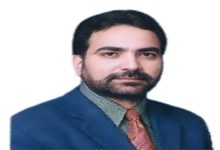 Rashtriya Swayamsevak Sangh (RSS) founded in 1925 by Dr Keshav Baliram Hedgewar, stands today at the heart of India’s political machinery. What began as a right-wing Hindu revivalist movement has transformed, over a century, into the most influential relego-political force in the country — the invisible hand that shapes India’s ruling party, the Bharatiya Janata Party (BJP).
As the RSS marks one hundred years of its existence, it celebrates its reach across 93,129 shakhas (branches) within India and 53,231 in 87 countries abroad, according to Business Standard. This global web reflects the ideological globalization of Hindutva — a form of militant cultural nationalism that now defines India’s posture at home and abroad. The RSS, in this centenary moment, is not only the pan Indian religious organization; but the permanent face of India’s political future.
The ideological roots of the BJP lie deeply embedded in the Hindu Mahasabha. What the Mahasabha theorized, the RSS institutionalized, and what the RSS organized, the BJP politicized. Initially, the Bharatiya Jana Sangh, founded by Syama Prasad Mukherjee, served as the RSS’s political expression. After the Janata Party experiment (1977–1980) collapsed, the movement reemerged as the Bharatiya Janata Party under the leadership of Atal Bihari Vajpayee and L.K. Advani in 1980. The RSS ideology — once religious and cultural — became political and assertive, guided by the concept of Hindu Rashtra, a nation defined by Hindu ethos and nationalist spirit. Other religions, particularly Islam and Christianity, were viewed as foreign intrusions, tolerated only if they conformed to the imagined cultural unity of Bharat. The message was clear: “Come home or face the consequences.”
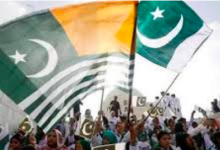

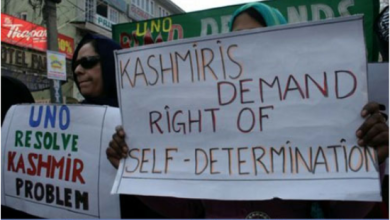
The RSS-BJP alliance derives its intellectual compass from Deendayal Upadhyaya’s Eikmanav Darshan which now serves as the BJP’s official guiding philosophy. This doctrine calls for a Uniform Civil Code, construction of the Ram Temple, and the abrogation of Article 370 of the Indian Constitution — all of which have been realized step by step, transforming cultural symbolism into political reality. The abrogation of Kashmir’s special status was not an administrative decision but a civilizational project, aimed at bringing the Hindu face to the forefront of Indian politics.
The RSS has systematically built its cadre into a pipeline of power. Nearly one-third of BJP parliamentarians are RSS-trained karyakartas, including the Prime Minister, Home Minister, Defence Minister, and several Chief Ministers. This is no coincidence. The RSS functions as a political nursery, training and grooming future leaders through its network of shakhas. Every route to political prominence in the BJP runs through this ideological school. The RSS has crafted this ecosystem meticulously, ensuring that no one rises to national prominence without passing through its ideological gate.
Though the RSS initially resisted globalization, it later embraced a model of Hindu nationalist capitalism under Narendra Modi’s political wisdom. By fusing economic modernization with religious nationalism, the BJP created an economy wrapped in saffron symbolism. The 2023 electoral bond scheme, which raised over ₹1.6 trillion (₹160,000 crore), became a sophisticated tool to sustain this economic engine — channeling corporate power to fund the RSS-BJP ecosystem. Each shakha contributes, collects, and campaigns, making the RSS not only a social organization but also a financial powerhouse sustaining the BJP’s dominance.
The RSS’s organizational web extends across all sectors of Indian life, forming what can rightly be called a shadow state. Its affiliated bodies — known collectively as the Sangh Parivar — cover every domain of public influence: the BJP (political mobilization), Bharatiya Mazdoor Sangh (labour), Bharatiya Kisan Sangh (farmers), Akhil Bharatiya Vidyarthi Parishad (students), Rashtra Sevika Samiti (women), Vishva Hindu Parishad (religious mobilization), Bajrang Dal (militant activism), Vanvasi Kalyan Ashram (tribal outreach), Swadeshi JagranManch (economic nationalism), VidyaBharati (education), SevaBharati (social welfare), and Hindu Swayamsevak Sangh (international outreach). Together, these organizations form a comprehensive matrix of ideological, political, and cultural control — an empire that penetrates every sphere of Indian life.
The RSS was founded in 1925, while Pakistan was born in 1947. The ideological warning of Allama Iqbal and Quaid-e-Azam Muhammad Ali Jinnah — that without separate representation, Muslims in a Hindu-majority India would be politically marginalized — stands vindicated today. In a population of 220 million Muslims, only 18 Muslim parliamentarians remain, and none from the BJP.
The slogan of Ghar Wapsi has turned into a policy of exclusion; the Indian Muslim is being systematically pushed to the margins. India today stands ideologically divided — between Gandhi’s India and Godse’s India. The former represents moral politics and inclusive pluralism; the latter celebrates revenge nationalism and cultural supremacy. Sadly, the political vision of Jinnah has triumphed over the moral vision of Gandhi — not by choice, but by the compulsion of history.
As India enters the second century of RSS politics, the transformation is complete — from a secular republic envisioned in 1947 to a Hindu Rashtra institutionalized in 2025.
The Sangh’s century-long ideological engineering has seeped into the very bloodstream of the Indian state, redefining its institutions, identity, and international posture. The line between religion and politics has not merely blurred; it has been deliberately erased. Whether or not the BJP retains power in Bihar or beyond is now secondary — the ideological state has outlived electoral cycles.
The grammar of governance, the vocabulary of nationalism, and even the idiom of diplomacy now carry the unmistakable imprint of Nagpur. The dialogue with neighbours, especially Pakistan, remains hostage to the RSS’s extremist lens that views reconciliation as surrender and peace as weakness. As the RSS celebrates its centenary, India faces a moral reckoning: can a nation built on pluralism sustain a future rooted in exclusion? The answer lies not in the ballot box, but in whether India can rediscover the soul it traded for power — the soul of tolerance, coexistence, and moral strength
The samples of these syrups were tested at the Drug Testing Laboratory, Food and Drug Administration, Madhya Pradesh, where they failed quality checks due to DEG impurity levels exceeding safety norms. Describing the situation as “serious,” Joint Drugs Controller Purnima Kabu stated that the products have been linked to the deaths of several children in Madhya Pradesh and Rajasthan, prompting immediate preventive action in Jammu and Kashmir.
“As a matter of abundant precaution and proactive measure, pharma wholesalers, retailers, distributors, registered medical practitioners, hospitals, and healthcare institutions are hereby directed to immediately stop further procurement, sale, and utilization of these drugs irrespective of all batches till further notice,” the official notice reads.
The order further instructs that any available stock of the banned syrups within the Union Territory be reported to the Office of the J&K State Drug Controller.
Pertinently, the recent tragedy surrounding ColdRif cough syrup has once again drawn national attention to the dangers posed by spurious and substandard medicines in India. Following the deaths of at least 14 children in Madhya Pradesh, allegedly linked to the consumption of the syrup manufactured by Shreesan Pharmaceutical, multiple states — including Uttar Pradesh, Punjab, and Arunachal Pradesh — have moved swiftly to ban its sale and use.
The Uttar Pradesh government not only prohibited the medicine but also ordered investigations, with the Food Safety and Drug Administration conducting raids on medical stores. Punjab had earlier banned ColdRif after the Madhya Pradesh Drugs Testing Laboratory declared it “not of standard quality.” States such as Goa, Haryana, Himachal Pradesh, Karnataka, Maharashtra, Rajasthan, and Uttarakhand had already imposed similar restrictions.
The deaths in Madhya Pradesh’s Chhindwara and Betul districts have raised serious concerns about the effectiveness of India’s drug safety mechanisms.
This crisis casts a long shadow over Jammu & Kashmir, where weaknesses in pharmaceutical oversight and public health practices could amplify the risks posed by toxic medicines like ColdRif.
While no incidents linked to ColdRif syrup have yet been reported in Jammu & Kashmir, past experiences indicate a high potential threat. In 2020, about 12 children in the Ramnagar area of Udhampur district died after consuming a cough syrup called Coldbest-PC.Buy vitamins and supplements
Medical investigations confirmed that the syrup was contaminated with diethylene glycol (DEG) — the same toxic substance now found in ColdRif. DEG poisoning can cause acute kidney failure and, in severe cases, damage multiple organs, including the brain and liver.