India resorts to massive crackdown to control anti-Siang dam narrative: Report
Delhi facing stiff resistance as dam set to submerge 27 villages in Arunachal

New Delhi: The BJP-led governments at the Centre and in Arunachal Pradesh have unleashed a massive crackdown on protesters opposing the Siang dam, including the use of force, internet shutdowns, a paid PR campaign, censorship of social media content, and action against journalists and lawyers.
According to a report by Kashmir Media Service, protests in Arunachal Pradesh against the proposed Siang Upper Multipurpose Project (SUMP) turned violent on October 23.
A 12-hour Arunachal bandh was called by local bodies and youth groups, including the Siang Indigenous Farmers Forum (SIFF), Adi Baane Kebang United and the Adi Galo Welfare Society, on October 23. The bandh was followed by large-scale arson in Pasighat, East Siang district, targeting an office of the National Hydroelectric Power Corporation (NHPC), a police station, and the homes of two MLAs and the BJP’s state president.

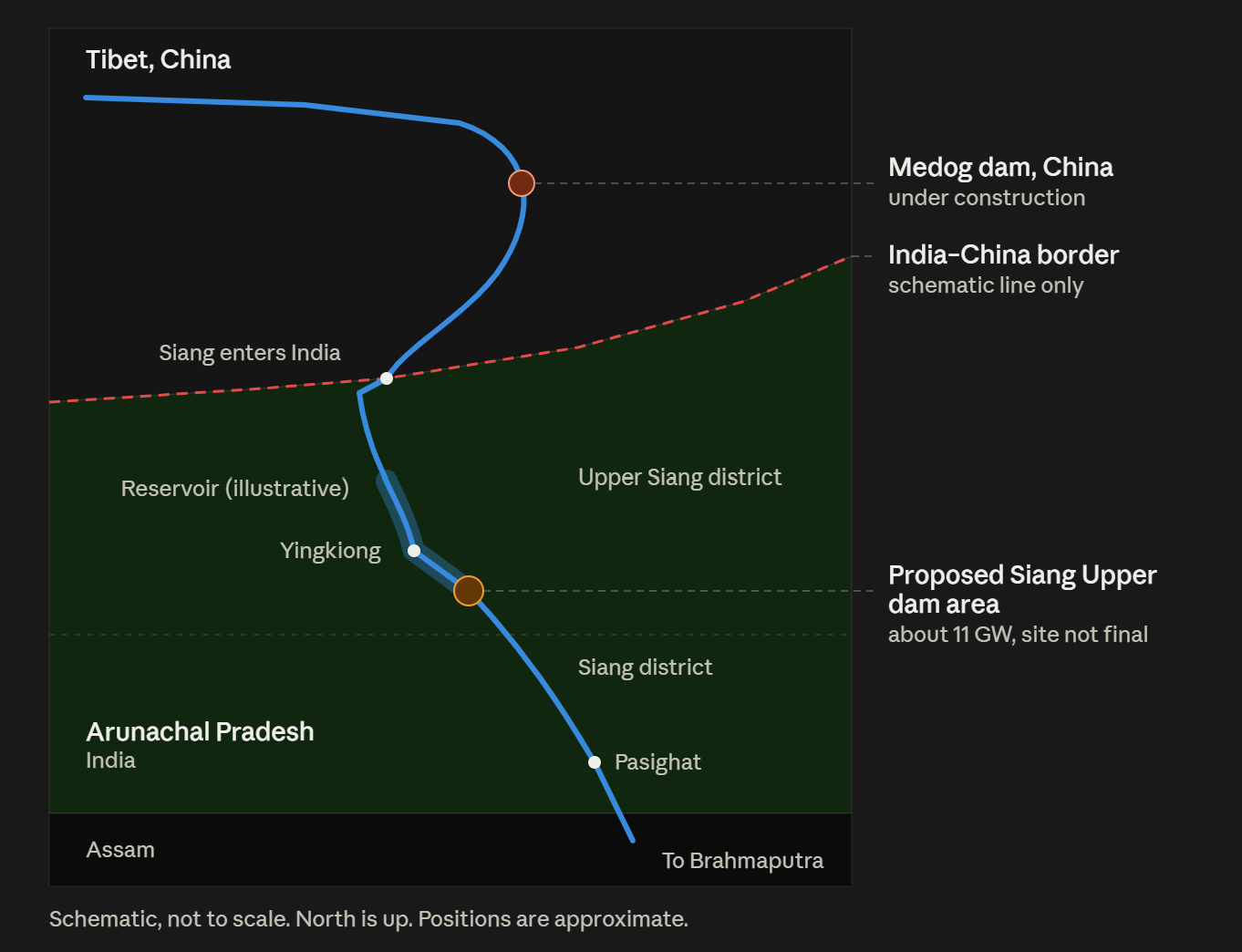
The proposed SUMP, with an estimated capacity of 11,200 megawatts, is planned on the Siang River across the Upper Siang and Siang districts. First proposed in 2008-09, it was changed in 2017 to a single 250-metre-high dam, which would be India’s largest in terms of installed capacity. Stiff local resistance had earlier forced survey teams to withdraw.
BJP revives project
The BJP-led governments at the Centre and in Arunachal Pradesh revived the project in 2020. There are reports that China plans to build a dam on the Yarlung Tsangpo River, known as the Siang in India. In April 2022, New Delhi directed NHPC to conduct a pre-feasibility survey.
In May 2025, Central Armed Police Forces were deployed at several locations. In September 2026, the state Cabinet approved an empowered committee to oversee the survey, alongside a significant deployment of central forces.
Several indigenous communities, including the Adi, Galo, Nyishi, Apatani and Idu Mishmi, inhabit the Siang valley and depend heavily on the river, not only for their agricultural practices but also for their cultural identities and religious beliefs. They call the river Ane Siang, or Mother Siang. According to independent fact-finding reports, the SUMP would completely submerge nearly 27 villages and displace an estimated 1.5 lakh people, almost 11% of Arunachal Pradesh’s population.
Use of force, detentions
One of the issues against which the October 23 bandh was called was the detention of anti-SUMP protesters since October 9. According to reports, the state government invoked the Arunachal Pradesh Unlawful Activities (Prevention) Act (APUAPA) and detained at least 10 protesters. Among those detained was the president of the SIFF Youth Wing.
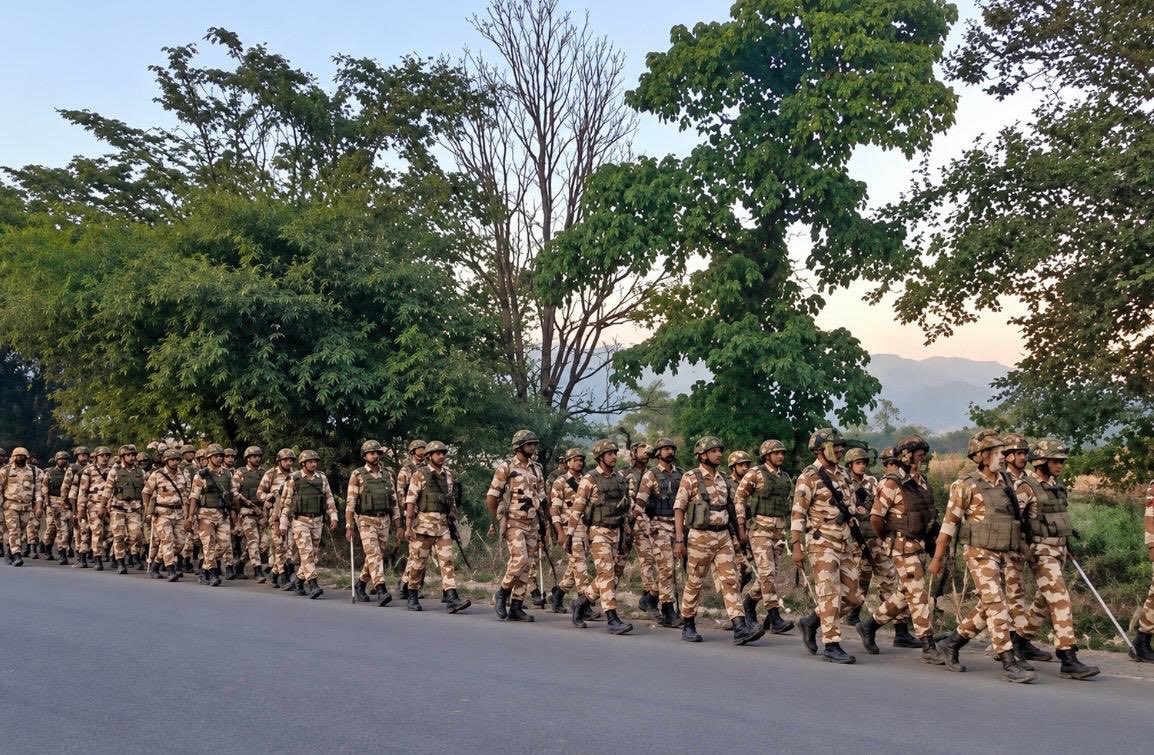
The crackdown intensified after the October 23 violence. A further 69 people were arrested and four detained. A total of 55 cases were reportedly filed: 26 in Upper Siang, 21 in Siang and six in East Siang district.
The state has also significantly increased its security deployment. At least 30 companies of Central Armed Police Forces and three companies of Assam Police have been deployed, in addition to Arunachal Pradesh Police personnel. The Centre also flew in two additional companies of the Rapid Action Force.
There were also reports of police using tear gas and batons against protesters on October 23. Five women were reportedly taken to hospital after experiencing breathing difficulties.
The crackdown has not been confined to Arunachal Pradesh. On October 31, a solidarity protest against the SUMP outside Arunachal Bhavan in New Delhi also ended in the detention and alleged manhandling of protesters by the Delhi Police. Around 40 protesters were detained, including female protesters who reportedly were detained after 9 pm.
Internet shutdown
As of November 2, internet services were suspended in Upper Siang as SIFF and the SUMP Affected Area Youth Association (SAAYA), with the support of various student unions and community-based organisations, enforced a 36-hour bandh. Protesters demanded the release of the detainees under APUAPA.
Censorship of social media content
The crackdown has also extended to the online space, with social media accounts of activists, journalists and news outlets being restricted or taken down.
Tadak Nalo, founder and president of the Arunachal Frontier Tribal Front, released a video statement after his Facebook account was restricted. Describing the situation in Arunachal Pradesh as “emergency-like”, he said fundamental rights, including the right to freedom of speech and expression, were being suppressed.
“My Facebook page, ‘Tadak Nalo for Revolution’, has been misused under the Information Technology Act and restricted completely within India today. If you want to view my page, you will have to go outside India,” he said.
Curbs on journalists
Several journalists and news pages have also reported having their Facebook pages disabled. Shaan Jijong, managing director of Upper Siang News 24*7, said the outlet’s official Facebook page had been disabled. He also named Ebo Mili and Katon Moyong, whose Facebook pages had allegedly been taken down.
Two news reports published by Arunbhoomi News were also made unavailable for viewing in India.
The Arunachal Press Club and the Arunachal Pradesh Union of Working Journalists have condemned the restrictions and demanded transparency and their immediate restoration.
Targeting journalist and lawyer
Arunachal Pradesh Police have also moved against a journalist covering the anti-SUMP movement, seeking a search warrant against Tongam Rina, deputy editor of The Arunachal Times, in connection with the violence in Pasighat on October 23.
Police have also sought a search warrant against her lawyer, Sunny Tayeng, along with youth leader Otul Jerang, who has been arrested, and activist Tajong Talom.
Rina took to X to assert that the police action would not deter her from her journalism or activism. “I have seen enough intimidation in my life, so this isn’t something that will stop me from writing or my activism. More power to the people of Siang Valley and Arunachal,” she wrote.
The Press Club of India also issued a statement expressing solidarity with Rina and condemning the police move.
Paid PR campaign
Actress Taba Reema, who has been vocal against SUMP, has posted a video alleging that PR firms were reaching out to content creators to speak about the construction of the dam in a positive light.
According to an Indian Express report, Mumbai-based Concept Public Relations was awarded a one-year contract in July 2025, which was subsequently extended until November 2026, to build opinion in favour of the project, at a total cost of Rs 10.91 crore.
An NHPC official told the newspaper that it had been hired to put forward “their side” and help supporters within the community speak out, despite “the pressure from violent elements”.