Marginalized nomadic Muslims in Telangana stage hunger strike, press long-standing demands
Protesters call for dedicated finance corporation, educational support and protection of traditional livelihoods
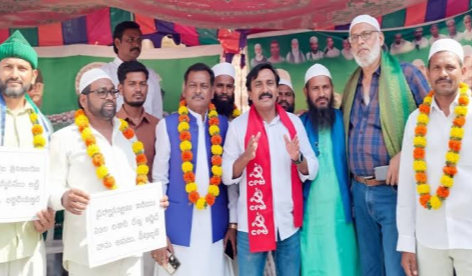
Hyderabad : Members of marginalized nomadic Muslim communities in the Indian state of Telangana have staged a hunger strike in Karimnagar, demanding affirmative action, financial assistance, educational opportunities and protection of their traditional livelihoods, which they say have been undermined by government policies and economic deprivation.
According to Kashmir Media Service, the hunger strike was held outside a government office under the banner of the Telangana State Nomadic Muslim Tribes Organization. The protesters called for the establishment of a dedicated government finance corporation to provide loans, subsidies and development assistance to some of the state’s most disadvantaged Muslim communities.
Addressing the demonstrators, Waseem Ahmed, a coordinator of the Association for Protection of Civil Rights (APCR), said Telangana’s recent caste census had identified nomadic Muslims among the most socially and economically disadvantaged groups within the state’s Backward Classes classification.


India’s affirmative action system provides historically marginalized communities with reserved seats in educational institutions and government jobs, along with targeted welfare benefits. However, the protesters said nomadic Muslims continued to suffer from inadequate representation and limited access to government assistance.
Ahmed criticised the state government for establishing dedicated financial institutions for other disadvantaged communities while failing to set up a similar body for nomadic Muslims.
He demanded the immediate establishment of a finance corporation with adequate funding and the implementation of a previously announced annual allocation of 10 billion Indian rupees to support families who had lost their traditional occupations due to restrictions under forest and wildlife protection laws.
The protesters also demanded implementation of commitments under the Maulana Abul Kalam Azad Ta’lim Scheme, an educational welfare initiative, to improve access to schooling and other educational opportunities for their children.
They called for the withdrawal of criminal cases registered under forest laws against Gardi Muslims and communities traditionally engaged in snake charming. They also sought fully subsidised loans of up to 1 million Indian rupees for families deprived of their traditional sources of livelihood.
The organisation further urged the authorities to allow Nai Muslims, traditionally associated with barbering and related occupations, to continue their ancestral professions without restrictions.
Other demands included the construction of a community development centre, recovery of illegally occupied Waqf properties and utilisation of their resources for the welfare of impoverished Muslim families.
The protesters also called for appropriate recognition of nomadic Muslim communities under India’s Other Backward Classes (OBC) affirmative action framework to ensure their access to reservation and welfare benefits.
Community leaders, including organisation president Sher Ali and working president MD Shabbir, warned that the protests would be intensified if the Telangana government failed to address their longstanding demands.