Post-Diwali air pollution reaches alarming levels across India
Concentration of toxic, cancer-linked particles surges to nearly 60 times WHO's safe limit
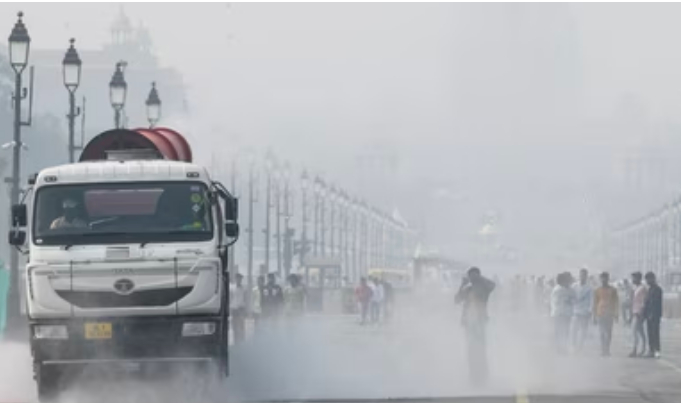 New Delhi: Air pollution levels in India have soared to alarming levels following Diwali celebrations, with the concentration of hazardous, cancer-linked particulate matter reportedly reaching nearly 60 times the World Health Organization’s (WHO) recommended safe limit.
Extensive fireworks during Diwali released large quantities of toxic smoke, worsening air pollution and contributing to a serious environmental crisis in India, Pakistan and other neighbouring countries.
According to the international publication Asia Business Daily, the concentration of extremely fine toxic particles, associated with cancer and other life-threatening illnesses, reached 879 micrograms per cubic metre in India following Diwali, nearly 60 times the WHO’s recommended safe limit.
The impact of worsening pollution was also evident in New Delhi, where air quality remained in the ‘very poor’ category on Wednesday, with two monitoring stations recording pollution levels in the ‘severe’ category.

According to the Sameer application, which provides hourly updates based on data from the Central Pollution Control Board (CPCB), the Indian capital’s average Air Quality Index (AQI) stood at 312 at 2:05 pm. Of the 58 active monitoring stations across the city, 30 recorded ‘very poor’ air quality.
Delhi Technological University and Chhawla recorded AQI readings of 410 and 411, respectively, placing them in the ‘severe’ category, while Chandni Chowk followed closely with a reading of 398.
Under CPCB classifications, an AQI of 0–50 is considered ‘good’, 51–100 ‘satisfactory’, 101–200 ‘moderate’, 201–300 ‘poor’, 301–400 ‘very poor’, and 401–450 ‘severe’. Readings above 450 fall under the ‘severe plus’ category.
A British research report has estimated that more than 3.8 million people died in India between 2009 and 2019 due to the health impacts of air pollution.
Environmental experts have warned that toxic smoke and smog are spreading across the Indian border into Pakistan, particularly Punjab, posing serious risks to respiratory health and potentially worsening other health problems across the region.