US religious freedom commission lists Sharjeel Imam as prisoner of conscience
USCIRF cites his anti-CAA advocacy, raises concern over prolonged pre-trial detention under UAPA
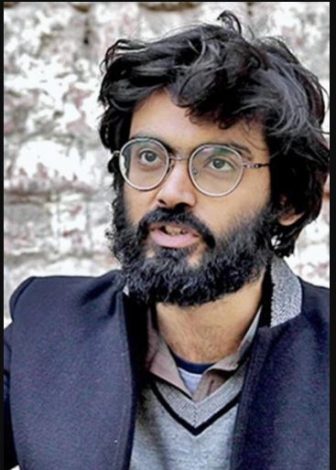
Washington: The prolonged detention of Indian Muslim activist and scholar Sharjeel Imam has come under renewed international scrutiny after the United States Commission on International Religious Freedom (USCIRF) included him in its Religious Prisoners of Conscience Database, identifying him as a person detained for his religious freedom advocacy.
The US federal commission has cited Imam’s participation in protests against India’s Citizenship (Amendment) Act (CAA) in December 2019 and January 2020, describing his activities as peaceful advocacy for religious freedom.
In a post on X, USCIRF shared Imam’s profile in the database, categorising his detention as persecution linked to his religious identity and advocacy for religious freedom. The commission has also highlighted the cases of other detained activists, including Umar Khalid.

Imam was arrested by Delhi Police on January 28, 2020, and has since remained in pre-trial detention under India’s draconian Unlawful Activities (Prevention) Act (UAPA) in connection with the February 2020 Delhi riots conspiracy case.
Indian authorities accuse him of delivering speeches that allegedly incited communal violence during the anti-CAA protests and of being involved in a larger conspiracy behind the Delhi riots. He has not been convicted in the case.
Arrest and prolonged detention
Imam, a former research scholar at Jawaharlal Nehru University (JNU), became actively involved in India-wide protests against the CAA and the proposed National Register of Citizens (NRC). He was also associated with the Shaheen Bagh protest movement.
Police have cited speeches delivered by Imam on December 13, 2019, and January 16, 2020, as grounds for the charges against him, alleging that his remarks incited violence and promoted communal discord. His arrest and prolonged incarceration have drawn criticism from human rights activists, academics, politicians and legal experts.
In September 2026, Imam was granted seven days of interim bail to attend his cousin’s wedding. However, on September 30, 2026, the Delhi High Court rejected his regular bail plea, along with that of Umar Khalid.
On November 4, 2026, both activists approached the Indian Supreme Court, challenging the High Court’s decision and seeking bail. Their petitions have highlighted concerns over prolonged incarceration and delays in the trial proceedings.
Academics and rights activists voice support
Several prominent individuals, academics and organisations have criticised the cases against Imam and expressed concern over his continued detention.
Aakar Patel, former head of Amnesty International India, said he did not consider any part of Imam’s speech to be seditious.
Former Supreme Court judge Markandey Katju also defended Imam, arguing that the FIRs registered against him should be quashed and maintaining that he had committed no crime.
The Jawaharlal Nehru University Students’ Union (JNUSU) condemned Imam’s arrest, describing it as an example of the state’s “Islamophobia, selective amnesia and bias.”
The JNU Teachers’ Association also questioned the invocation of sedition charges, saying the action reflected the politicisation of law enforcement agencies.
Meanwhile, 148 students and alumni from various Indian Institutes of Technology (IITs), along with more than 100 students from Jamia Millia Islamia, Aligarh Muslim University and other universities, signed a letter expressing solidarity with Imam.
A group of Bihar students studying at prominent institutions, including JNU and IIT Delhi, also wrote an open letter to Rashtriya Janata Dal (RJD) leader Tejashwi Yadav, urging him to demand Imam’s release. They highlighted his contributions as an academic, historian, student and journalist.
Academic and professional background
Before gaining prominence as an activist, Imam pursued an academic and professional career. He reportedly worked as a programmer at the IT University of Copenhagen in 2009 and later served as a teaching assistant at IIT Bombay.
He subsequently worked as an engineer at Juniper Networks before returning to academic pursuits. He also contributed articles to several Indian and international media outlets, including TRT World, Firstpost, The Quint and The Wire.
His prolonged pre-trial detention has continued to attract criticism and concern from civil liberties groups, academics and human rights advocates. USCIRF’s latest inclusion of his name in its database has further drawn international attention to his case.