Massive postings, transfers in IIOJK courts
30 District Judges, 54 Civil Judges appointed
Jammu: In Indian illegally occupied Jammu and Kashmir, the authorities have carried out large-scale postings and transfers within the judiciary, aimed at ensuring the conviction of Kashmiri Hurriyat leaders and activists in fabricated cases.
The occupation administration has transferred and appointed 84 judges. An order issued by M.K. Sharma, Registrar General of the High Court of occupied Jammu and Kashmir, confirms the transfer of 30 District Judges and 54 Civil Judges.
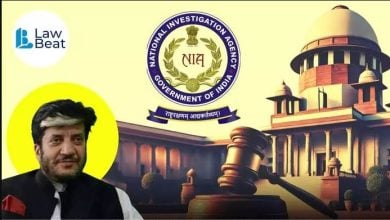
Kusum Lata Pandita has been appointed as the new judge for the special National Investigation Agency (NIA) court in Jammu. She will take over responsibilities from Prem Sagar, who has been appointed as a Special Judge in Srinagar to hear cases under the NDPS (Narcotic Drugs and Psychotropic Substances) Act.


Among the new judicial appointments across various districts, Jawad Ahmed has been appointed as the Principal District and Sessions Judge for Islamabad (Anantnag), Tasleem Arif for Baramulla, Ritesh Kumar Dubey for Bhaderwah, and Musarrat Ruhi for Kulgam. Similarly, Aijaz Ahmed Khan has been appointed as the Principal District and Sessions Judge for Ganderbal, Abdul Nasir for Shopian, Amit Sharma for Kishtwar, and Abdul Qayoom Mir for Kargil.
In other significant appointments, Om Prakash Bhagat—the former Principal District and Sessions Judge of Budgam—has been appointed as the Third Additional District and Sessions Judge in Jammu to handle cases registered under stringent laws such as TADA and POTA. Arvind Sharma, the Additional District and Sessions Judge of Samba, has been appointed as a Special Judge for anti-corruption cases. Yahya Firdous Ahangar has been appointed as an Additional Sessions Judge for anti-corruption cases in Jammu, while Rajni Sharma has been appointed as a Special Judge in Srinagar to hear CBI cases.
The official order also includes various other appointments and transfers of District Judges and Civil Judges across different courts, tribunals, and legal service institutions.
Meanwhile, following the unilateral revocation of Jammu and Kashmir’s special status by the Modi-led Indian government in August 2019, the appointment of non-locals—replacing local Kashmiris—within the administration and judiciary of occupied Jammu and Kashmir has become a major subject of political debate.
The approval by the Supreme Court Collegium (the board responsible for the appointment of judges) of nine lawyers for appointment as judges to the High Court of occupied Jammu and Kashmir has raised questions regarding regional representation within the higher judiciary.
Political leaders and lawyers have expressed concerns, stating that the institutional space available to Kashmiris is rapidly shrinking and that their representation has been disproportionately reduced, while non-Kashmiris are being increasingly appointed to positions within the local judiciary and administration.