Burhan Wani: A martyr who outlived the bullet
Nine years on, Burhan's legacy still defies the occupation that tried to erase him
 Usama Imtiyaz
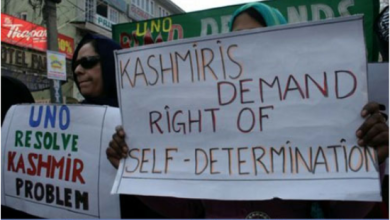
On July 8, Indian illegally occupied Jammu and Kashmir (IIOJK) marks the martyrdom anniversary of Burhan Wani. Nine years after he was martyred by Indian occupying forces, his face still appears on posters and phone screens across the region. His name continues to echo in towns, protests, and funerals. The occupier ended his life, but not his message.
Burhan Wani was not shaped by any foreign ideology. He was shaped by the occupation itself. His decision to resist came from daily humiliation: being frisked by soldiers, stopped at checkpoints, and beaten in his own land. At fifteen, after being assaulted by Indian troops while riding home with his brother, Burhan vanished from public view. When he resurfaced months later, he was no longer just a teenager. He had become the face of a defiant generation.
He was not the first to resist the occupation. But he was the first in his generation to understand how the message of resistance could be communicated in a new way. His videos, shared on phones and over social media, were clear and direct. They resonated not because they were loud, but because they were real.

To the Indian occupying state, Burhan was a threat not because of how many fighters he led, but because of how many minds he reached. He was resisting not only with weapons but also with a camera. That made him far more difficult to control.
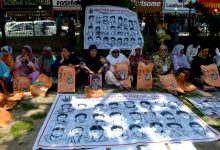
While Indian media quickly branded him a terrorist, people in IIOJK saw him as a martyr, a brother, and a symbol of resistance. His face became a reminder that resistance is not imported. It is born in occupied classrooms, in raided homes, and in families mourning the disappeared. Burhan did not radicalize Kashmir. He revealed its reality.
The response to his martyrdom followed a familiar script. Curfews were imposed. Internet access was cut off. Shoot-on-sight orders were issued. Pellet guns were used against civilians, leaving hundreds blind. None of this silenced the people. More than 200,000 mourners attended his funeral. The occupying power tried to end a life but ended up exposing the depth of the resistance.
Since his martyrdom, the resistance has evolved. Digital defiance now stands beside armed struggle. Messages travel through social media, voice notes, and encrypted apps. A new generation speaks in reels and captions, refusing to silence.
Despite arrests, censorship, and surveillance, Burhan’s memory lives on in songs, slogans, and whispered stories. Even children who were too young to understand his politics know his name. He became part of a collective memory that occupation has failed to suppress. His legacy has become part of Kashmir’s cultural and political memory.
The Indian occupying state may hold territory and institutions, but it no longer holds the narrative. Burhan challenged not only military rule but also the silence around it. And once silence breaks, it could not be put back in place.
Today, the occupying power faces a truth it cannot bury. The more it tries to erase Burhan’s memory, the more it spreads. The more it brands resistance as extremism, the clearer it becomes that occupation fears even the idea of dignity.
Burhan Wani may have fallen to an Indian bullet, but he never truly died. He became what the occupying state fears most: a symbol that only grows stronger with time.