Humayun Aziz Sandeela
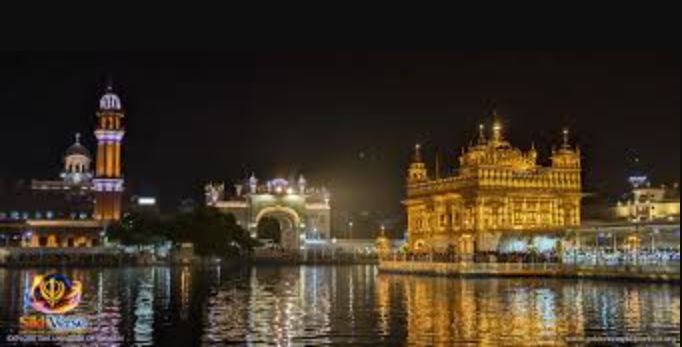
The events surrounding the Indian military assault on the Golden Temple complex in June 1984 remain among the most sensitive and contested episodes in modern South Asian history. For many within the Sikh community, both in Punjab and across the global diaspora, those days are not merely historical records but a deeply embedded collective memory shaped by grief, political rupture and an enduring search for justice. For the Indian state, they are often framed within the context of counterinsurgency and the restoration of constitutional order amid escalating militancy. Between these narratives lies a complex terrain of trauma, politics and unresolved questions that continue to influence identity and state-society relations even decades later.
On 9 June, accounts of the assault on the Golden Temple are often recalled in Sikh memory as a moment when sacred space and armed force collided with devastating consequences. The Golden Temple, or Harmandir Sahib, is not only the holiest site in Sikhism but also a symbol of spiritual equality and collective faith. The deployment of military force within its precincts is widely viewed by Sikhs as a profound rupture, one that extended beyond political conflict into the realm of religious injury. Reports of damage to religious structures, civilian casualties, and disruption of daily worship contributed to a sense of shock and lasting anguish. For those who experienced or inherited this memory, the sense of violation became intertwined with questions about state legitimacy and proportionality.

By 10 June, the focus shifts in many historical accounts to the political handling of the crisis. Critics of the Indian government’s approach argue that the escalation reflected a failure of sustained political negotiation with Sikh leadership groups in the preceding period. According to this view, dialogue was progressively replaced by coercive strategies, narrowing the space for peaceful resolution. The breakdown of communication is often cited as a turning point that intensified confrontation rather than containing it. In this interpretation, the reliance on military intervention is seen as having deepened mistrust between segments of the Sikh population and the Indian state, while also complicating long-term peacebuilding efforts in Punjab.
However, it is also important to recognise that the state’s position has historically emphasised the presence of armed militants within the Golden Temple complex at the time, framing the operation as a necessary response to what was described as an increasingly violent insurgency. This divergence in interpretation remains central to how the events are remembered and debated. The lack of a shared historical narrative continues to fuel disagreement over accountability, proportionality and intent.
By 11 June, the aftermath of the operation had already begun to extend far beyond the immediate geography of Amritsar. In Sikh communities abroad, the events were rapidly transformed into a powerful symbol of collective trauma and political awakening. The diaspora response played a significant role in shaping international discourse, particularly in countries with large Sikh populations such as the United Kingdom, Canada and the United States. Protests, advocacy campaigns and memorialisation efforts emerged in various forms, contributing to a sustained global conversation about religious identity, minority rights and state violence.
Within sections of the diaspora, the incident also contributed to the growth of pro-Khalistan sentiment, which advocated for an independent Sikh homeland. The events of June 1984 are frequently cited by supporters of the idea of a separate Sikh homeland as a defining moment that reshaped political consciousness and intensified demands for self-determination. At the same time, many Sikhs reject separatist politics entirely while still acknowledging the depth of historical pain associated with the operation.
The long-term consequences of these events have been profound and multifaceted. In Punjab, the subsequent decade was marked by cycles of militancy and counterinsurgency that left deep social and psychological scars. Thousands of lives were lost, institutions were destabilised, and trust between communities and the state was significantly eroded. Efforts at reconciliation have since been uneven, with periods of relative calm interspersed with renewed political sensitivity whenever the memory of 1984 resurfaces in public discourse.
Internationally, the Golden Temple incident continues to occupy an important place in discussions about human rights, religious freedom and the limits of state power in addressing internal security challenges. It is frequently referenced in academic work on conflict studies as an example of how military solutions to political problems can generate long-term identity-based grievances if not accompanied by inclusive political engagement.
Yet beyond the political and analytical frameworks lies a deeply human dimension. For many Sikh families, the memory of those days is transmitted through personal stories of loss, fear and displacement. The temple itself, rebuilt and restored, stands today as both a place of worship and a living reminder of history’s unresolved tensions. Pilgrims continue to visit in large numbers, but the emotional resonance of the site carries layers of meaning that extend beyond its physical beauty.
More than four decades later, the events of June 1984 remain a reference point in discussions about justice, reconciliation and the relationship between faith and state power. The absence of a universally accepted narrative continues to shape political discourse, while also underscoring the difficulty of transforming historical trauma into shared understanding. What endures most strongly is not only the memory of a military operation, but the broader question it raises about how societies confront internal conflict without deepening the wounds they seek to heal.