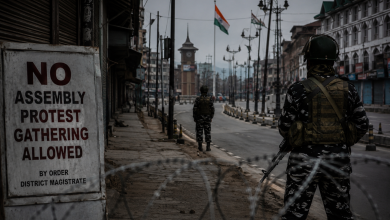
 India’s ruling regime has long treated information in Indian Illegally Occupied Jammu & Kashmir (IIOJK) as a strategic battlefield. Press-freedom monitors now warn of severe censorship concerns in Kashmir. In practice, New Delhi aggressively dictates the message, it saturates state-run TV, print and social media with patriotic slogans while labelling Kashmiri dissent as “terrorism”. For example, after the April 2025 Pahalgam attack New Delhi even asked foreign outlets to use the word “terrorist” for the gunmen. The effect is a uniform narrative of revenge and patriotism on Indian news outlets.
State Media and Propaganda
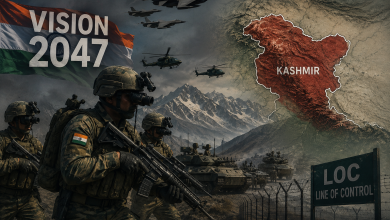
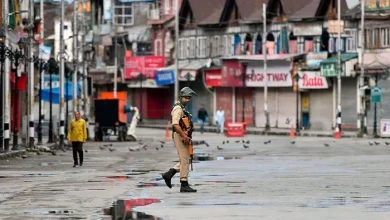
Indian authorities tightly control media coverage of Kashmir. State TV and newspapers endlessly replay official talking points. Every act of resistance is blamed on “Pak-sponsored terrorists,” and every act of repression is portrayed as a necessary step toward restoring normalcy. In the 2025 crisis, Indian news channels aired utterly fabricated war stories with dramatic flair. Zee News, for instance, even broadcast an animated capture of Lahore, a claim India’s own military had to formally deny later. At the same time, official social-media accounts showed only staged images of soldiers as friendly protectors. These images stand in stark contrast to reality. Human-rights researchers highlight the that behind the propaganda is the grim truth of Kashmir. A viral photo showed a Kashmiri boy sitting beside his dead grandfather, a scene that shatters the government’s sanitized narrative of soldiers as saviors.
This concerted framing is intentional. One Indian social-media account even boasted “in information warfare, perception is the battlefield,” urging followers to amplify any news that hurt Pakistan, and to bury any true news that harmed India. The result is that dissenting voices rarely slip through. Kashmiri local media now largely echo New Delhi’s normalcy story not because of lack of critical stories, but because journalism in the Valley is under strict lockdown. As Free Press Kashmir’s editor put it after being suspended, the censor was sending a clear message: “We are watching you.”

Digital Platforms and Censorship
India’s information war is perhaps most blatant online. Under India’s IT rules, social-media companies are compelled to place Kashmiris in jail for resisting government orders. In May 2025, just days after Pahalgam, India’s IT ministry quietly ordered X to withhold over 8,000 accounts within India, many belonging to Kashmiri and Pakistani media outlets. X later confirmed it had received no specific legal justification for this mass blackout. Among those silenced were Kashmiri news sites i.e. Free Press Kashmir, The Kashmiriyat and journalists (Anuradha Bhasin, Muzamil Jaleel). New Delhi even noted that India blocked access to thousands of X accounts from Pakistan during the crisis.
The digital clampdown extends beyond Indian borders. NDTV reported that Instagram, on an Indian court order, blocked the official accounts of Pakistani celebrities for Indian users. India had already banned over a dozen Pakistani news YouTube channels (Geo, ARY, Dawn) under the IT Act. On the connectivity side, Jammu & Kashmir has often been plunged into internet blackouts or service slowdowns. Tech-policy researchers note that India leads the world in telecom shutdowns: J&K has faced months-long bans and statewide restrictions. In fact, Indian officials have blocked tens of thousands of websites and URLs between 2018–24. Combined with social-media censorship, this creates an online information ghetto: Kashmiri netizens find themselves cut off or forced to see only content approved by New Delhi.
Disinformation Blitz
Parallel to censorship, India has unleashed a wave of disinformation. In the days after Operation Sindoor (May 2025), social media became flooded with fake news and trending hashtags. Indian trolls and news channels pushed slogans like #PakSurrender etc. amplified by automated bot accounts. Dozens of outright fabrications originating in Indian media. For example, Republic TV and Zee News claimed Indian forces had struck Lahore or captured Pakistani pilots; NDTV falsely reported Pakistani tanks moving toward Indian territory all of which India’s military later had to deny. In the first 48 hours of that conflict, AltNews and others flagged over 70 major disinformation cases on Indian networks. In the information arena, New Delhi’s narrative thus largely goes unchallenged.
The Way Forward
India’s so-called information security measures in Kashmir amount to an information stranglehold. By flooding the media with jingoistic content and cranking up legal censorship, New Delhi has bottled up the truth in IIOJK. Critics inside India have admitted the pattern: long before the Pahalgam attack, the government was working on ways to stymie freedom of expression, and it simply seized the crisis as an opportunity to tighten censorship. In practice, every crisis becomes a pretext to monopolize truth, privileging one narrative while dissent is branded dangerous.
Exposing this battle for narrative is urgent. Pakistan must intensify its diplomatic and media campaigns to alert the world that India is “fooling the world community” about Kashmir. Only by piercing the fog of propaganda can the true plight of Kashmiris come to light. After all, in this decades-old conflict the side that controls the message wields enormous power, perhaps even more than those who hold the guns.







One Comment