The Human Security Dimension of Kashmir: India’s Military Calculus and Constitutional Marginalisation
Sania Abbas
 For generations, the people of occupied Jammu and Kashmir have endured uncertainty, division and persistent denial of fundamental rights. The Kashmir dispute cannot be reduced to a contest over territory between India and Pakistan; it must be understood first and foremost through the lens of human security. Yet successive Indian governments have consistently treated Kashmir as a problem to be solved by force and administrative fiat, sidelining the dignity, aspirations and everyday lives of Kashmiri men, women and children.
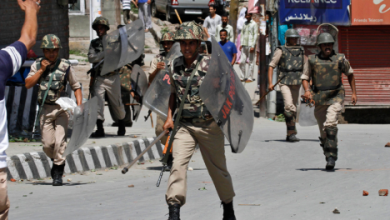
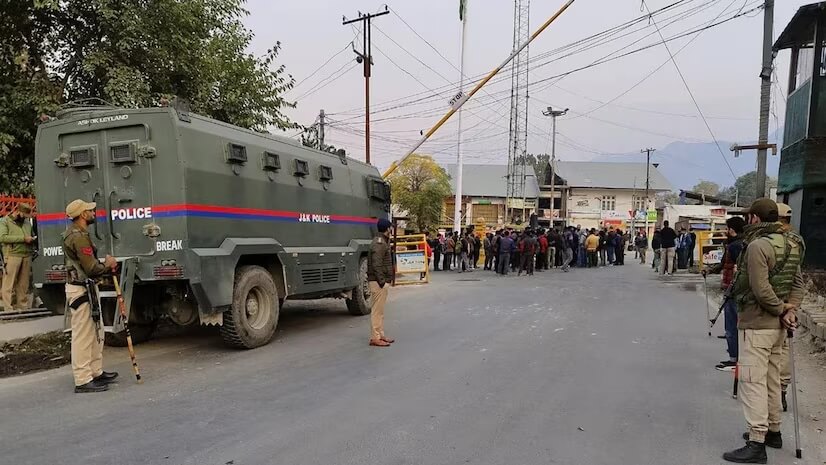
New Delhi’s approach has been resolutely state-centric and militarised. The heavy and prolonged deployment of troops, frequent imposition of curfews, routine suspensions of communication, arbitrary detentions and the prolonged use of laws that allow for detention without prompt judicial oversight have become a feature of life in the occupied territory. Rather than opening political channels to address long-standing grievances, the pattern has been to prioritise control: to securitise politics, criminalise dissent and govern at a distance through coercion. The result is not merely a temporary law-and-order posture but a structural marginalisation that penetrates the social, economic and political fabric of the region.

The revocation of Article 370 in August 2019 and the subsequent bifurcation of the state into two Union Territories represent a decisive constitutional recalibration imposed from New Delhi. Carried out without the meaningful consent of the Kashmiri people, the move was accompanied by a total communications blackout, mass detentions of political leaders and activists, and restrictions on movement and assembly. For many Kashmiris, these measures crystallised long-held fears: that constitutional change would be used as an instrument of political disempowerment and demographic engineering rather than as a step toward inclusion and justice.
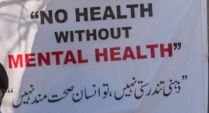
Beyond the constitutional maneuvers, the daily reality of militarisation has left deep scars. Young people have come of age under the shadow of checkpoints, searches, and an omnipresent security apparatus. Educational trajectories have been disrupted by instability and periodic shutdowns; economic opportunities have been stifled as investment and tourism falter under insecurity and governance restrictions. Mental health crises, family ruptures, and a pervasive sense of humiliation and grievance are rarely captured in strategic briefings, yet they are the lived consequences of policies that privilege strategic control over human well-being.
India’s security calculus has consistently placed strategic and territorial considerations above the human element of the dispute. Concepts such as “strategic stability” and “internal security” have taken precedence over the basic freedoms of expression, political participation and access to justice. The Line of Control, defended as a necessary military boundary, has in reality hardened into a social and emotional border: families separated, trade networks severed, shared cultural ties strained. For ordinary Kashmiris, the map’s ink translates into isolation, lost livelihoods and a steady erosion of community life.
Legal instruments and administrative practices have further compounded exclusion. Measures that were justified in the name of counterinsurgency and public order have often been implemented in ways that erode accountability. Laws that grant extraordinary powers to Indian forces, together with frequent administrative detentions and restrictions on assembly, have created environments where grievance cannot be openly voiced or effectively channelled through democratic processes. As a consequence, alienation deepens and the space for peaceful political contestation narrows.
The international community’s emphasis on managing the India–Pakistan dimension of the dispute has, at times, allowed the human realities to fall off the agenda. When global actors frame Kashmir primarily in terms of regional stability or bilateral rivalry, the substantive concerns of the Kashmiri people—rights, restitution, political agency—are deprioritised. This external focus on geopolitics inadvertently reinforces internal policies that treat the population as an object of security management, rather than as active citizens whose consent and dignity matter.
A genuine pivot toward human security would require more than rhetorical commitments. It would demand a recalibration of policy in New Delhi: the restoration of meaningful political agency for Kashmiris, transparent and accountable governance, the repeal or reform of legal provisions that enable prolonged deprivation of liberty without due process, and a clear strategy to rebuild livelihoods and social trust. Communications and information rights must be protected; arbitrary detentions and administrative overreach must be challenged; and avenues for inclusive political dialogue must be reopened.
Lasting peace in South Asia will not be achieved by constitutional decrees imposed from above, nor through the continued deployment of overwhelming force. Security that is built on repression is fragile and unsustainable. Until the rights and aspirations of the people of occupied Jammu and Kashmir are placed at the centre of policy, the cycle of grievance and instability will continue.
The task ahead is not easy, but it is urgent. A shift from militarised governance to policies grounded in human security would not only honour the lives of millions of Kashmiris but would also offer the most durable path to peace and stability in the region. Only when the voices of the people, rather than the calculations of security planners, become the primary basis for policymaking will a genuine and lasting settlement be possible.
The writer is pursuing MPhil in International Relations at NUML and is a researcher at the Kashmir Institute of International Relations (KIIR).