Article: Kashmir’s economic strangulation: Call for global attention to the situation in Jammu & Kashmir
By: Raies Mir
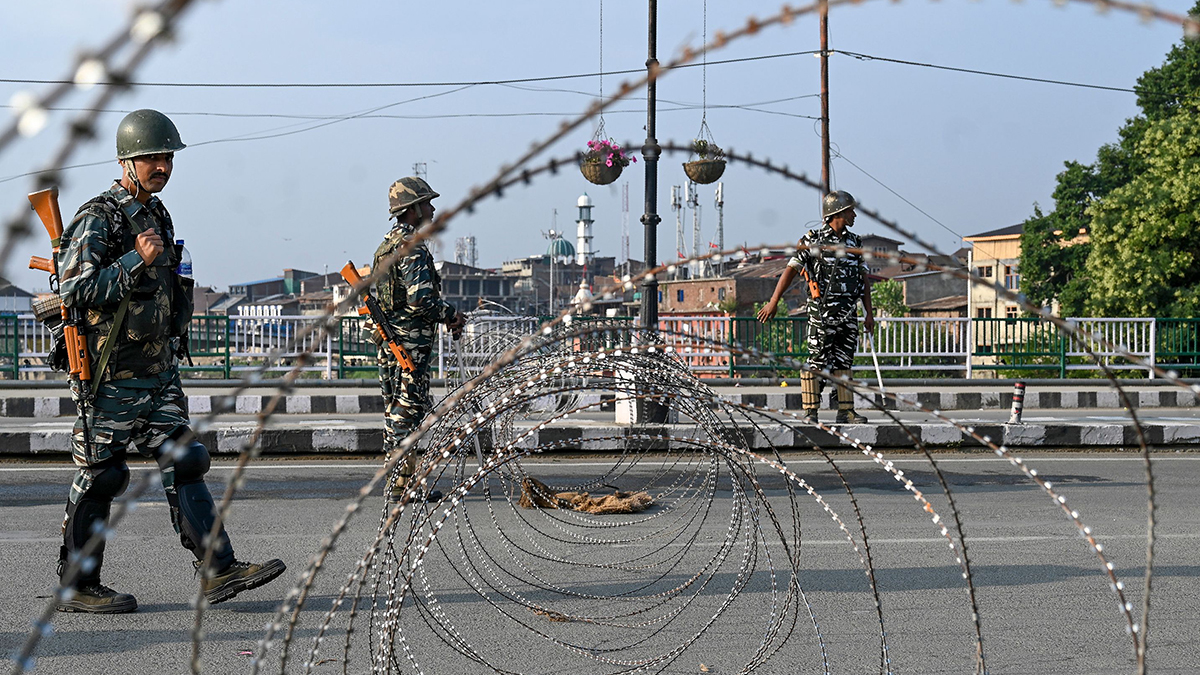
Kashmir today finds itself in the grip of an economic siege with devastating consequences for its people. The repeated and prolonged closure of the Srinagar–Jammu Highway, the only all-weather road linking the Valley with the outside world, has triggered a systemic breakdown of the region’s economy. For ordinary Kashmiris, this has meant living under unbearable economic pressure alongside the constant shadow of political repression.
Perishable goods, especially Kashmir’s world-renowned apples and other fruits, are rotting for lack of timely transportation. Orchardists and traders who depend on the fruit industry—the backbone of Kashmir’s rural economy—are watching helplessly as their year’s hard work decays in stranded trucks. Local industries and businesses have also been crippled, unable to withstand the repeated interruptions in supply chains. At the same time, prices of essential commodities have skyrocketed, making everyday survival a struggle for common families. Conservative estimates put the losses due to road blockages and closures at over Rs 1,000 crore, a staggering figure for an already fragile economy.
The Political Context
What might appear to outsiders as a mere logistical failure is viewed within Kashmir as part of a larger, deliberate strategy of economic strangulation under occupation. With the Bharatiya Janata Party (BJP)-led regime at the helm, many Kashmiris believe that the crisis is not accidental but a calculated policy to weaken the region, marginalize its people, and erode their identity.

The political backdrop cannot be ignored. In August 2019, the Government of India unilaterally revoked Articles 370 and 35A of its Constitution, dismantling Indian illegally occupied Jammu & Kashmir’s special autonomous status. The move, carried out under a massive military lockdown and without the consent of the local population, raised serious questions about legality, democracy, and human rights. Since then, power has been centralized in New Delhi, stripping Kashmiris of decision-making authority over politics, economy, natural resources, and even religious endowments such as Waqf properties.
This centralization has deepened the political marginalization of Kashmiri voices. Combined with economic suppression, restrictions on civil society, and curbs on press freedom, the result is a suffocating environment where dissent is stifled. Draconian laws like the Public Safety Act (PSA) and the Unlawful Activities (Prevention) Act (UAPA) give sweeping powers to Indian forces, under whose watch thousands have been detained. The presence of one of the world’s largest concentrations of military and paramilitary personnel has turned civilian life into a daily ordeal.
Breaking the Deadlock: Reopening Srinagar–Rawalpindi Road
To address the economic paralysis, Kashmir needs more than temporary fixes—it needs the restoration of its traditional trade and communication lifelines. Reopening the historic Srinagar–Rawalpindi road could be a vital step forward. Such a move would not only revive trade and commerce but also ease the burden on farmers and traders, reestablish people-to-people contact, and help stabilize the broader region.
A Call to the Global Community
The enforced silence in Kashmir, maintained through intimidation, surveillance, and brute force, cannot be allowed to continue unchallenged. Journalists, human rights defenders, and political leaders are frequently targeted, detained, or silenced, while ordinary citizens live in an atmosphere of fear. This is not simply a domestic issue—it is a human rights crisis with global implications.
It is time for the international community, human rights organizations, and democratic governments to:
• Listen to the voices of Kashmiris, rather than dismiss or silence them.
• Demand accountability for human rights abuses committed under impunity.
• Advocate for the restoration of economic and political freedoms in the region.
• Support peaceful and democratic solutions to the long-standing Kashmir dispute.
Kashmiris must not be left to suffer in silence. Their right to dignity, economic opportunity, and political freedom is enshrined in international law and resonates with the conscience of humanity. The world must not ignore this prolonged strangulation. Transparency, accountability, and justice are urgently needed.
The people of Jammu & Kashmir deserve to live not under siege, but with the freedom to determine their own future. Anything less is a betrayal of the universal principles of justice and democracy.