Kashmir’s apple industry faces collapse due to systemic neglect, warns officer
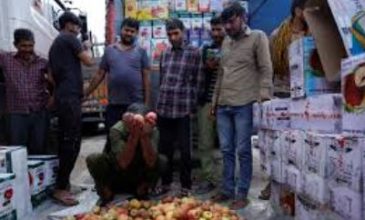 Srinagar: In Indian illegally occupied Jammu and Kashmir, former Area Marketing Officer (AMO) of the Horticulture Planning and Marketing Department, Mukhtar Ahmad Khan, has warned that the Valley’s apple industry is on the verge of collapse due to decades of neglect, lack of infrastructure and unreliable road connectivity for dispatch of fruit to outside markets during harvest season.
According to Kashmir Media Service, Khan said Kashmir’s most vital agricultural sector continues to suffer in the absence of modern post-harvest infrastructure. Cold storage facilities, controlled atmosphere (CA) units, and fruit processing plants are either non-existent or too limited in capacity. He noted that C-grade apples are wasted for want of processing units, while CA storage in the Valley cannot handle even a fraction of the nearly 10 lakh metric tonnes of A-grade fruit produced annually. “With no storage cushion and unreliable all-weather transport, the system collapses every year as orchardists are forced to sell in distress due to intentional delays in fruit movement,” he added.
Referring to the introduction of High-Density apple plantations, Khan said that while they have improved yields, they require earlier harvesting and faster distribution. In the absence of storage and processing buffers, he warned, the sudden glut of produce becomes unmanageable, especially when transportation is deliberately obstructed.
The former officer also criticised the lack of a comprehensive export policy and the absence of a Minimum Support Price (MSP) or price-support scheme. He stressed that middlemen exploit the situation, forcing growers to sell at throwaway rates. “A robust MSP mechanism is urgently needed to protect farmers from losses when market prices fall below production costs,” he said.


Khan further expressed concern over the unregulated sale of pesticides, saying substandard and overpriced chemicals flood the market unchecked, burdening farmers financially and causing ecological damage. He called for a dedicated Pesticide Regulatory Authority to monitor quality and pricing.
He stressed that real reform must begin with reliable road connectivity across fruit-producing belts, especially during harvest. “Better roads and uninterrupted transport would allow growers to move their produce quickly and avoid losses. But as long as delays are engineered during peak harvest, farmers will continue to suffer,” he cautioned.