India’s nuclear waste turns Jharkhand into graveyard of misery: Kavya
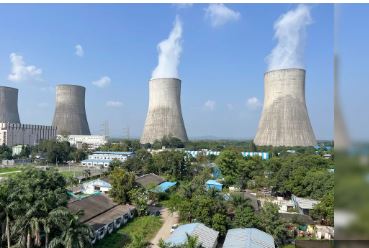 New Delhi: Indian journalist and social commentator Kavya Karnatka has said that the true cost of India’s claim to being a nuclear power is being paid by the forgotten and devastated villages of Jharkhand, where people live amid burning land, poisoned water, and slow death due to dumping of nuclear waste.
According to Kashmir Media Service, speaking in a media interview, Kavya revealed that Jharkhand, which produces the largest share of India’s uranium and coal, has been turned into a wasteland. “We did not provide them with jobs; we gave them disabilities,” she said, describing the tragic state of a village called Jadoo Ghora, where “every one out of five women undergoes miscarriage because we have dumped our nuclear waste there.”
She said every third man in Jharkhand suffers from some form of disability, while people live with rashes all over their bodies and melted faces. “Half of the children face cognitive disability,” she added. In another coal-producing area, she narrated, “the soil itself is burning due to excessive excavation of coal, and people are forced to use contaminated water.”
Kavya questioned the government’s claims of progress, saying, “Our people say India has become Vishwaguru. However, this is not a fact.” She contrasted India’s supposed development with grim realities — “Look at Mumbai; it has big skyscrapers, but it also has the world’s largest slum, where around twenty people live in a small room that fills with water in the rains.”


She further noted that in capital city, New Delhi, “people are fed water that looks like petrol — you can imagine the situation in the rest of India.” Condemning India’s illusion of urban prosperity, Kavya said, “Our movies have taught us that Mumbai and Delhi are the best places to live. That traps people. Indian cities are the worst in the world — be it pollution or nature connectivity.”
She added that even in the slums, “drugs like whitener have reached there — the only way out for people trapped in misery.” Highlighting the plight of women and journalists, she said, “When we step out, especially as women, we have no safety. Journalists don’t cover such things because they don’t want to expose it.” Kavya’s testimony exposes the stark inequality and environmental devastation in India’s so-called economic growth story, showing how its poorest regions continue to pay the heaviest price for the country’s pursuit of nuclear and industrial power.