Pakistan Naval chief’s Bangladesh visit marks renewed bilateral engagement
Dhaka seeks strategic balance amid New Delhi’s expanding maritime hegemony
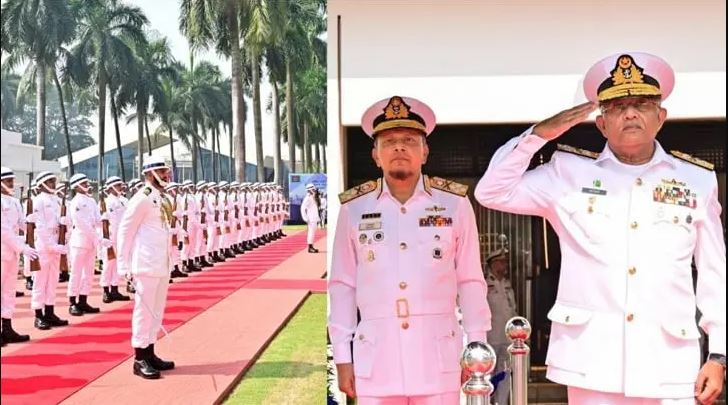
Islamabad: Bangladesh’s renewed engagement with Pakistan marks a quiet yet strategic shift, driven by growing unease over India’s expanding military dominance in the Bay of Bengal. The visit of Pakistan’s Naval chief Admiral Naveed Ashraf to Dhaka underscores Bangladesh’s intent to diversify its defense ties and reduce dependence on India.
According to Kashmir Media Service, Admiral Naveed Ashraf arrived in Bangladesh yesterday on a four-day official visit — the first by a Pakistani naval chief since 1971. Soon after his arrival, Ashraf met with Bangladesh army chief Gen. Waker-Uz-Zaman at the Army Headquarters. The two officials discussed ways to strengthen bilateral defense cooperation and military capabilities. They also discussed the prospects for expanding military cooperation through bilateral training, seminars, and visits.
The visit came a day after Pakistan’s naval ship PNS SAIF anchored off Bangladesh’s main port in the southeastern city of Chattogram for a four-day goodwill visit that will last until Nov. 12. It followed a cargo ship that anchored in the port for the first time last year, shortly after the interim government led by Muhammad Yunus took office.


“The coordinated engagement underscores Pakistan’s commitment to strengthen longstanding ties and improve maritime collaboration with Bangladesh,” the Pakistan Navy said in a statement.
Bangladesh and Pakistan’s relations have notably improved since former Prime Minister Sheikh Hasina was ousted in a mass uprising on August 5, 2024, and forced to flee to India.
Facing challenges from Indian naval expansion, river control, and Western-aligned exercises, Dhaka seeks balanced partnerships to safeguard its sovereignty and pursue greater regional autonomy through renewed defense cooperation with Islamabad.
India’s growing military footprint in the Indian Ocean, from bases in the Andaman and Nicobar Islands to Arihant-class submarines, poses a direct threat to Bangladesh’s maritime sovereignty. Moreover, regular India–US–Japan naval drills in the Bay of Bengal project Western-aligned power, undermining the region’s neutrality and Bangladesh’s autonomy. India’s dams on the Ganges and Teesta rivers diminish freshwater inflows, harming Bangladesh’s delta ecosystems and coastal resilience.
Pakistan’s outreach aims to bolster Bangladesh’s naval strength amid rising concerns over India’s assertive maritime posture. Planned training and defense exchanges reflect Islamabad’s support for Dhaka’s sovereign right to secure its maritime interests.
Through this renewed cooperation, both nations seek to promote a balanced maritime order in the Bay of Bengal and resist unilateral dominance in South Asian waters.