India rushes to replenish Excalibur artillery stock after heavy battlefield losses
New Delhi: India has moved to urgently replenish its depleted stock of specialised Excalibur artillery ammunition during Operation Sindoor against Pakistan, underscoring New Delhi’s relentless war-mongering posture and its ongoing push for a dangerous regional arms race.
According to Kashmir Media Service, New Delhi has requested 216 Excalibur projectiles under a $47.1 million deal cleared by the United States, along with a separate $45.7 million package to procure around 100 Javelin missile systems.
Analysts note that India’s fast-tracked purchases follow significant losses and heavy expenditure of its weaponry during May 2025 escalations, exposing gaps in its stockpiles.
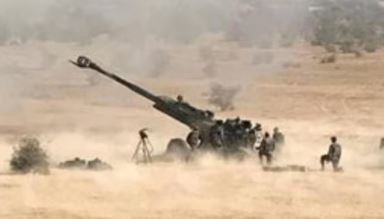
The Excalibur projectile, fired from the US-made M-777 Ultra-Light Howitzer, is a precision-guided artillery round capable of homing in on specific targets. India had deployed these munitions during Operation Sindoor, with some of the rounds claimed to have been used on May 7. India purchased 145 M-777 guns nearly a decade ago.


This latest arms transfer marks the first foreign military sale to India since Washington–New Delhi ties soured in August after the US imposed a 50 percent tariff on Indian goods, including a punitive 25 percent tariff linked to India’s crude oil purchases from Russia. Despite this diplomatic chill, the US Defense Security Cooperation Agency (DSCA) has issued mandatory certifications and notified Congress of both sales.
The DSCA notification said India sought up to 216 Excalibur tactical projectiles, along with portable electronic fire-control equipment. The package includes technical data, repair support, and logistics assistance. A second notification confirmed India’s request for 100 Javelin missile rounds and 25 lightweight command launch units, along with simulation rounds, coolant units, technical manuals, spare parts, system integration and lifecycle support.
Observers say the latest procurement reinforces India’s ongoing militarisation drive and its refusal to end the dangerous arms buildup in the region, even after suffering major equipment losses during May conflict with Pakistan. Kashmir-focused analysts note that New Delhi’s aggressive posture threatens regional peace and diverts resources from pressing humanitarian and socio-economic needs.