South Africa’s PCLU accused of delaying action on Modi crimes complaint
SAKAG mulls High Court interdict after prosecutors ask for ‘new evidence’
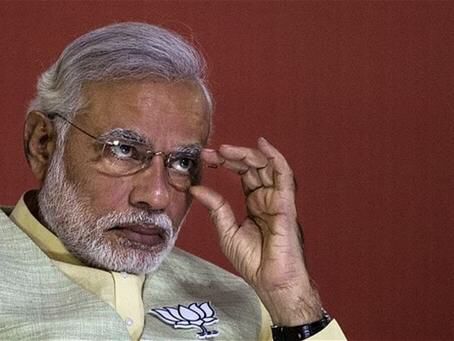
Johannesburg: The South Africa Kashmir Action Group (SAKAG) has criticized the Priority Crimes Litigation Unit (PCLU) of South Africa’s National Prosecuting Authority for what it calls an inadequate consideration of the “Modi Docket”—a criminal complaint seeking the investigation, arrest, and prosecution of Indian Prime Minister Narendra Modi for alleged international crimes committed in Indian illegally occupied Jammu and Kashmir.
According to Kashmir Media Service, the PCLU’s acknowledgment letter, issued by Acting Director of Public Prosecution Advocate K.G. Mashamaite, reviews the case history since 2018 but advises complainants to approach the Directorate for Priority Crime Investigation Counter Assault Team (DPCI-CATS) if new evidence becomes available. SAKAG maintains that substantial fresh evidence has already been submitted and that the PCLU’s guidance amounts to an unnecessary delay.
SAKAG Chairman Salman Khan said the organization is now considering filing an urgent interdict before the High Court of South Africa, supported by senior human rights advocates and legal counsels. He recalled that on 12 November 2025, SAKAG and the Muslim Lawyers Association (MLA) had jointly filed a crimes-against-humanity complaint against Narendra Modi under international customary law and the Rome Statute.


The complaint was formally lodged with the South African Police Service (SAPS), the National Director of Public Prosecutions (NDPP), and the Directorate for Priority Crime Investigation (DPCI). Attorney Yousha Tayob of MLA confirmed that SAPS Captain Matlhabe has acknowledged receipt of the complaint documents via email and stated that he would consult the National Prosecuting Authority for directions on the next steps in the investigation.
The complainants argue that grave violations of human rights and international humanitarian law have taken place in IIOJK under the authority of Modi’s government. These alleged breaches, they state, contravene the Geneva Conventions, the Universal Declaration of Human Rights (UDHR), the International Covenant on Civil and Political Rights (ICCPR), and the Rome Statute—international instruments that South Africa is obliged to uphold.
The legal basis of the complaint draws on several provisions of the South African Constitution. Sections 231 to 233 govern the incorporation of international agreements and customary international law, while Sections 38(a) and 39(1)(b) require courts to consider international law when interpreting the Bill of Rights. The MLA and SAKAG argue that they are acting both in their own interest and on behalf of victims in IIOJK who cannot represent themselves. They emphasize that crimes against humanity constitute jus cogens violations—universally prohibited and non-derogable norms of international law.
SAKAG stressed that South Africa carries a moral and legal responsibility, given its history of struggle against apartheid, to resist granting impunity to individuals accused of serious international crimes. “It is unthinkable that a person accused of such heinous crimes could be welcomed in South Africa with immunity,” Salman Khan said. He warned that failure to act could turn South Africa into a safe haven for war criminals and undermine the principles of the Bill of Rights in Chapter 2 of the Constitution.
The complaint ultimately appeals to South Africa’s duty to protect, its commitment to the rule of law, and its longstanding solidarity with oppressed peoples around the world.