SIA arrests another Kashmiri civilian as raids continue unabated in IIOJK
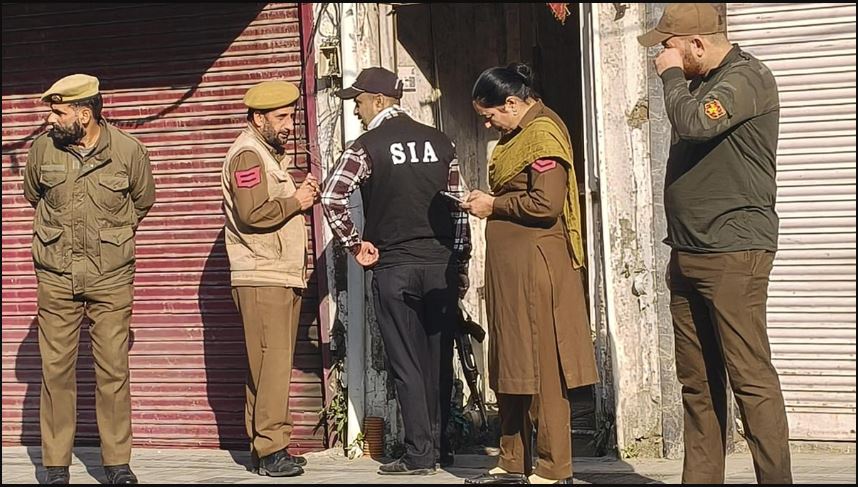
Srinagar: Indian police and New Delhi–controlled State Investigation Agency (SIA) have intensified raids and arrests across Indian illegally occupied Jammu and Kashmir under the sweeping pretext of dismantling what they call a “white-collar terror network,” further deepening fear and repression in the territory.
According to Kashmir Media Service, the SIA arrested a Kashmiri civilian, Tufail Niyaz Butt of Batamaloo, Srinagar. Officials said he was picked up as part of what they describe as an “ongoing investigation” into posters pasted in Bunpora, Nowgam, in mid-October—an incident local residents say is being exploited to justify widescale detentions.
The police investigation—personally overseen by Senior Superintendent of Police (Srinagar) Dr G.V. Sundeep Chakravarthy—began with CCTV footage analysis that led to the arrest of three youth: Arif Nisar Dar alias Sahil, Yasir-ul-Ashraf, and Maqsood Ahmad Dar alias Shahid. Their interrogation was subsequently used to expand the case, resulting in the arrest of Maulvi Irfan Ahmad, a former paramedic turned imam, whom police accused of supplying posters and “radicalizing” doctors.

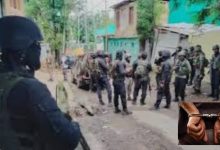
As part of the widening crackdown, investigators extended the trail to Faridabad’s Al Falah University, where two Kashmiri doctors—Dr Muzzafar Ganaie and Dr Shaheen Sayeed—were arrested. Indian agencies also claimed to have seized 2,900 kg of explosive material—an assertion independent observers have questioned due to the lack of transparency and contradictory statements issued by investigative bodies.
Meanwhile, Kashmiris continue to decry the systematic use of raids, arrests, and intimidation under fabricated charges designed to stifle dissent and criminalise professional, academic, and religious circles. Rights groups have termed the ongoing campaign an attempt to manufacture a narrative that portrays ordinary Kashmiris—including doctors, scholars, and students—as security threats.
Kashmiri civil society has stressed that India’s agencies are weaponizing investigations to justify collective punishment, crackdown on dissenting voices, and sustain the climate of fear across the occupied territory. Arrests and raids, locals say, continue unabated under one pretext or another—further exposing India’s repressive rule in IIOJK.