Modi set to raise Hindutva flag over Ram Temple on ashes of Babri Masjid in Ayodhya
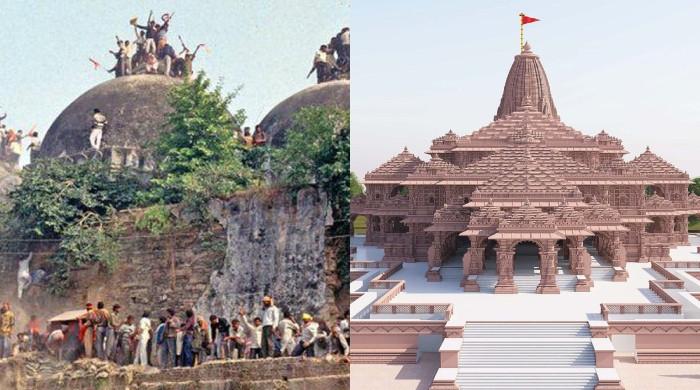
Ayodhya: The completion of the Ram Temple in Ayodhya on the very site where the Babri Masjid once stood has sparked fresh concerns over the treatment of religious minorities in India.
According to Kashmir Media Service, the mosque, demolished by extremist Hindu mobs on December 6, 1992, was a historic place of worship for Muslims. The Indian state largely remained a passive spectator during the attack. Today, on November 25, 2025, Indian Prime Minister Narendra Modi is scheduled to perform the Hindu ritual of “Dhwaja Arohan” by hoisting a 22-foot religious (dharmic) flag. ,
Following the demolition, widespread riots broke out across India, with Muslims bearing the brunt of casualties and losses. In 2019, the Indian Supreme Court ruled that the demolition of Babri Mosque was unlawful, yet the land was handed over to a trust for temple construction, effectively legitimizing the act. Today, saffron flags fly over the gleaming new temple, while the ashes of the Babri Mosque and the scars of the Muslim community remain hidden behind its walls.


Observers note that the Ayodhya case has become a classic example of extremist politics and mob violence being exploited for electoral gain. India touts the temple as a “civilizational victory,” but the question remains: where is the protection of minority rights and their sacred sites? Places that once echoed with calls of “Allahu Akbar” are now the stage for Hindutva political triumphs.
Rights analysts warn that the completion of the Ram Temple sets a dangerous precedent for other mosques and Muslim heritage sites across India, highlighting the systemic marginalization of religious minorities under the current Modi-led regime. The Babri Masjid’s transformation into a temple stands as a stark reminder of how extremist ideology has overridden India’s secular constitution, democratic norms, and the rule of law.