India violating UDHR, 96,480 Kashmiris killed in IIOJK since Jan 1989
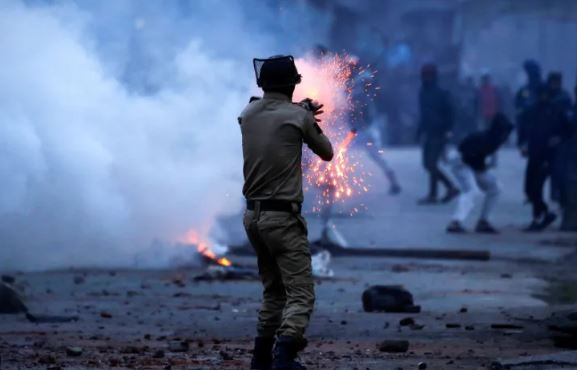
Islamabad: Indian illegally occupied Jammu and Kashmir continues to reel under violent and brutal occupation and political injustice as the world observes Human Rights Day today.
A report released by the Research Section of Kashmir Media Service on this occasion stated that while the Universal Declaration of Human Rights (UDHR) of December 10, 1948, was a milestone, Kashmiri human rights continue to be violated with impunity.
Despite India’s formal commitments to international human rights instruments, every fundamental right guaranteed under the UDHR—including life, liberty, dignity, movement, expression, property, and fair trial—continues to be denied to millions of Kashmiris.

An alarming record of state violence since 1989 shows that 96,480 Kashmiris were killed, including more than 7,400 custodial deaths. Over 110,000 homes were destroyed, 179,759 people arrested, 22,991 women widowed, and 11,269 women molested or disgraced. These abuses have intensified since India’s 2019 revocation of Articles 370 and 35A, which dismantled Kashmir’s limited autonomy and facilitated widespread demographic engineering. Since then, 1,047 Kashmiris have been killed, 32,816 arrested, and 1,168 structures destroyed.
The report also highlights the increasing use of lethal weapons, including pellet shotguns, which have caused mass blindness and permanent disabilities. Testimonies from victims and findings by international organizations underscore the brutality of these tactics.
Economic repression is a core component of India’s strategy. Industrial collapse, destruction of homes, seizure of 192 properties in 2025 alone, mass termination of Muslim government employees, and the shutdown of cross-LoC trade have deepened economic desperation. Youth unemployment, among the highest in India, has reached crisis levels, with joblessness among young women estimated at nearly 50%.
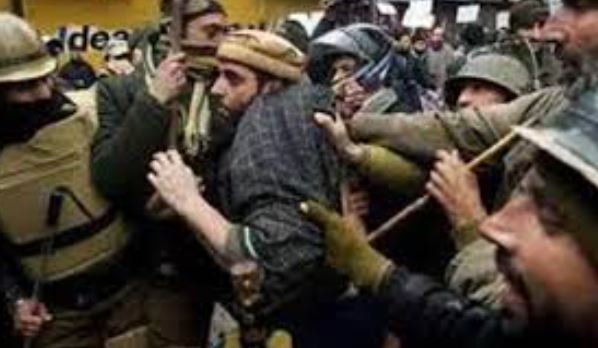
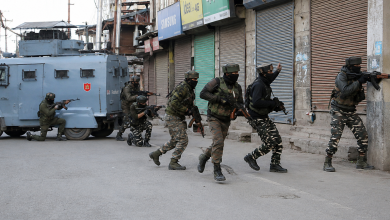
Recent crackdowns—including arbitrary arrests, home demolitions, torture, and communication blackouts—have been condemned by UN Special Rapporteurs, who warn that India’s actions violate multiple international laws, including the UDHR, ICCPR, and Geneva Conventions. Experts emphasize that counter-terrorism is being used as a pretext for collective punishment, profiling, demographic alteration, and suppression of political dissent.
The report situates current abuses within a historical pattern of constitutional manipulation, beginning with Sheikh Abdullah’s dismissal in 1953 and culminating in the 2019 revocation of autonomy. India’s refusal to allow a UN-mandated plebiscite, combined with insistence on bilateralism, has created a permanent state of denial for Kashmiri self-determination.
Ultimately, evidence demonstrates that India’s actions in Kashmir constitute systematic violations of international humanitarian and human rights law. Military occupation, demographic engineering, economic strangulation, and suppression of civil liberties demand urgent global intervention. Kashmir today remains not merely a conflict zone but an active site of structural oppression, where human rights are suspended, voices silenced, and basic dignity denied.
State Violence in IIOJK Since January 1989:
Total killings: 96,480
Custodial/fake encounter killings: 7,408
Civilians arrested: 179,759
Structures/houses destroyed or damaged: 110,562
Women widowed: 22,991
Children orphaned: 108,007
Women gang-raped/molested: 11,269
Enforced disappearances: 8,000
UN Special Rapporteurs—including Ben Saul, Morris Tidball-Binz, Nazila Ghanea, Balakrishnan Rajagopal, Nicolas Levrat, Paula Gaviria, Irene Khan, and Mary Lawlor—expressed alarm over the “scope and severity” of India’s human rights violations in IIOJK on November 24, 2025. They noted sweeping operations resulting in arrests of around 2,800 individuals, including journalists and human rights defenders, many detained under draconian laws like PSA and UAPA. Torture, incommunicado detention, and denial of access to lawyers and families were reported. The experts urged New Delhi to honour its international obligations, emphasizing that counter-terrorism laws must not be used to crush human dignity.
Criminalizing Dissent and Media Suppression:
Over 4,000 political prisoners, including top Hurriyat leaders, journalists, and activists, remain in Indian jails. Indian forces continue to use live ammunition, pellet guns, tear gas, and PAVA shells, leaving thousands with permanent disabilities. Since July 2016, pellet guns alone have injured over 7,000 Kashmiris, with more than 200 permanently losing their eyesight.
Media freedom is under severe threat. The State Investigation Agency (SIA) raided the Kashmir Times office in Jammu and lodged fabricated charges against Executive Editor Anuradha Bhasin. Global watchdogs, including RSF and IFJ, condemned the raids and demanded immediate withdrawal of charges.
Economic Oppression:
In 2025 alone, 41 residential houses were destroyed, and over 192 properties seized, targeting agriculture, homes, shops, and offices. Government employees have been suspended in acts of retaliation, exacerbating unemployment and poverty. Kashmir’s youth unemployment stands at nearly 32%, with young women disproportionately affected at 48.6%.
Book Bans and Intellectual Repression:
On August 5, 2025, India confiscated 25 books on Kashmir, including works by Kashmiri, Indian, and international authors, claiming threats to “India’s integrity.” Scholars, authors, and journalists condemned the move as an attempt to silence Kashmiri voices and erase historical facts.
Women Under Attack:
Kashmiri women continue to face violence, harassment, and arbitrary detention. In the last 37 years, 2,356 women were killed, and 11,269 were molested under state terrorism. Women remain central targets in military operations, arbitrary arrests, and social repression.