Maulana Madani vows ‘death before shirk’ amid Vande Mataram row in India
Muslim bodies say Delhi cannot coerce citizens to chant slogans against faith
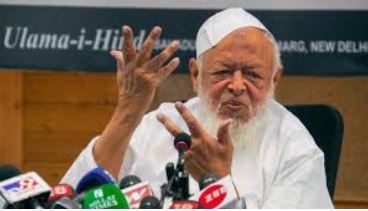 New Delhi: In India, Jamiat Ulema-e-Hind President Maulana Arshad Madani has issued a strong and uncompromising statement on the Vande Mataram controversy, declaring that Muslims “will accept death, but will never accept shirk,” as the Modi regime and Hindutva groups intensify pressure on minorities to conform to majoritarian symbols.
According to Kashmir Media Service, Maulana Madani said on social platform X that Muslims have no objection to others reciting Vande Mataram, but they cannot endorse its verses which “deify the nation, compare it with Durga Mata, and employ words of worship,” calling the translation itself rooted in shirk. “Mother, I worship you—that is the meaning of Vande Mataram,” he said, adding that no Muslim can be coerced into chanting slogans that violate Islamic belief.
Madani stressed that the Indian Constitution guarantees religious freedom under Article 25 and freedom of expression under Article 19. “Loving the country is one thing; worshipping it is another,” he said, asserting that Muslims need no certification of patriotism when their sacrifices in India’s freedom struggle are written in “golden pages of history.” He reiterated, “We worship only Allah. We will accept death, but we will never accept shirk.”
The statement comes as debate over Vande Mataram was reignited in the Indian Parliament, where Prime Minister Narendra Modi led a marathon 10-hour discussion marking the song’s 150th anniversary. Modi controversially claimed that the removal of certain stanzas in 1937 amounted to “dividing” the song and that this division “eventually contributed to the Partition of India,” blaming Congress and former Prime Minister Nehru for allegedly compromising on national symbols.

Opposition parties have accused the Modi government of weaponising the national song for political and electoral gains, especially at a time when India faces heightened communal polarisation.
Muslim organisations and rights groups say the push to impose Vande Mataram is part of a broader Hindutva project to erode constitutional protections and force minorities to submit to majoritarian cultural diktats. They maintain that coercion in matters of faith and worship violates the very foundations of a democratic and secular state.