Speakers urge global action against criminalization of dissent in Kashmir
Islamabad: Political leaders, academics, journalists and human rights activists have called for urgent global attention to the “criminalization of dissent” in Indian illegally occupied Jammu and Kashmir and highlighted the plight of Hurriyat prisoners languishing in jails of India and the occupied territory.
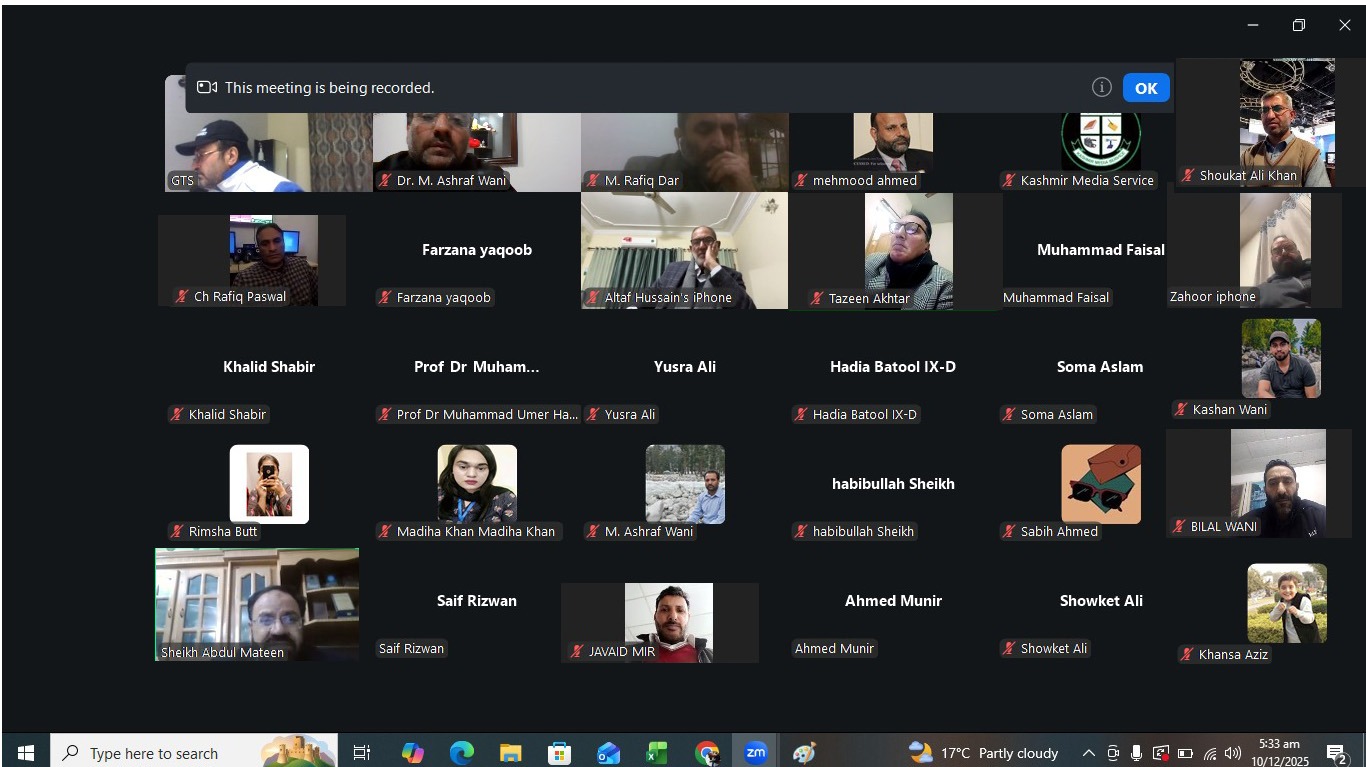
According to Kashmir Media Service, the speakers expressed these views at a World Human Rights Day webinar titled “Criminalizing Dissent in Kashmir: Hurriyat Prisoners and the Erosion of Rights,” jointly organized by Kashmir Media Service and the United Kashmir Journalists Association (UKJA). The session was moderated by senior journalist Dr. Muhammad Ashraf Wani and rights activist Rais Ahmad Mir.
Senior APHC-AJK leader Mehmood Ahmed Saghar warned that the unresolved Kashmir dispute continued to endanger peace in South Asia and could again lead to conflict if ignored.
Rreferring to the case of a Kashmiri mother who planned to walk almost 300 kilometers away from the Kashmir Valley to Kot Bhalwal Jail in Jammu to meet her detained son, he said the condition of human rights has worsened to the lowest ebb. He added that the Hurriyat Conference has decided to urge the government of Pakistan to display photos and profiles of Kashmiri prisoners in important offices and high commissions to draw international attention to their plight.
Former AJK minister and CEO of Dastaq Resources Pvt. Ltd. Farzana Yaqoob said that India was carrying out “demographic engineering” in IIOJK by issuing domiciles to non-Kashmiris. She said that if the situation was normal, such steps would not be needed. She emphasized continued advocacy for the Kashmir cause and added Kashmiris must also build pressure along with Pakistan to ensure their voices are heard effectively.
JKLF chief spokesman Rafiq Dar condemned media and political censorship in the occupied territory, saying many newspapers were not allowed to publish even routine political statements. He said that political leaders were being denied fair trials and referred to cases like Muhammad Maqbool Butt and Afzal Guru, whom he said were executed to “satisfy Indian conscience.” He added that incarcerated JKLF chief Muhammad Yasin Malik had also been denied justice and was being tried in fast-track weekly hearings without proper judicial process. He urged the world community to pressure India to end these practices.
Chairman of the Kashmir Institute of International Relations Altaf Hussain Wani stressed the need for stronger international mobilisation and more active Kashmiri diaspora engagement, citing the Palestinian model of civil society activism. He warned of new tactics in IIOJK, including increased drug exposure and the normalisation of alcohol among youth. He called for ampilifying the narrative of Indian “settler-colonialism” in IIOJK across media and policy forums.
Senior journalist Tazeen Akhtar said geopolitical developments had introduced new dimensions to the Kashmir dispute, including China’s growing role. He urged involving Beijing in discussions and called for establishing a dedicated media channel to highlight the Kashmir cause. He also said the global diaspora should follow the example of campaigns like the Sikh referendum movement.
AJK University academic Madiha Khan said fundamental human rights were being denied to Kashmiris. She questioned the legality of the accession document, calling it “fake” or at best conditional. She referred to media restrictions, privacy violations and the imposition of Hindutva ideology in IIOJK. She also raised concerns about threats to Indus water resources and tourist areas such as Pahalgam, and urged the world community to consider concrete actions including sanctions. She stressed the need to strengthen narrative-building.
Bahria University professor Dr. Muhammad Umar Hayat said Hindutva ideas had spread even among younger generations, including Gen Z and Alpha. He said students needed to be educated about the right to self-determination and that the Kashmiri’ freedom struggle should not be equated with terrorism. He suggested campus activities, policy briefs and dignified social media discussions to counter negative perceptions.
Human rights activist Soma Aslam discussed the legislative changes after the abrogation of Articles 35-A and 370, saying nearly 800 Indian laws had been imposed on IIOJK, reflecting the extent of control exercised by authorities.
Hurriyat leader and rights activist Shamim Shawl spoke about the emotional impact on Kashmiri families, again referring to the image of the mother walking to Kot Bhalwal jail. She warned of India’s targeted actions against youth, rising unemployment and what she described as orchestrated communal violence. She said these issues must be presented before international human rights organisations.
Hurriyat Conference leader Shaikh Abdul Mateen said freedom of expression had been severely restricted in IIOJK and the number of detainees without charges was increasing. He cited the example of Masarrat Aalam Butt, who he said had been in jail for 29 years. He stressed that the Kashmir dispute affected not only Kashmiris but also Pakistan, India, China and the wider international community. Recalling the tensions in May 2025, he urged Pakistan—“as our lawyer”—to continue strong political and diplomatic efforts. He also appreciated the current Pakistani leadership for once again bringing the Kashmir issue to the forefront.