Tensions in India-Bangladesh relations escalate from political allegations to sports boycott
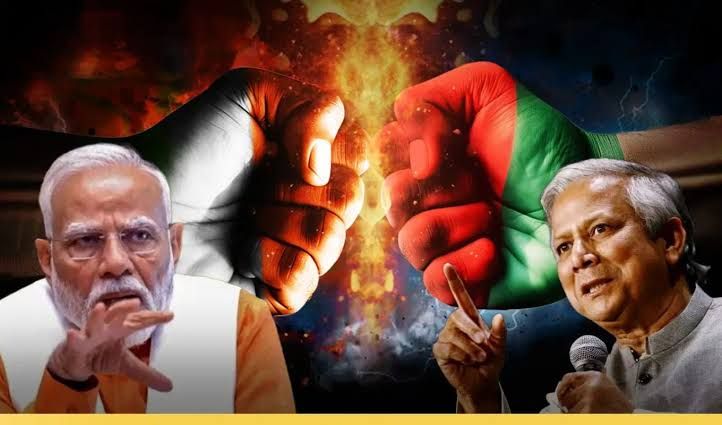
Dhaka: The relations between India and Bangladesh have been tense, starting from political allegations and extending to trade and diplomatic relations.
According to Kashmir Media Service, in recent days, both countries have taken steps towards boycotting sports against each other.
Tensions between the two countries increased after the fall of the government of Bangladesh’s pro-India Prime Minister Sheikh Hasina Wajid in 2024. As a result of the protest movement, Hasina fled to India, after which the Bangladesh interim government and the public criticized India for not returning Hasina so that she could face justice in her country.
India suspended the services of its embassy in Chittagong last month, after which Bangladesh also stopped visa services to India. As a result of protests by Hindu right-wing groups, the Indian Cricket Board did not allow a Bangladeshi player to participate in the Indian Premier League (IPL). In response, Bangladesh announced that it would not travel to India for the Cricket World Cup and requested international sports authorities to move the matches to a neutral venue.
The tension has been further complicated by political changes in both countries. For India, the political turmoil in Bangladesh has complicated its efforts to counter Chinese influence in the region. Bangladesh is due to hold parliamentary elections in 2026, and anger against India has been a key election issue.
Bangladesh’s caretaker government leader, Muhammad Yunus, has been urging India to deport Hasina or not grant sanctuary to her party members, but India has not responded.
India’s pro-government channels have portrayed Muhammad Yunus as a supporter of extremism. The tension has also become an electoral issue within India, especially in West Bengal and Assam, where protests for Hindu rights have raised the political temperature in India.
Despite the tension between the two countries, experts say, both governments are trying to limit its impact. India is trying to strengthen ties with the Bangladesh National Party, which has been Hasina’s rival, for the upcoming elections in Bangladesh.
In addition, Bangladesh’s Islamist party Jamaat-e-Islami has also become a complex challenge for India, representing the growing influence of Islamist politics.
Indian foreign policy expert Constantino Xavier said India is not only concerned about the elections but also about the ongoing political crisis in Bangladesh and its long-term strategy. He believes that in five or six years, Jamaat-e-Islami could come to power and India will have to review its policy for this.