Hindu teacher’s story refutes fearful portrayal of Muslim-majority Kishanganj in Bihar
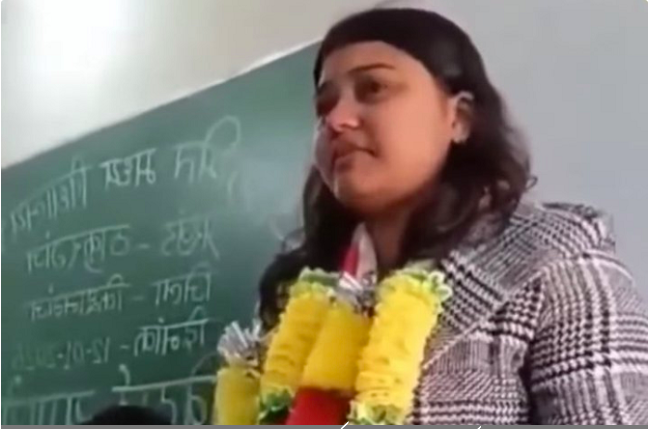 Patna: A Hindu woman teacher posted in Bihar’s Muslim-majority Kishanganj district has shared her personal account of her time in the area, a perspective that contradicts fear-based narratives propagated by Hindu extremists. Her story highlights the respect, safety, and warmth shown by local Muslims, directly countering claims that paint the district in negative light.
According to Kashmir Media Service, the teacher said how initially she was filled with fear. “I was told that Kishanganj is ‘mini-Pakistan,’ a phrase that created deep fear and mental stress,” she said. She recalled being repeatedly warned about the dangers of working in a Muslim-majority district, particularly as a Hindu woman, which created uncertainty about her safety.
However, once she began teaching, her experience changed quickly. “From the first week, students treated me with respect. Parents spoke to me with dignity. No one made me feel different,” she said. Over time, local Muslim colleagues guided her with patience and care, helping her settle into school life and the neighbourhood. The support extended beyond the classroom. “In my daily life, people stood by me. During illness and personal problems, neighbours asked after me and helped me. I never felt unsafe. I never felt unwanted,” she shared.
At a farewell event after her transfer order, the teacher became emotional. “The love and sincerity with which I was accepted removed all my fears and wrong ideas,” she told colleagues and students. “Leaving Kishanganj was painful. I cried because I was leaving my own people.”


Her heartfelt words have drawn attention online, with many noting how her account breaks the false image often projected about Muslim-majority areas in India.
The teacher said her time in Kishanganj taught her a lasting lesson. “Religion did not matter here. What mattered was being human,” she said. Her experience stands as a reply to voices that spread suspicion against Indian Muslims, demonstrating how real-life experiences can differ sharply from fear-based stories often circulated.