Kashmiri activists mark India’s Republic Day as ‘Black Day,’ decry rights abuses in region
Islamabad: Kashmiri activists, scholars and legal experts condemned India’s Republic Day observances as a “Black Day” for Indian illegally occupied Jammu and Kashmir, alleging persistent human rights abuses, engineered demographic shifts and the systematic use of sexual violence amid heavy military presence.
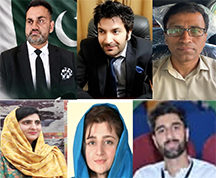
In a virtual seminar held on the eve of India’s Republic Day on 26 January, participants from Azad Jammu and Kashmir, Pakistan and the international diaspora framed the date as one of mourning and resolve rather than festivity. Moderated by senior PTV anchor Yasir Rehman, the discussion featured researchers, advocates and political representatives who urged renewed global efforts to enforce United Nations Security Council resolutions calling for a plebiscite in the long-disputed territory.
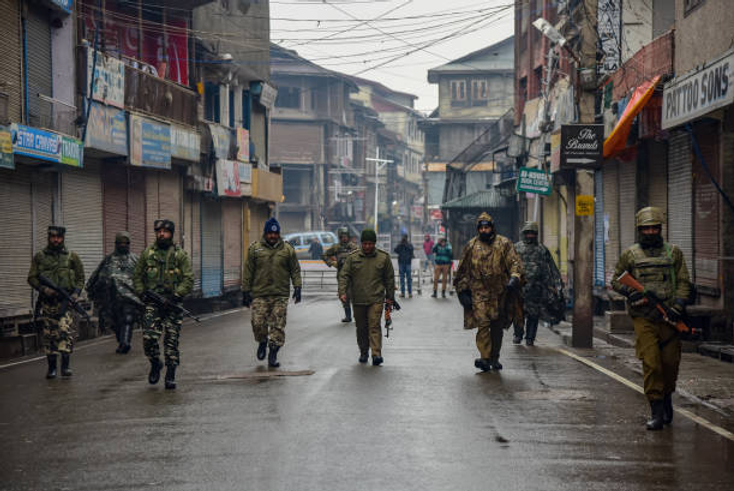 Panelists highlighted the 2019 abrogation of Article 370, which revoked the region’s special autonomous status and reorganized it into union territories under direct central administration. They contended that the move has facilitated land purchases and settlement by non-locals in the Muslim-majority Himalayan area, constituting a deliberate alteration of its demographic profile.
 Sheikh Abdul Mateen, representing the All Parties Hurriyat Conference, described Indian illegally occupied Jammu and Kashmir (IIOJK) as one of the world’s most densely militarized zones, marked by frequent arbitrary detentions, prolonged communication shutdowns and nocturnal security raids on civilian homes.
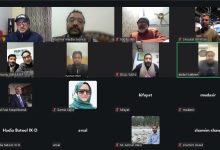

Sidra Sadozai, a lawyer and researcher specializing in conflict-related sexual violence, cited the 1991 Kunan-Poshpora mass rape incident as a stark illustration of rape deployed as a tool of war to intimidate and subjugate local populations. She criticized the lack of established international jurisprudence for prosecuting such offenses in the Kashmir context and accused Indian authorities of intrusive surveillance of mosques and religious figures, actions she deemed incompatible with democratic standards.
Salman Khan, a South Africa-based human rights advocate, drew attention to perceived international double standards, asserting that Western governments rapidly impose sanctions or interventions in select cases while overlooking reported violations in Kashmir and Gaza.
Prof. Dr. Shagufta Ashraf asserted that India’s Constitution, often celebrated as a beacon of liberty and equality, has instead entrenched subjugation in the region since the contested 1947 accession, a process never validated by the UN-mandated plebiscite. She called on Kashmiris to consolidate in non-violent resistance and demanded the withdrawal of excess security forces alongside accountability for documented abuses.
Dr. Mujahid Gilani, President of the Kashmir Youth Alliance, characterized dissent in occupied Kashmir as “systematically paralyzed,” with even prominent individuals and judicial figures subjected to intimidation for voicing concerns. Syed Manzoor Ahmed Shah, associated with the Hurriyat Conference, underscored the conference’s public mandate and advocated coordinated international advocacy by Azad Kashmir authorities and Pakistan.
Legal advocate Samia Sajid maintained that the nullification of Articles 370 and 35A represented a premeditated effort to dilute the region’s Muslim-majority identity. She observed that while other Indian states benefit from comparable special constitutional safeguards under the Article 371 series, Kashmir’s protections were selectively eliminated. Labeling the pattern of violations as potential war crimes and crimes against humanity, she proposed establishing an international criminal tribunal akin to the Bosnia model.
Zubair Hussain, a Europe-based advocate, noted that post-2019 events have prompted more candid parliamentary discussions on Kashmir across Europe. He described India’s position as one of mounting diplomatic isolation and urged organized campaigns, including letters to European legislators, to capitalize on the moment.
 Additional contributors, including Najeeb ul Ghafoor Khan from Azad Kashmir and Asif Jarral, President of the Jammu Kashmir Democratic Freedom Forum in France, along with Advocate Rehana Ali, Tayyaba Khurshid, Analyst and Journalist Mudassar Hussain emphasized bolstering social media outreach, meticulous documentation of infractions and strategic engagement with European institutions to challenge India’s narrative on the issue.
The seminar mirrored recurring commemorations throughout Pakistan and the Kashmiri diaspora, where January 26 is consistently portrayed as a somber reminder of unfulfilled self-determination commitments rather than constitutional achievement.
The proceedings ended with appeals for greater cohesion among Kashmiris across the Line of Control, enhanced participation by younger generations, and persistent lobbying at the United Nations and allied international bodies.