European delegation urges global outreach to amplify Kashmiri voices
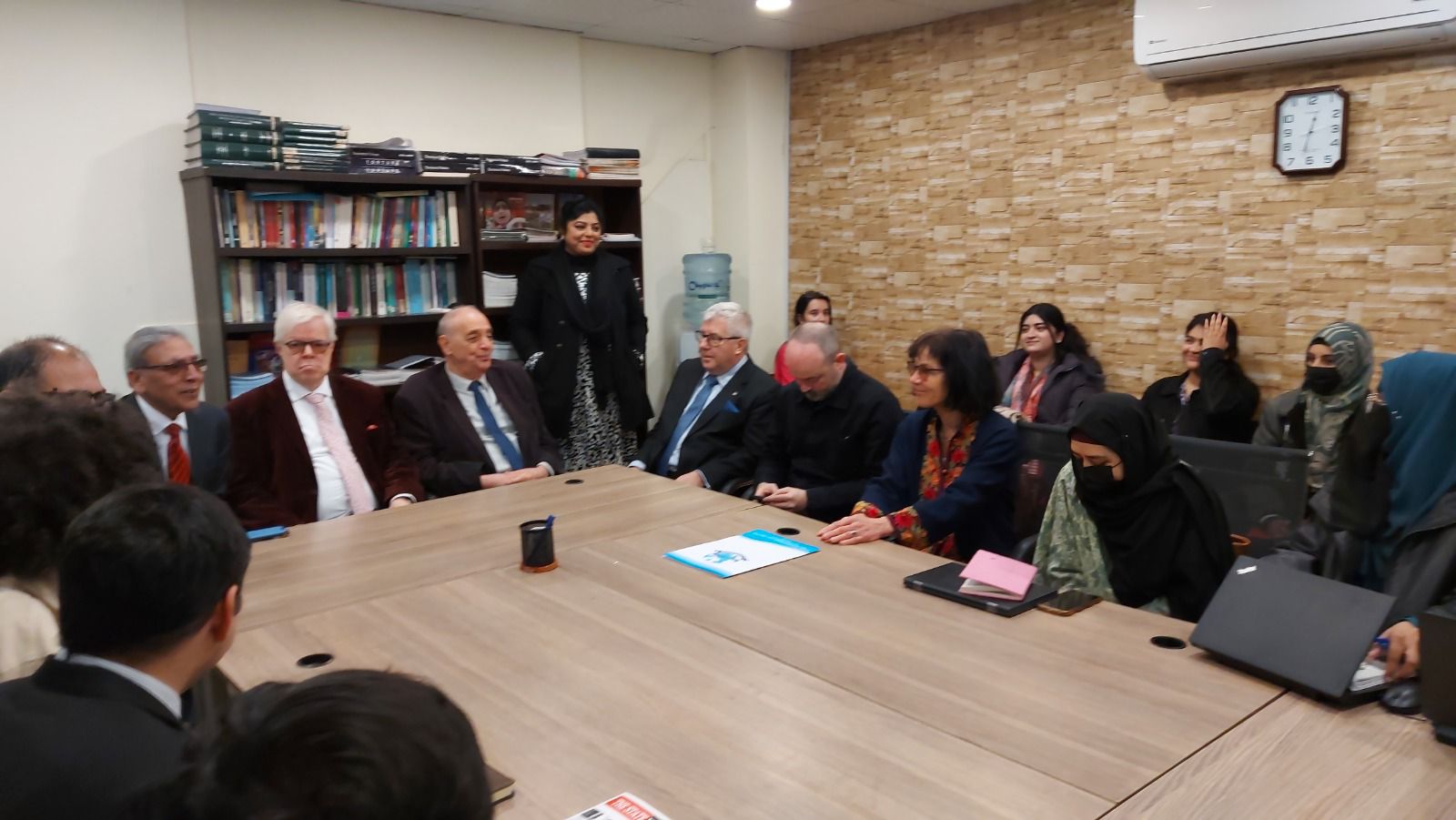
Islamabad: A visiting European delegation has emphasized the need for stronger global linkages to amplify the voices of the Kashmiri people, urging scholars, researchers, and interns to proactively engage with international think tanks, academic institutions, and media platforms to highlight the ground realities of Indian illegally occupied Jammu and Kashmir.
According to Kashmir Media Service, the European delegation said this while paying a visit to the Kashmir Institute of International Relations (KIIR) in Islamabad, today, where it was briefed on the institute’s research, advocacy, and capacity-building initiatives, as well as the ongoing human rights situation in Indian illegally occupied Jammu and Kashmir.
KIIR Chief Altaf Hussain Wani presented a detailed overview of recent developments in the occupied territory, highlighting documented human rights violations and challenges faced by the Kashmiri people. The delegation, comprising journalists, human rights activists, and former European parliamentarians, included Cedric Gerbehaye (Belgium), Marjan Lucas (Netherlands), Anna Olegovna (Netherlands), Ryszard Henryk Czarnecki (Poland), Bjorn Anders Hultin (Sweden), Carl Hultin (Belgium), Endre Barcs (Hungary), and Ali Raza Syed, Chairman of the EU Kashmir Council.
The visitors praised KIIR’s sustained work and urged participants of the KIIR Internship Program to proactively engage with international think tanks, universities, and media outlets to amplify Kashmiri voices globally.
Addressing young scholars, members of the delegation stressed the importance of local ownership of documentation and storytelling, saying: “You don’t need any international photographer to document the stories of the people of Kashmir — take this responsibility, narrate the stories, and you will find international support.”
During the visit, survivor testimonies and a collection of KIIR reports and literature on the human rights situation in the region were presented to the delegation. Both KIIR and the visitors expressed commitment to continued dialogue, exploring avenues for academic collaboration, policy engagement, and support for young researchers and interns working on Kashmir-related issues.