Mosques covered in UP ahead of Holi, Muslims asked to ‘stay indoors’
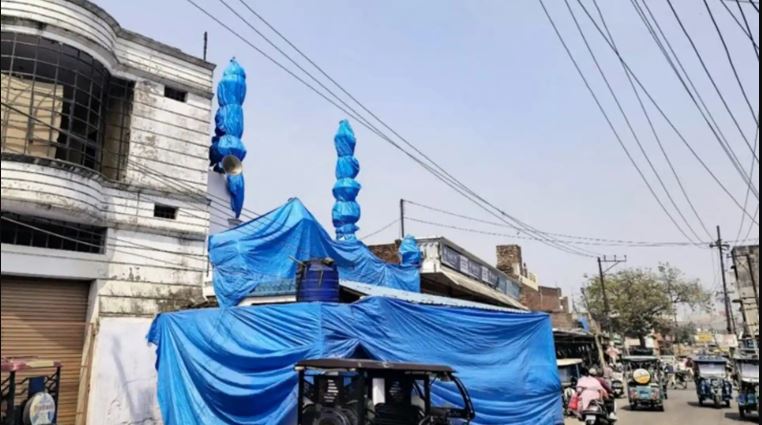
Bijnor: In India’s Uttar Pradesh state, several mosques in Bijnor district have been covered with tarpaulin sheets ahead of the Hindu festival of Holi, drawing sharp reactions from members of the Muslim community who see the move as discriminatory and reflective of growing communal polarisation under the BJP regime.
According to Kashmir Media Service, the district administration ordered the covering of mosques falling along the route of Holi processions in Dhampur town and deployed heavy police contingents around religious sites. Officials claimed the measure was “precautionary” to prevent colour or gulal from being thrown at mosques and to avoid communal tension. Similar actions were taken in Saharanpur and Sambhal in previous years.
Local reports said Holi processions traditionally pass through busy localities, including areas where mosques are situated. Instead of ensuring accountability for miscreants, authorities opted to physically shield the mosques with plastic sheets, a step many Muslims described as humiliating. Residents said that rather than addressing potential offenders, the administration appeared to normalise the possibility of desecration of Muslim places of worship.
The controversy deepened after remarks made by Additional Superintendent of Police (Western) Radheshyam Rai during a peace committee meeting in Gonda district. He reportedly said that those who do not wish to play Holi should remain indoors, as the festival “does not see who is Hindu, Muslim, Christian or Sikh” and that colour would be applied regardless. The statement triggered criticism, with social activists terming it insensitive and biased, arguing that law enforcement authorities are duty-bound to ensure equal protection and freedom of movement for all citizens rather than advising minorities to confine themselves to their homes.
Residents emphasised equal respect for mosques and religious sensitivities. Critics said sustainable peace cannot be achieved through cosmetic security measures but requires genuine commitment to safeguarding minority rights and upholding constitutional protections.