Pakistan’s foreign policy must be guided by strategic balance, national self-confidence: Masood Khan
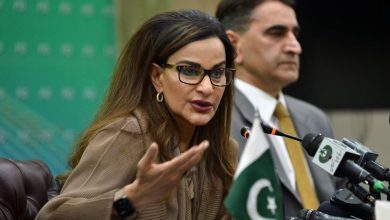
Islamabad: Former President of Azad Jammu and Kashmir and former Pakistan Ambassador to the United States Masood Khan has emphasized that Pakistan’s foreign policy must be guided by strategic balance, national self-confidence, and institutional diplomacy in navigating complex global alignments.
According to Kashmir Media Service, Masood Khan delivered a comprehensive lecture to participants of the National Institute of Public Administration (NIPA) in Islamabad on the evolution and future trajectory of Pakistan–United States relations and their broader implications for Pakistan’s national security and foreign policy.
Tracing the historical context, he recalled that Pakistan emerged in 1947 as a fragile and resource-constrained state facing existential challenges. In those early years, he noted, Pakistan sought strategic partnerships to secure its sovereignty and strengthen its defence capability. This led to the development of a close relationship with the United States during the early Cold War period, when global politics was structured around a bipolar order dominated by Washington and Moscow, he added.
Masood Khan explained that the initial partnership between Pakistan and the United States produced tangible benefits, including military training, modernization of Pakistan’s armed forces, and economic cooperation that contributed to early state-building efforts. However, he observed that differences in expectations—particularly regarding support on the Kashmir dispute—created strains in the relationship during the 1960s and subsequent decades.
He noted that geopolitical developments such as the wars of 1965 and 1971, nuclear proliferation concerns, and sanctions regimes significantly affected bilateral relations. The partnership was later revived during the 1980s when Pakistan and the United States collaborated to resist the Soviet invasion of Afghanistan.

Reflecting on the period following the attacks of September 11, 2001, Ambassador Khan said Pakistan once again became a frontline partner in the international campaign against terrorism. Over the course of two decades, Pakistan provided logistical support and cooperation that facilitated international military operations in Afghanistan. Despite this partnership, he noted that mutual mistrust and policy divergences periodically strained the bilateral relationship.
He underscored that contemporary geopolitics demands a pragmatic and balanced foreign policy approach. While the United States remains an influential global power whose relations shape broader Western engagement, Pakistan must also continue strengthening its strategic partnership with China, including cooperation under the China-Pakistan Economic Corridor and joint defence production initiatives.